



High Back Stick Armchair
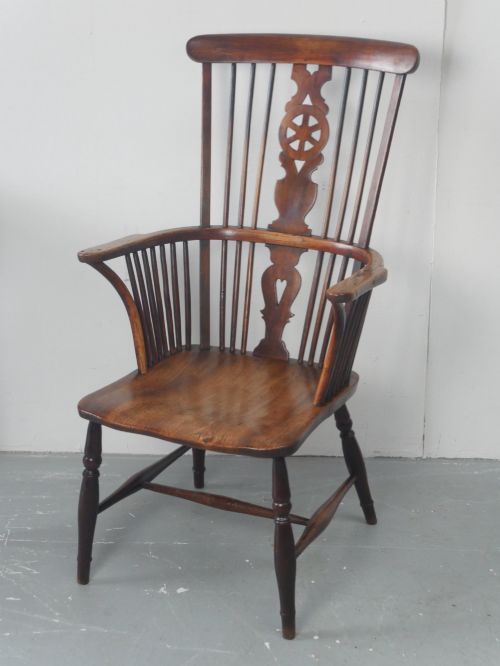
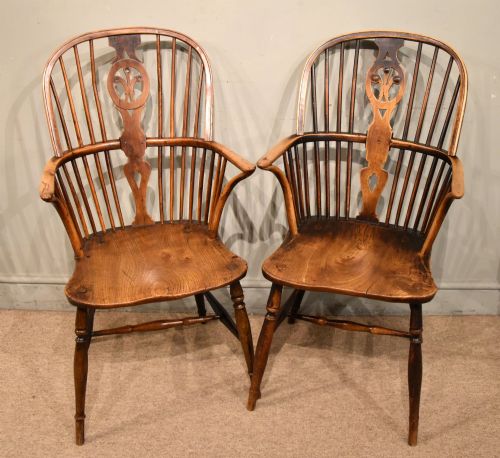
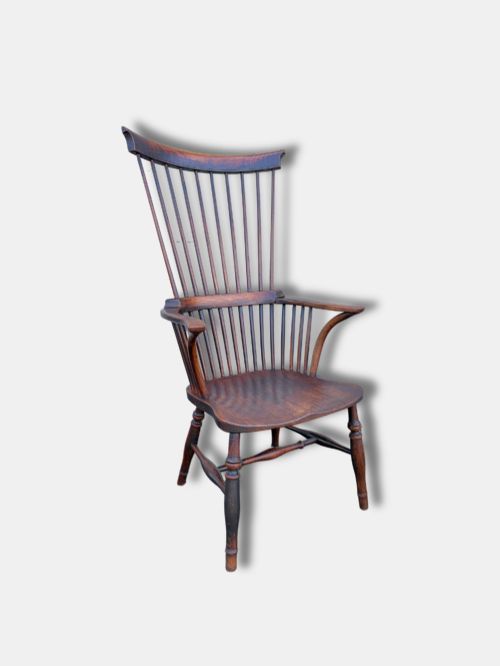
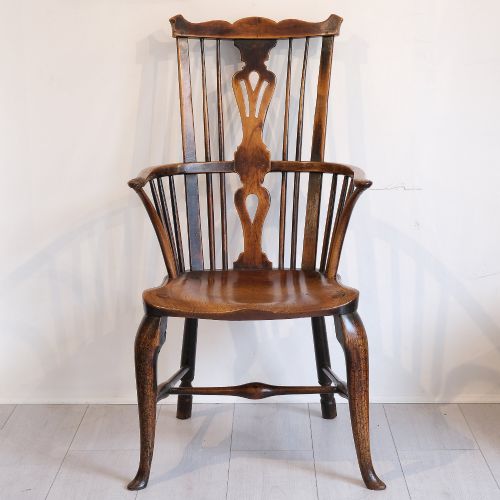
These high back stick armchairs offer sturdy country comfort with soaring spindles and deep-set seats.
High Back Stick Armchair
The selection spans periods from the eighteenth century through to the nineteenth century, including Georgian, Regency, and Victorian examples. Alongside full-sized armchairs, the evidence includes smaller children's chairs built to the same vernacular standards.
Regional variations emerge across English, Welsh, and Scottish styles, encompassing primitive country forms and kitchen stickbacks. These pieces bring a robust architectural silhouette to an interior through their combination of steam-bent rails and turned uprights.
How they were made
Maker-joiners utilised native timbers such as elm for solid, sculpted seats, combined with ash or yew wood for flexible spindles and bentwood bows. Oak and beech also appear in the construction, whilst decorative finishes sometimes include simulated rosewood.
Construction relied on traditional green woodworking and Windsor techniques, where turned legs and back sticks are wedged directly into a thick wooden seat slab. Seats were often deeply saddled by hand using an adze or scorp to ensure ergonomic comfort.
Additional materials such as cane seats and brass components occasionally supplement the primary timber structures. Steam-bending allowed craftsmen to form continuous high combs and lath backs without weakening the grain.
High Back Stick Armchair Retail Price Guide 2026
Typical asking prices for high back stick armchair among the pieces listed under this phrase on Sellingantiques today, from the lower quarter to the upper quarter. They describe what is for sale here now, not the wider market.
Several pieces include diminutive children's chairs scaled down precisely to match full-sized vernacular forms.
What varies in quality
Quality rests in the harmony of the timber selection and the retention of crisp turning details on the arm supports and legs. Grain alignment in the bentwood bows dictates structural longevity.
The depth and smoothness of the saddle-shaped seat carving reveal the maker's hand and time investment. Superior examples maintain tight joint integrity where the spindles meet the seat plank.
Gabbitass of Worksop·Darvil
The High Back Stick Armchair Glossary
- Windsor chair
- A wooden chair built with a heavy solid plank seat into which the legs and back spindles are independently tenoned. This construction method provides exceptional durability.
- Comb back
- A chair design featuring a low back rail topped by a separate small headrest or comb supported by vertical spindles. It resembles the teeth of an upright comb.
- Stickback
- A vernacular seating style where turned wooden rods form the backrest rather than carved splats. These sticks are typically tapered and driven directly into the seat.
- Vernacular
- Objects designed and built by local tradesmen using regional materials and traditional methods rather than high-style metropolitan patterns. These pieces reflect local working-class or rural requirements.
- Saddled seat
- A wooden seat base hollowed out into a concave, ergonomic contour resembling a riding saddle. This shaping distributes weight comfortably over long periods.
High Back Stick Armchair: Frequently Asked Questions
What is a high back stick armchair?
A high back stick armchair is a traditional wooden seat featuring a tall array of vertical spindles rising from a solid timber base. These chairs evolved from rural vernacular traditions to offer robust support and everyday utility.
They are frequently associated with Windsor forms, utilising turned underframes and steam-bent back bows. Their enduring appeal lies in their sculptural silhouettes and comfortable, ergonomic seat construction.
How do I date a stick armchair?
Dating relies on examining the timber species, turning profiles on the legs, and the method of joining the components. Georgian and eighteenth-century examples often display deep patination and distinct regional hand-tooling.
Nineteenth-century and Victorian pieces tend towards standardised turnings and sometimes incorporate alternative materials like cane or beech. Comparing the wear patterns around the footrests also helps determine age.
Where were these chairs made?
These armchairs originated in rural workshops across England, Wales, and Scotland, shaped by regional timber availability and local woodworking practices. Country joiners utilised native woods growing immediately around their workshops.
Specific areas developed distinct characteristics, such as the robust construction found in Welsh examples or the particular styling associated with Scottish vernacular makers.
How do I live with a country armchair?
These armchairs integrate easily into modern or traditional interiors, serving as reading chairs in studies or accent pieces in living rooms. Their sturdy construction makes them suitable for daily domestic use rather than mere display.
To care for them, keep them away from direct heat sources to prevent the timber from splitting. Regular dusting and occasional feeding with suitable wax will maintain the aged patina of the wood.