

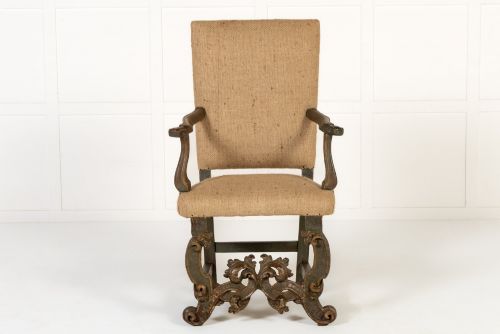
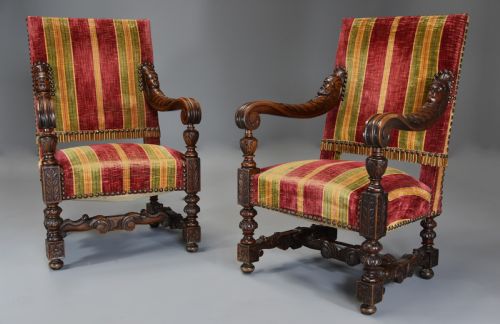


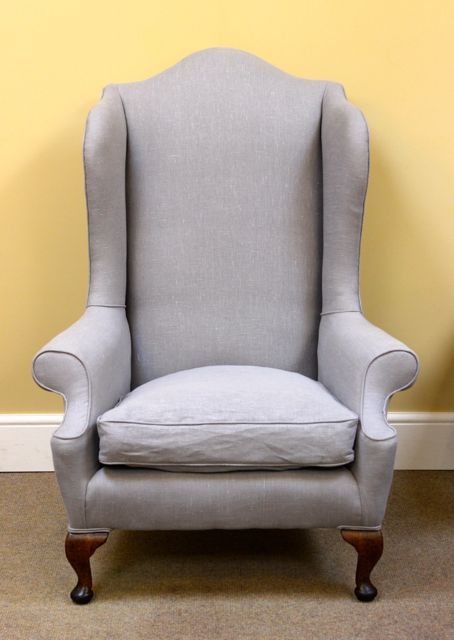
High Back Scroll Armchairs
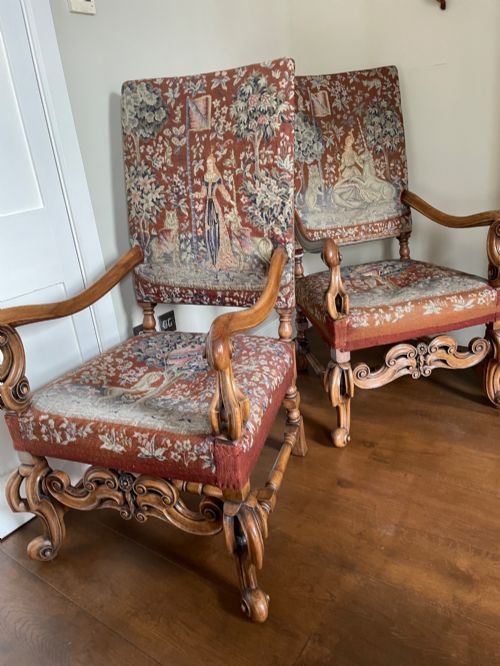
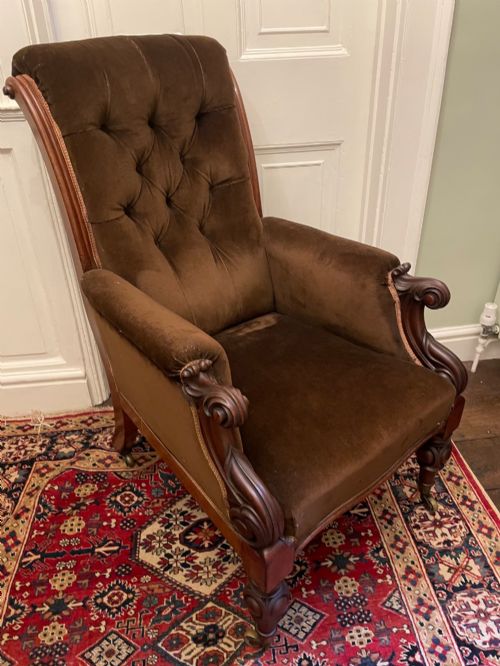
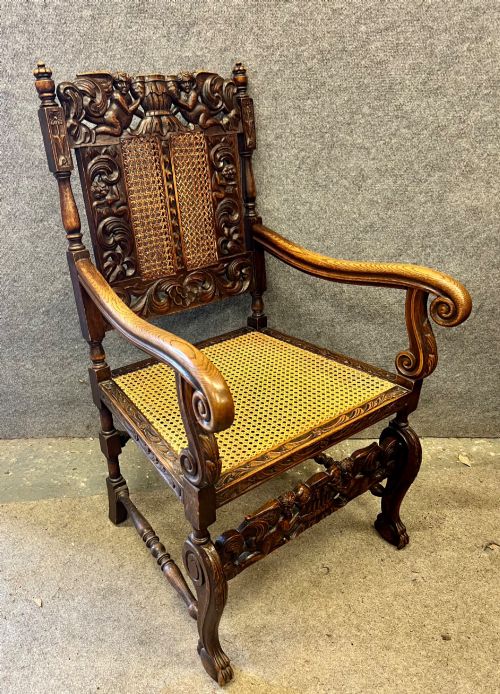
These high back scroll armchairs combine commanding presence with deep seating, offering both period gravitas and robust comfort for a traditional interior.
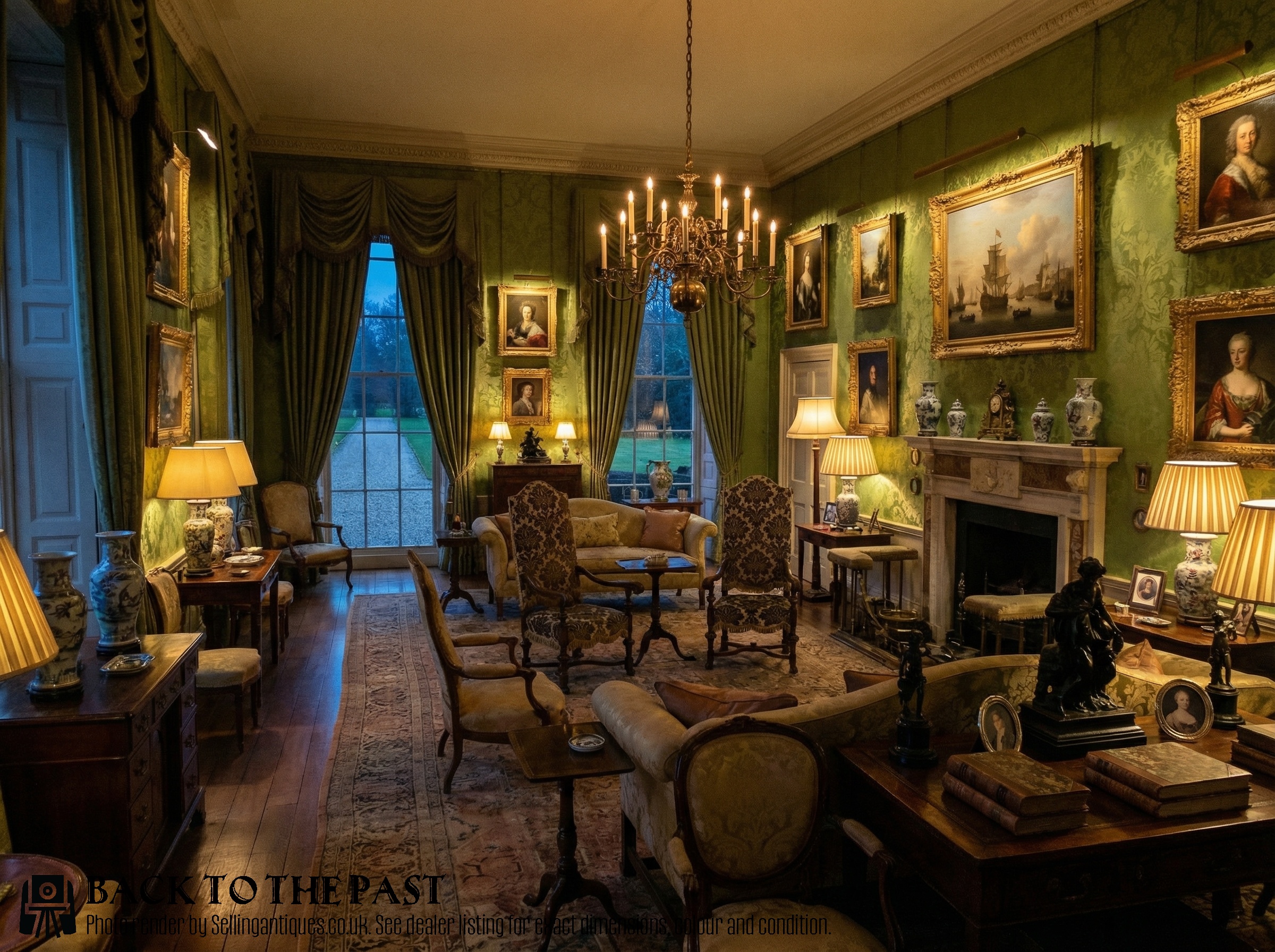
High Back Scroll Armchairs
High back scroll armchairs bring substantial presence to a room, defined by their elevated backs and distinctively curved arm supports. When exploring high back scroll armchairs, you encounter examples ranging from seventeenth-century origins through nineteenth-century revivals.
Makers drew on historical idioms, producing walnut, oak, and mahogany frames upholstered in fabric, velvet, or fitted with cane. These seating options served dining, library, and hall settings across different centuries.
How they were made
Carpenters and cabinetmakers shaped dense timbers such as walnut, oak, and mahogany to form the structural frames. Artisans carved intricate scrollwork and structural details directly into the wood.
Upholstery techniques involved securing fabric, velvet, or woven cane to the high frames using brass elements and traditional stuffing methods. Giltwood finishes also appear on specific revival pieces from the nineteenth century.
High Back Scroll Armchairs Retail Price Guide 2026
Typical asking prices for high back scroll armchairs among the pieces listed under this phrase on Sellingantiques today, from the lower quarter to the upper quarter. They describe what is for sale here now, not the wider market.
The selection spans seventeenth-century origins alongside nineteenth-century revival interpretations including French Baroque and Carolean styles.
What varies in quality
The crispness and depth of the wood carving dictate much of the distinction between standard production and exceptional examples. Sharp detailing in the scroll arms and crestings indicates superior craftsmanship by the maker.
The integrity of the timber frame and the quality of the original upholstery materials, whether cane, velvet, or fabric, influence the overall calibre of the piece. Proportion and structural balance further separate ordinary chairs from finer specimens.
The High Back Scroll Armchairs Glossary
- Carolean
- Pertaining to the reign of Charles II, characterised by rich wood carving and scrolling woodwork. This style saw significant revival periods during the nineteenth century.
- Scroll arm
- An armrest terminating in a characteristic spiral or rolled wooden scroll. This feature provides both ergonomic support and decorative movement.
- Cane
- Woven plant material used for seating panels and backs. It requires skilled manual labour to weave into precise patterns.
- Giltwood
- Timber coated with a thin layer of gold leaf. This finish appears on select high-status revival seating.
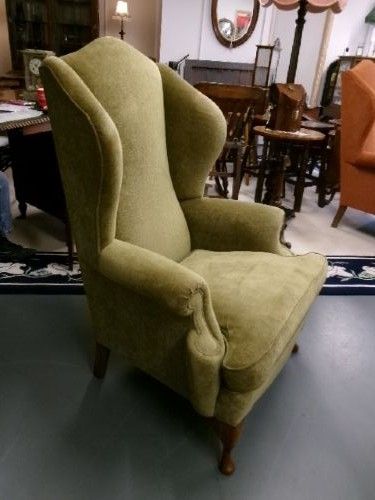
- Wing back
- An armchair featuring protective side panels attached to the backrest. These wings historically blocked draughts in large rooms.
High Back Scroll Armchairs: Frequently Asked Questions
How do I identify a revival piece?
Revival pieces combine historical design motifs with nineteenth-century manufacturing methods and timber conditioning. Examining the tool marks and structural joints helps clarify the actual period of construction.
Stylistic cues often mix earlier Baroque or Carolean elements with Victorian framing techniques. Comparing the timber patination with known period examples provides further context.
Where were these chairs placed historically?
High back scroll armchairs served formal reception rooms, libraries, and halls where status and comfort mattered. Large open elbow chairs and throne chairs occupied prominent positions.
Smaller variants, such as nursing chairs, suited private chambers and intimate seating arrangements. Their substantial backs offered both warmth and visual weight in draughty rooms.
Are these chairs suitable for daily use?
Sturdy timber frames and solid joinery make many of these seating forms robust enough for regular use. Checking the internal stability and upholstery condition ensures safe daily sitting.
Weaker cane panels or delicate carved arms require more careful handling than fully upholstered mahogany or walnut frames. Professional assessment of the joints prevents structural damage.
What maintenance do antique wood frames need?
Periodic application of appropriate wax polish helps nourish exposed walnut, oak, and mahogany surfaces. Avoiding direct sunlight prevents timber drying and fading.
Upholstered sections benefit from gentle professional cleaning suited to fabric or velvet textiles. Preserving the original finish maintains the character of the carved woodwork.