
Antique Throne Style Chairs
These antique throne style chairs bring imposing presence and commanding height to any room, offering heavy timber construction and dramatic carved detail.
Antique Throne Style Chairs
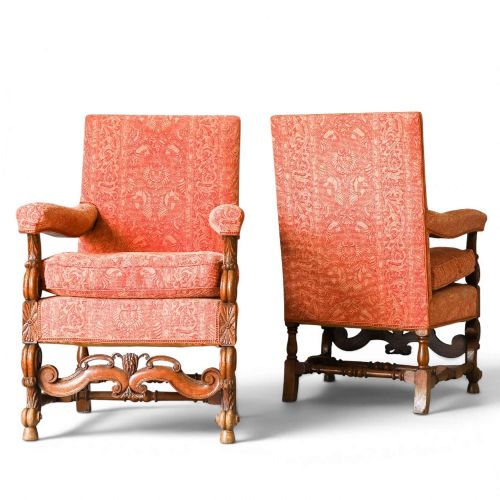
When you search for antique throne style chairs, you look for imposing seating defined by tall backs, solid timber frames, and substantial armrests. These pieces borrow architectural motifs from earlier centuries to create a commanding presence in a room.
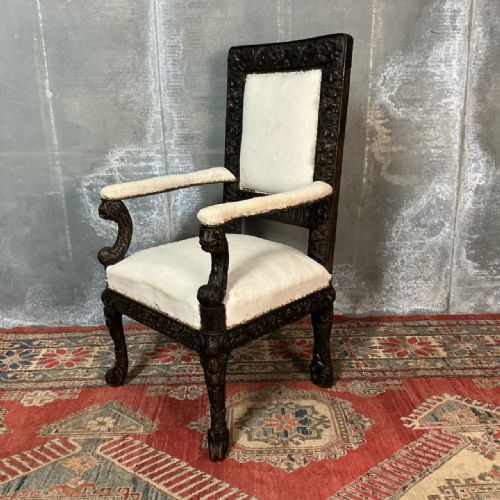
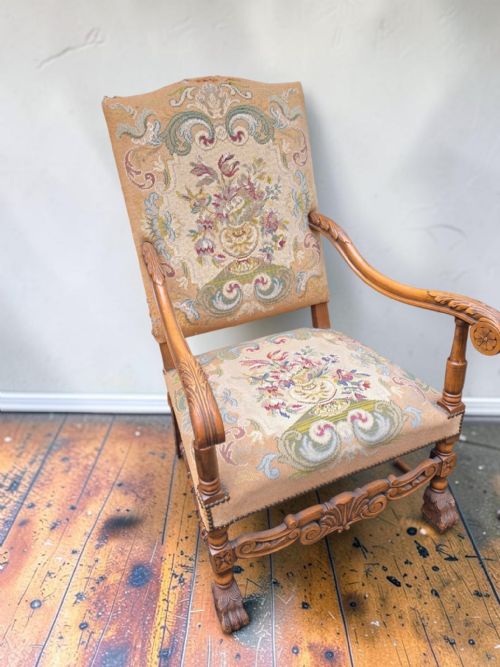
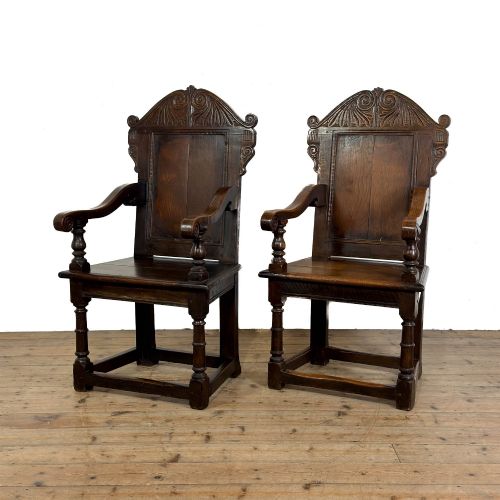
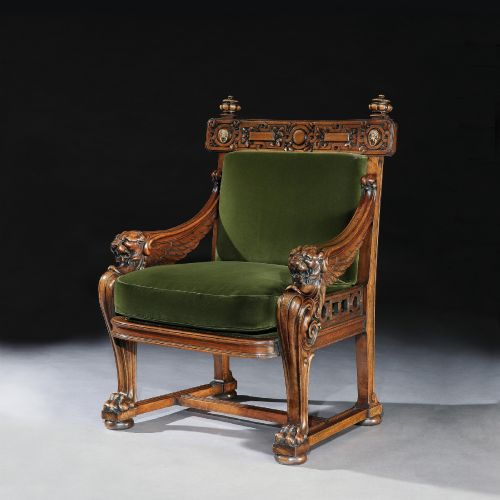
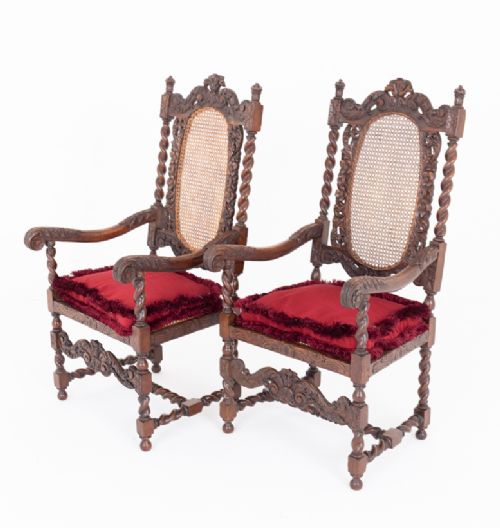
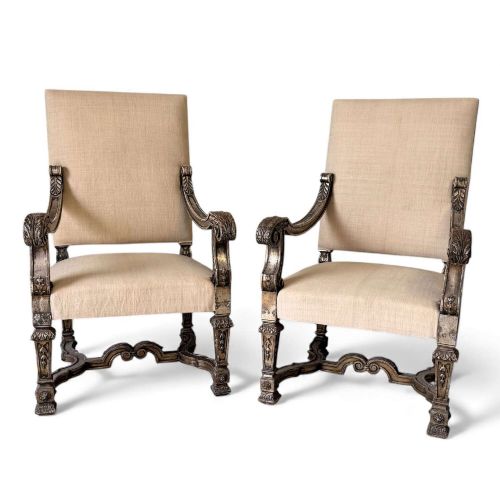
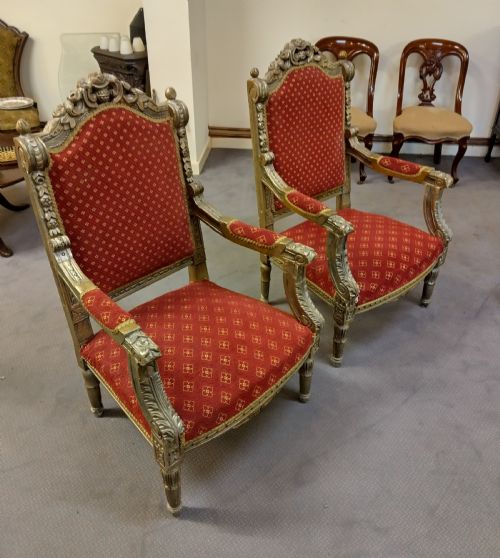
The selection here draws primarily on nineteenth century revivals alongside genuine seventeenth and eighteenth century examples. You encounter heavy oak wainscot chairs, walnut armchairs with tapestry or leather upholstery, and elaborate giltwood pieces.
Makers often drew inspiration from Gothic, Jacobean, and Baroque styles to satisfy period tastes for dramatic seating. Forms range from rigid hall chairs to deeply carved armchairs designed to dominate a dais or parlour corner.
How they were made
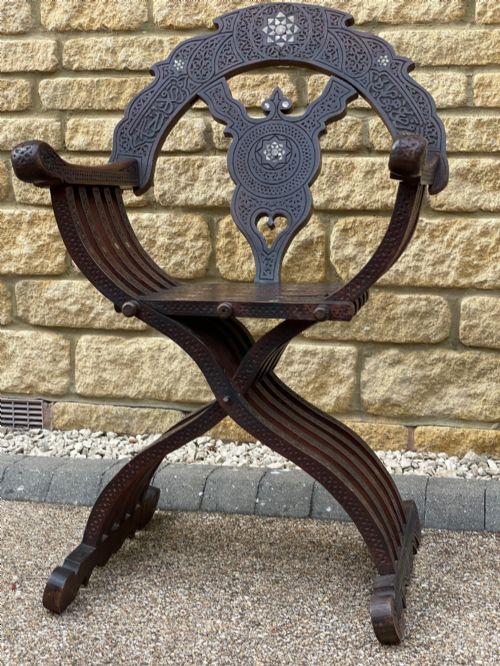
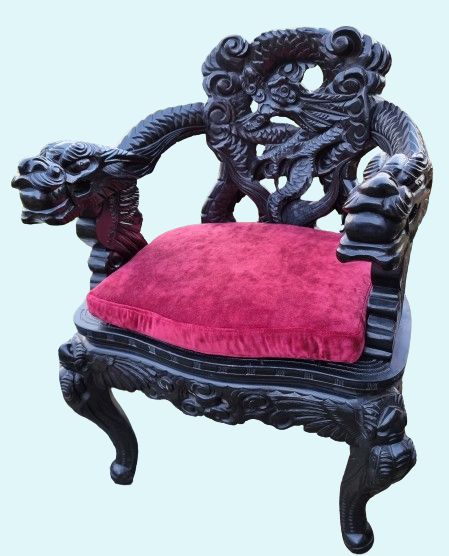
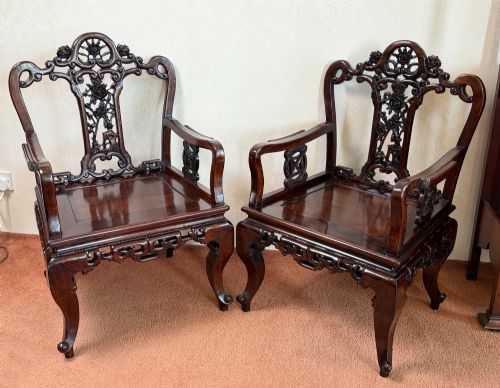
Carpenters relied principally on dense timbers such as oak, walnut, and exotic hardwoods like hongmu to build these heavy frames. These woods were chosen for their structural strength, permitting deep sculptural relief without compromising the integrity of the joints.
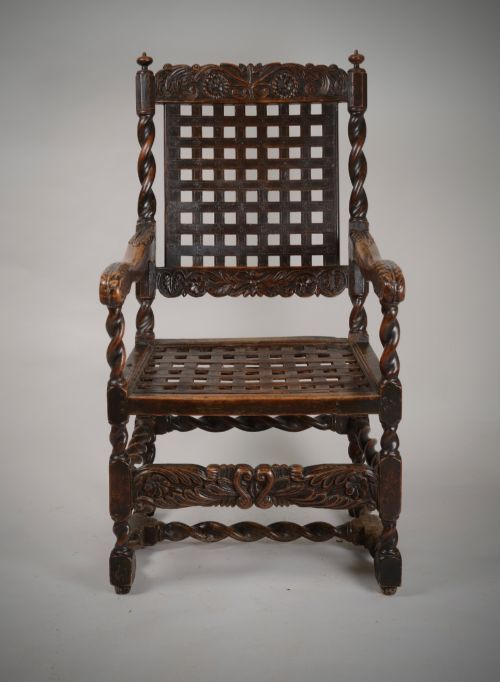
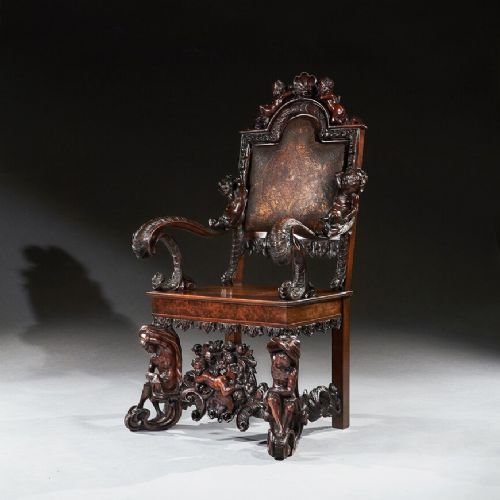
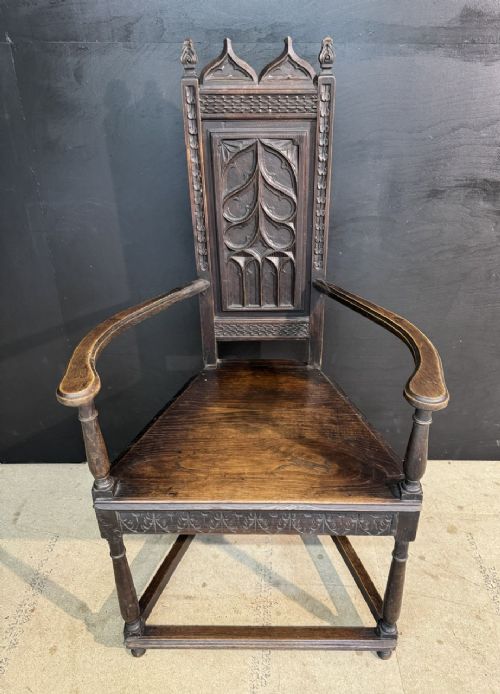
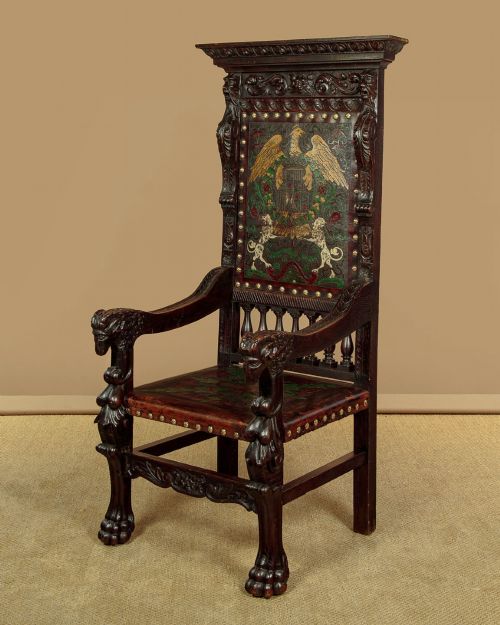
Carvers employed hand chisels to render intricate scrolling foliage, lion monopodia, and panelled linenfold motifs directly into the timber. Upholstered variants integrated textiles including velvet, painted leather, and hand-woven tapestry secured with brass studs.
One tiny apprentice piece proves a young woodworker spent months carving a miniature Chippendale throne.
What varies in quality
Depth and crispness of the hand carving separate standard production from exhibition pieces attributed to known designers. Superior examples display undercut relief and anatomical precision in figures, whereas lesser pieces show blunt edges and shallow incisions.
The selection of timber grain and the integrity of the joinery dictate the longevity of the seat. Heavier gauge hardwoods and stable heartwoods maintain their structural rigidity better than soft or secondary timbers prone to warping under heavy vertical loads.
Andrea Brustolon·Thomas Hope·A W N Pugin
The Antique Throne Style Chairs Glossary
- Wainscot chair
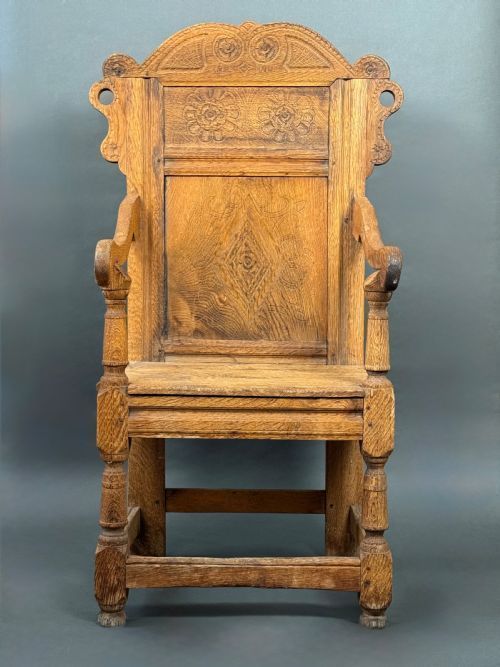
- A heavy wooden armchair with a panelled back, popular in the seventeenth century and frequently revived in Victorian times. It takes its name from wainscoting timber used in domestic architecture.
- Monopodia
- Furniture supports carved in the form of a single animal leg, typically ending in a paw or claw. This classical motif appears on nineteenth century revival seats echoing ancient Roman designs.
- Hongmu
- A dense, heavy Chinese hardwood prized for dark colour and durability. Makers utilised this material to construct substantial throne chairs with intricate openwork carving.
- Fauteuil
- An open-armed upholstered chair originating in France, featuring exposed wooden framing around the back and armrests. Walnut and giltwood versions appear frequently in nineteenth century revivals.
Antique Throne Style Chairs: Frequently Asked Questions
How do I identify a wainscot chair?
A wainscot chair is distinguished by its rigid wooden panelled back and solid armrests, typically constructed from heavy oak. These seats rely on frame-and-panel construction rather than upholstery for structural support.
Most examples date from the seventeenth century or nineteenth century revivals that imitate earlier vernacular styles. They offer a rigid, upright posture suited for halls rather than lounging.
Are these chairs comfortable for daily seating?
These seats were originally designed to project authority rather than provide modern ergonomic comfort. Upright timber backs and firm upholstery encourage an erect posture.
Upholstered variants featuring buttoned leather or tapestry offer more cushioning than plain wooden hall chairs. Many buyers use them as accent pieces in studies or hallways.
How do I distinguish seventeenth century from revival pieces?
Original seventeenth century timber displays distinct tool marks, surface oxidation, and shrinkage consistent with age. Joints often utilise pegged mortise and tenon construction without modern adhesives.
Revival pieces from the nineteenth century frequently employ machine-sawn components hidden beneath hand-carved surfaces. The timber grain and wear patterns help confirm the actual period of manufacture.