
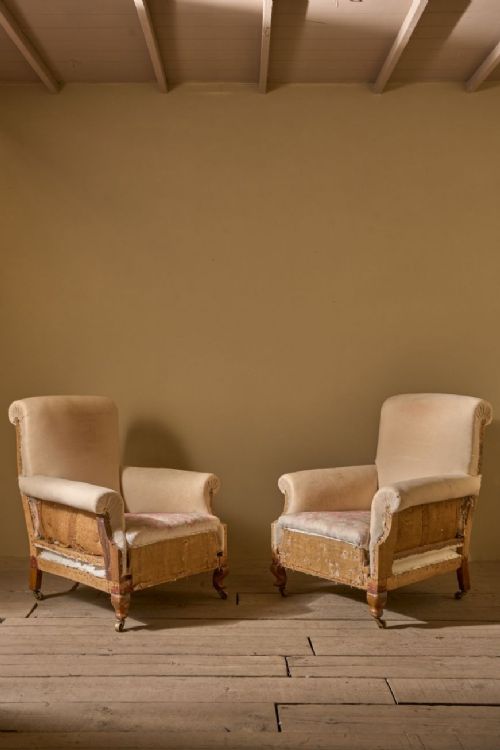
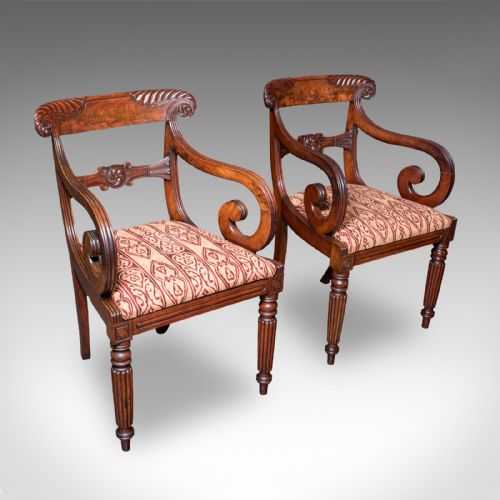
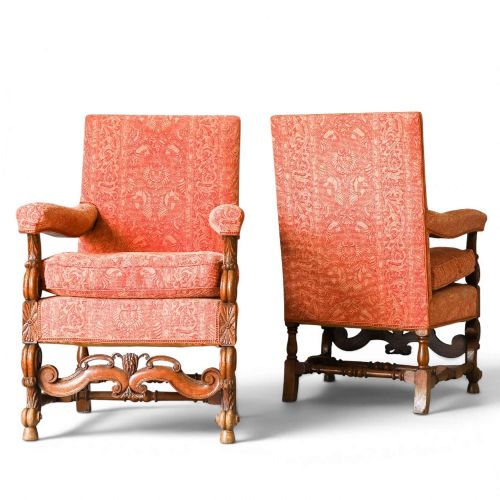
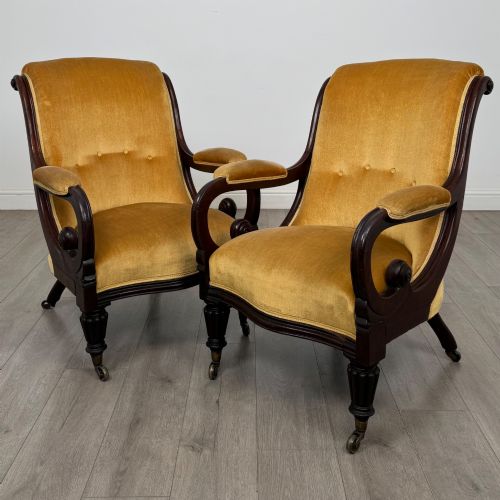


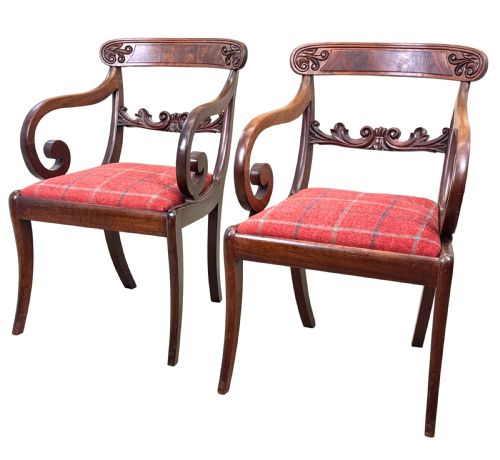


Pair Scroll Armchairs
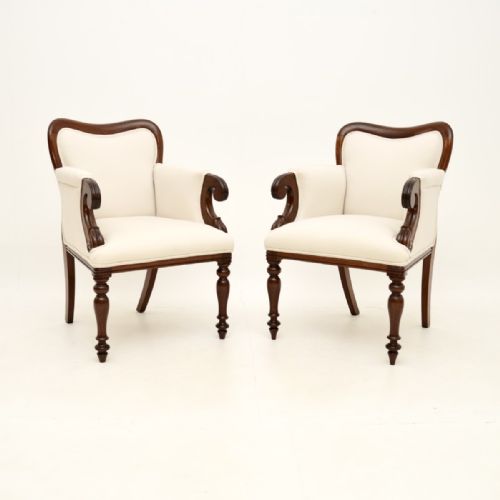
Pair scroll armchairs bring symmetrical grace and character to a room, offering paired seating defined by sweeping arm designs.
Pair Scroll Armchairs
When searching for pair scroll armchairs, buyers encounter matched seating solutions designed with distinctive curved armrests. These pieces span periods from the Regency era through the Victorian epoch into the early twentieth century.
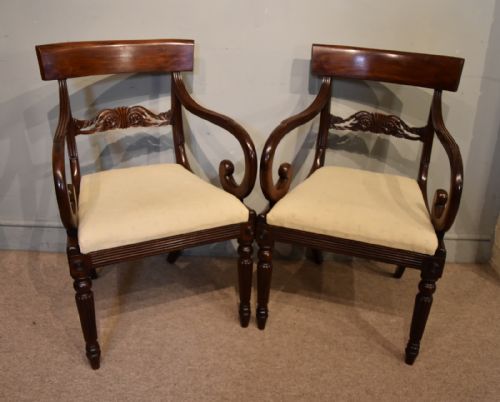
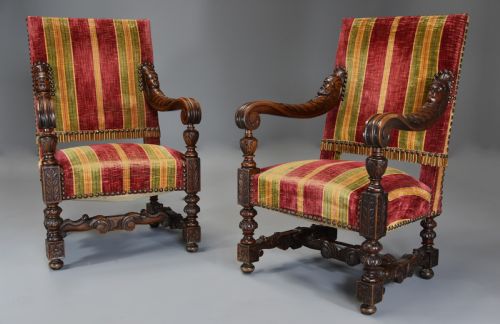
The selection includes English country house designs, French styles such as Napoleon III and Baroque revivals, alongside formal library and morning room carvers. Mahogany and walnut frameworks dominate, complemented by various upholstered finishes and occasional birch or ash construction.
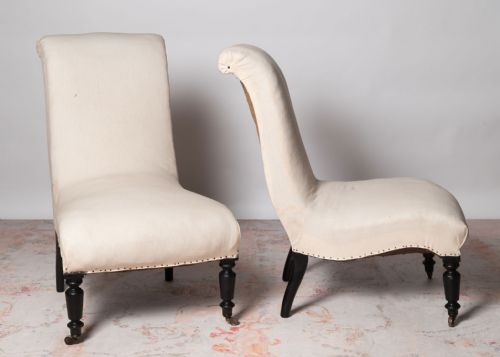
Most examples function as reception seats, library chairs, or salon furniture, offering a unified aesthetic through matching pairs. The forms range from low slipper chairs to tall scroll back armchairs and substantial elbow carvers.
How they were made
Cabinetmakers utilised dense timbers including mahogany, walnut, ash, and birch to construct the structural frames of these seats. Joinery techniques involved secure tenon and mortise joints, often paired with hand-carved decorative elements along the scrolling arms and forelegs.
Upholstery methods incorporated traditional stuffing materials secured beneath fabrics such as velvet, leather, linen, and ticking. Brass castors frequently appeared on nineteenth-century examples to facilitate movement across floor coverings.
One recorded set once belonged to the Royal and Ancient Golf Club of St Andrews, bringing a distinctly sporting provenance to the parlour.
What varies in quality
The standard of timber selection and the crispness of hand-carved scrollwork set superior examples apart from simpler workshop output. Grain alignment in mahogany or walnut frames demonstrates the initial investment of the maker.
Proportion and structural integrity define the higher tiers of these chairs, where balanced lines support daily use without compromise. The integration of upholstery webbing and traditional stuffing techniques also dictates long-term durability and comfort.
The Pair Scroll Armchairs Glossary
- Scroll arm
- An armrest curved into a spiral or scroll shape at the terminal. This profile defines the primary visual characteristic of these chairs.
- Carver
- An armchair designed with open arms, traditionally positioned at the head of a dining table or utilised as a desk chair. These pieces often feature more decorative woodwork than standard dining chairs.
- Showwood
- Exposed wooden framing around an upholstered back or seat. This technique allows the grain and polish of mahogany or walnut to remain visible.
- Sabre leg
- A concave-curved rear or front leg that tapers toward the foot, commonly seen on Regency furniture. The shape resembles a cavalry sabre.
- Button back
- An upholstery style where buttons are pulled deep into the padding to create a quilted diamond pattern. This method secures the internal stuffing and adds texture.
Pair Scroll Armchairs: Frequently Asked Questions
How do I date a pair of scroll armchairs?
Dating relies upon timber choice, leg profiles, and structural joinery conventions typical of specific reigns. Regency models often display sabre legs and rich mahogany, whilst later Victorian and Edwardian examples incorporate varied showwood framing.
Secondary indicators include upholstery remnants, castors, and regional cabinetmaking traits. Comparing the silhouette against known period patterns helps confirm the decade of manufacture.
Where should I place these chairs at home?
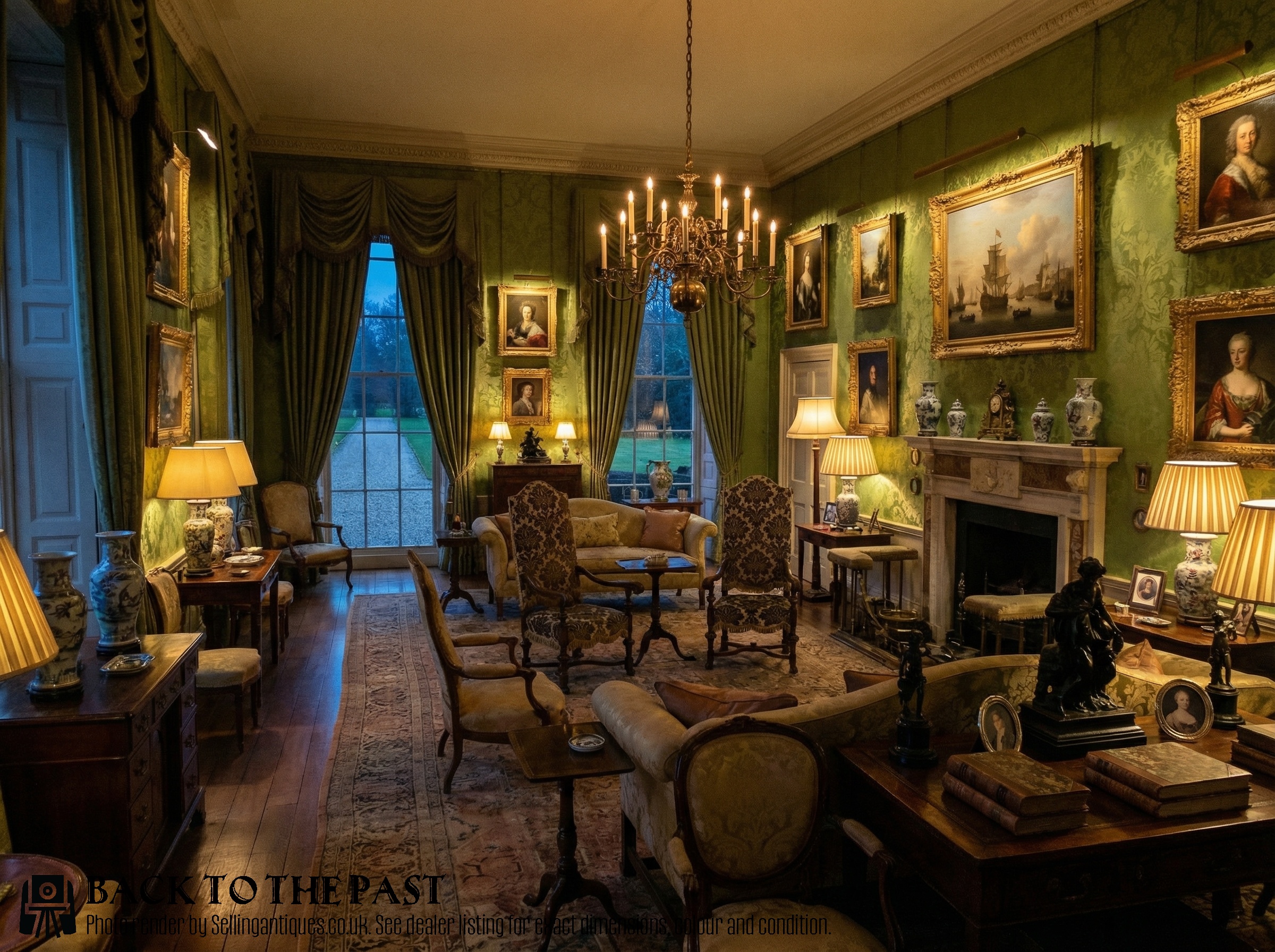
These matched chairs suit formal reception rooms, libraries, and spacious bedrooms where symmetry creates balance. Placing them opposite a fireplace or flanking a central piece of furniture highlights their paired design.
Library carvers sit well beside desks or reading tables, whilst slipper chairs function effectively in dressing areas. Their matching forms provide cohesive visual weight to empty corners.
Are scroll armchairs comfortable for daily seating?
Most examples offer supportive upright seating designed for reception rooms, studies, or parlours rather than deep lounging. The firmness depends on the traditional upholstery stuffing and sprung foundations within the seat frame.
Library and salon variations provide ergonomic support for reading and conversation. Adding appropriate scatter cushions can adjust the lumbar depth to personal preference.
What is the difference between Regency and Victorian scroll chairs?
Regency scroll armchairs generally exhibit restrained classical lines, dark polished mahogany, and sabre or reeded legs. They reflect an interest in archaeological revival forms with understated elegance.
Victorian iterations tend to feature heavier proportions, elaborate button upholstery, and richer carving details. Showwood frames and decorative castors become more prevalent in the later nineteenth century.