




Hexagonal Hall Pendant
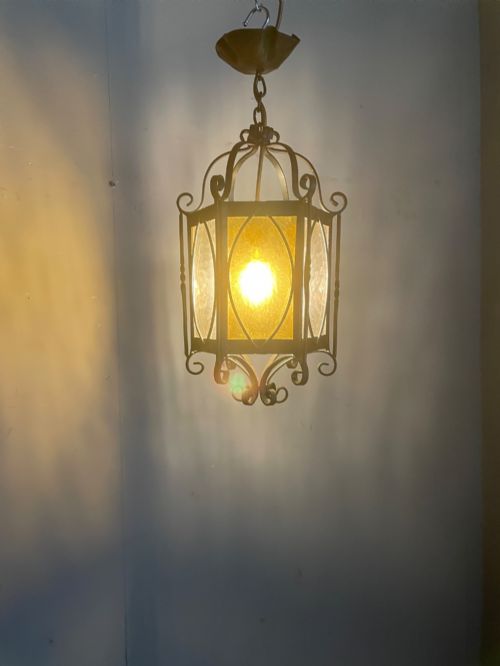
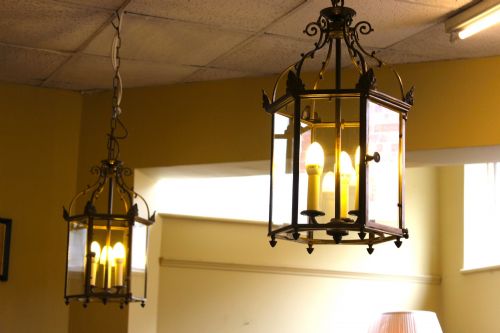
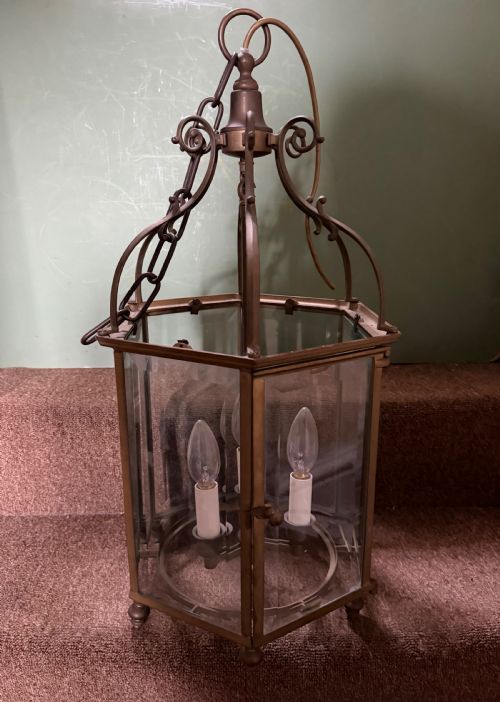
A hexagonal hall pendant hangs with strict symmetry, casting warm light through glazed panels to welcome guests.
Hexagonal Hall Pendant
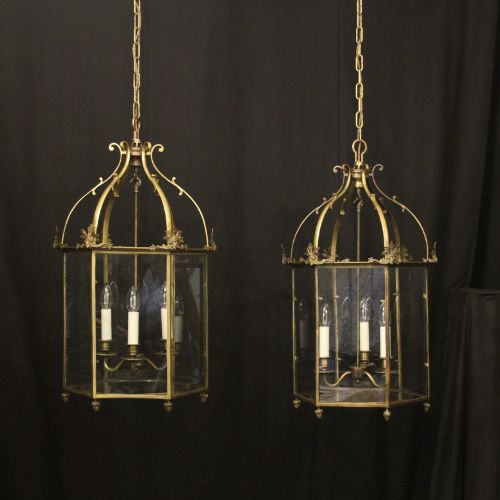
A hexagonal hall pendant provides focused overhead illumination for entranceways and corridors, using a six-sided glazed frame suspended from a chain or rod. These ceiling fixtures appear in Victorian, Edwardian, and twentieth-century incarnations, spanning periods from the mid-nineteenth century up to nineteen-thirty.
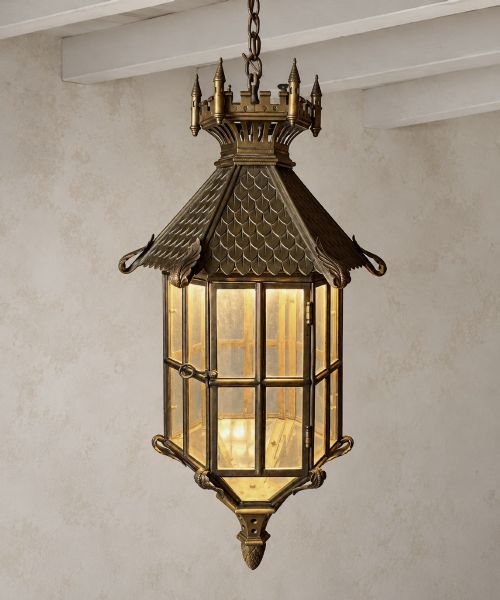
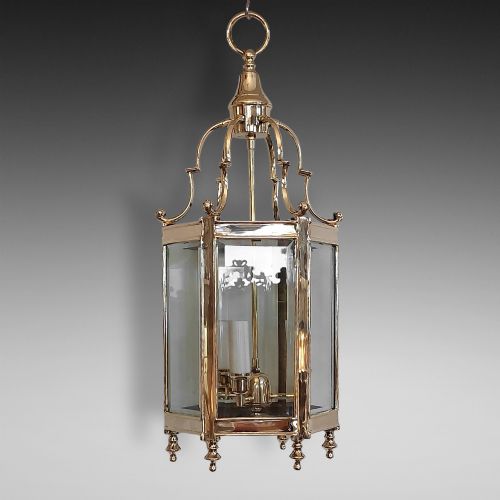
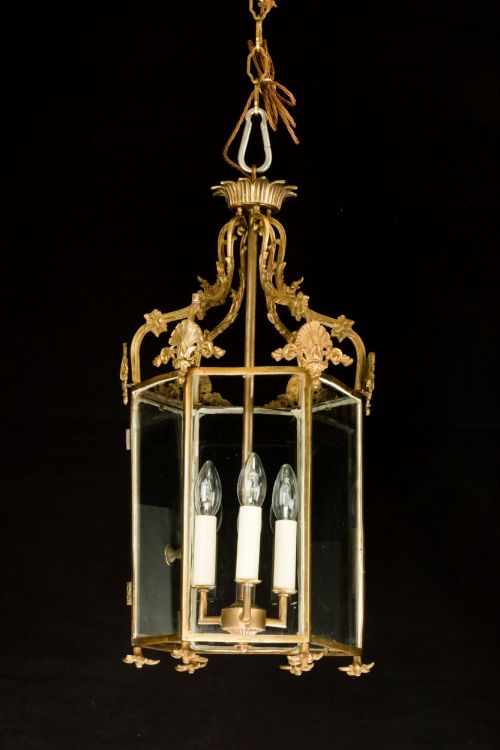
The dominant forms on this page include brass lanterns, bronze fixtures, and wrought iron designs shaped in styles such as Gothic Revival, Neo-Classical, and Arts and Crafts. Makers often built these hanging lights as hall lanterns, pendant lights, or French chateau style fixtures to suit high-ceilinged vestibules.
How they were made
Metalworkers formed the skeletal frames of these pendants using cast brass, gilded bronze, wrought iron, or steel, joining the six vertical ribs securely to top and bottom crowns. Gilded brass and ormolu treatments provided reflective surfaces, while copper and bronze introduced darker, heavier tones.
Glaziers fitted flat or bevelled glass panels into the metal channels, securing each pane to maintain the geometric form. Some examples incorporated specialised decorative motifs like the Green Man in copper or intricate rococo metalwork modelled on earlier French designs.
Hexagonal Hall Pendant Retail Price Guide 2026
Typical asking prices for hexagonal hall pendant among the pieces listed under this phrase on Sellingantiques today, from the lower quarter to the upper quarter. They describe what is for sale here now, not the wider market.
Listings span multiple decades, incorporating brass, bronze, copper, steel, and wrought iron materials across Victorian, Edwardian, and twentieth-century periods.
What varies in quality
Quality rests in the weight of the metal casting and the crispness of applied gilding or chased detail, particularly on ormolu and bronze examples. Heavier brass and bronze frames maintain structural rigidity better over decades of hanging.
The choice of glass elevates certain pieces, with thick bevelled glass panes creating prismatic light refraction superior to standard flat glass. Finer lanterns show careful hand-fitting of the metal joints around each glazed panel.
The Hexagonal Hall Pendant Glossary
- Bevelled glass
- Glass with edges ground and polished at an angle. This treatment creates decorative light refraction around the perimeter of each panel.
- Ormolu
- Finely ground high-carat gold-mercury amalgam applied to a bronze object. It gives a bright golden finish seen on decorative French-style lanterns.
- Gothic Revival
- An architectural and decorative style drawing on medieval ecclesiastical forms. It appears in lanterns through pointed arches and heavy ironwork.
- Neo-Classical
- A style inspired by the classical art and architecture of ancient Greece and Rome. Fixtures in this idiom use restrained symmetrical geometry.
- Wrought iron
- Iron beaten and shaped by hand while hot. It yields a strong, textured material with visible hammer marks used in sturdy frames.
Hexagonal Hall Pendant: Frequently Asked Questions
How do I hang a hexagonal hall pendant?
Suspension typically relies on a matching chain and ceiling canopy attached to the primary wiring loop at the top of the lantern. Ensure the weight of heavier bronze or iron models is supported by a ceiling joist.
Position the fixture so the bottom clears head height while remaining high enough to illuminate the entire entryway effectively.
What rooms suit a hexagonal hall pendant?
These lanterns serve well in entrance halls, corridors, stairwells, and vestibules where vertical space allows a hanging fixture. Their six-sided design projects light evenly in multiple directions.
Period styles like Gothic Revival or Neo-Classical work well in older properties, while simpler twentieth-century brass models suit more transitional spaces.
How do I clean the glass panels?
Remove dust with a soft microfibre cloth before applying a mild glass cleaner directly to the cloth rather than the lantern. This prevents excess liquid from seeping into aged metal joints or electrical fittings.
Take care around bevelled edges and delicate brass or gilded surfaces to avoid scratching the metal framework.
How do I date a brass lantern?
Dating depends on observing construction methods, material patination, and stylistic cues such as Edwardian proportions or nineteenth-century Gothic detailing. Heavy cast brass and hand-bevelled glass often point to Victorian or earlier manufacture.
Twentieth-century examples frequently show simpler welded joins and lighter gauge metal frameworks.