


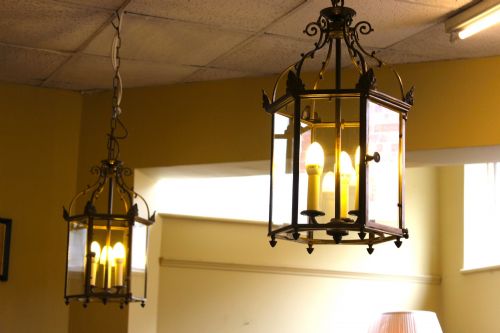
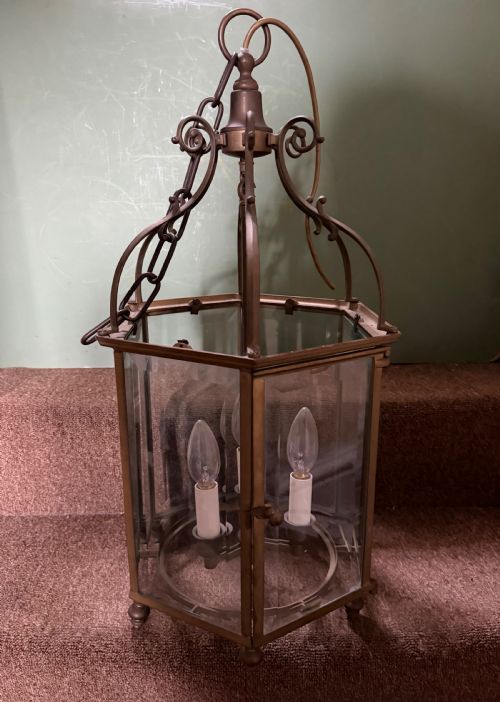


Hexagonal Brass Lantern
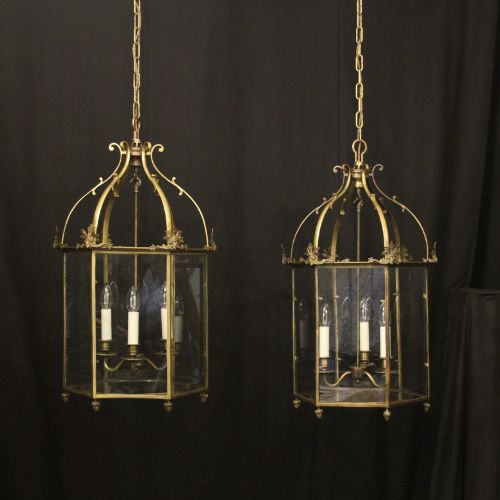
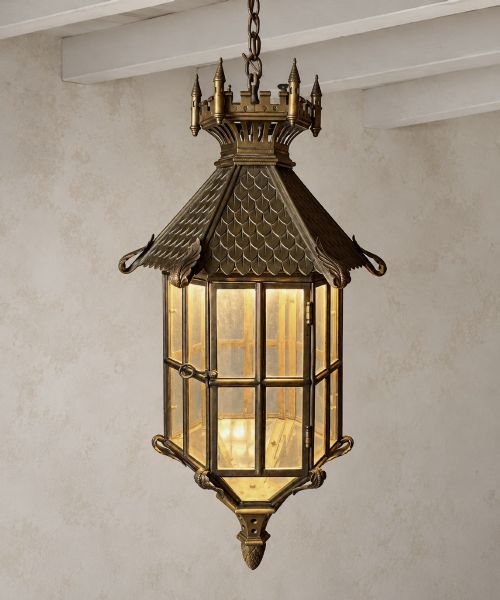
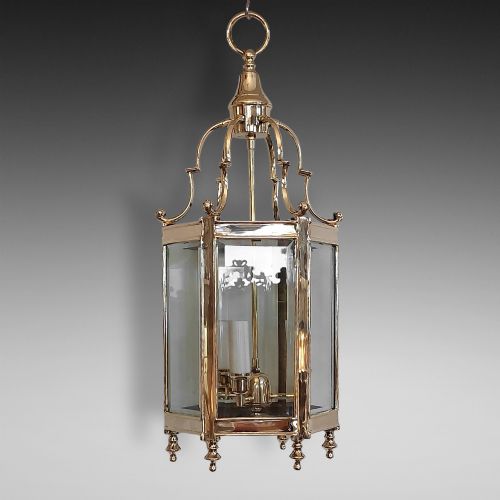
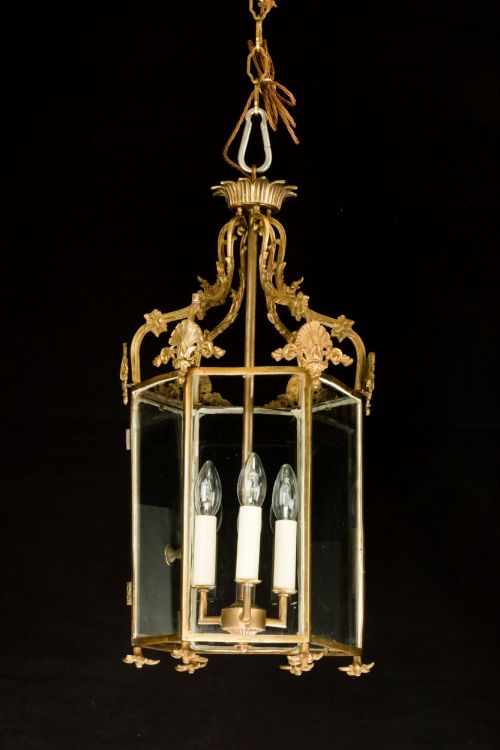
These hexagonal brass lanterns bring a structured, period quality to hallways and porches through six-sided frames and glazed panels.
Hexagonal Brass Lantern
A hexagonal brass lantern provides overhead illumination through a six-sided metal frame fitted with glass panes, typically hung from ceilings as a pendant or hall light. You will frequently encounter Edwardian and Victorian examples on this page, alongside French pieces that range from simple hall lights to grander models.
The form spans various proportions, from compact domestic pendants to substantial multi-light fixtures designed for larger spaces. These lights serve primarily as functional entrance lighting while adding distinct period character to interiors.
What Varies in Quality
Quality rests in the weight and rigidity of the metal frame, the precision of the casting, and the finish applied to the brass. Substantial cast components and crisp decorative detailing distinguish finer pieces from simpler, lighter constructions.
The treatment of the glass also marks a difference, with bevelled or heavy stained panels representing a higher tier of production than plain flat glass. The cohesion of the stylistic references, whether French Chateau or Regency, further separates standard examples from exceptional ones.
Hexagonal Brass Lantern Retail Price Guide 2026
Typical asking prices for hexagonal brass lantern among the pieces listed under this phrase on Sellingantiques today, from the lower quarter to the upper quarter. They describe what is for sale here now, not the wider market.
Materials across these listings include brass, gilded brass, copper, ormolu, steel, and bevelled glass.
The Hexagonal Brass Lantern Glossary
- Bevelled glass
- Glass panes with cut and polished angled edges that catch and refract light. This treatment adds depth and a subtle sparkle to the fixture.
- Gilded brass
- Brass treated with a gold-coloured finish or leaf to increase brilliance. This surface treatment was common on finer French and Victorian hall lanterns.
- Ormolu
- Finely cast and gilded bronze used for decorative mounts and details. It brings a warm, golden lustre to the metalwork.
- Hall lantern
- A ceiling-hung light fixture specifically proportioned for corridors, vestibules, and entrance spaces. These pieces often feature enclosed glass sides to protect the flame or bulb.
- Gothic Revival
- A nineteenth-century design style drawing on medieval architectural motifs. Lanterns in this style often incorporate pointed arches and structural tracery.
Hexagonal Brass Lantern: Frequently Asked Questions
Where should I hang a hexagonal brass lantern?
These fixtures suit entrance halls, corridors, stairwells, and porches where overhead hanging light is practical. Their six-sided shape distributes light evenly in narrow or transitional spaces.
Ensure the ceiling height accommodates the drop of a pendant light, particularly for multi-light versions that require adequate clearance.
How do I date a brass lantern?
Dating relies on stylistic clues such as Victorian Gothic Revival details, Edwardian proportions, or French Neo-Classical motifs. Construction methods, including the type of brass casting and glass bevelling, also point to specific decades.
Archival comparisons with nineteenth and early twentieth-century designs help narrow down the period of manufacture.
Are these lanterns wired for modern electricity?
Many historical lanterns have been rewired for contemporary electrical standards while retaining their original frames and glass. Listings often note whether a piece is ready for modern ceiling installation.
Check the internal lamp holders and consult an electrician to ensure compatibility with your home wiring.
What is the difference between English and French lanterns?
English examples tend to follow restrained Victorian, Edwardian, or Georgian design principles with straightforward brass frames. French pieces frequently incorporate more ornate cast details, rococo styling, or gilded bronze elements.
Both traditions utilise the six-sided hexagonal format but express different regional decorative tastes.