





Heriz Wool Corridor Rug
A heriz wool corridor rug brings sturdy North-West Persian geometry and long-lasting wool pile straight to your hallway.
Heriz Wool Corridor Rug
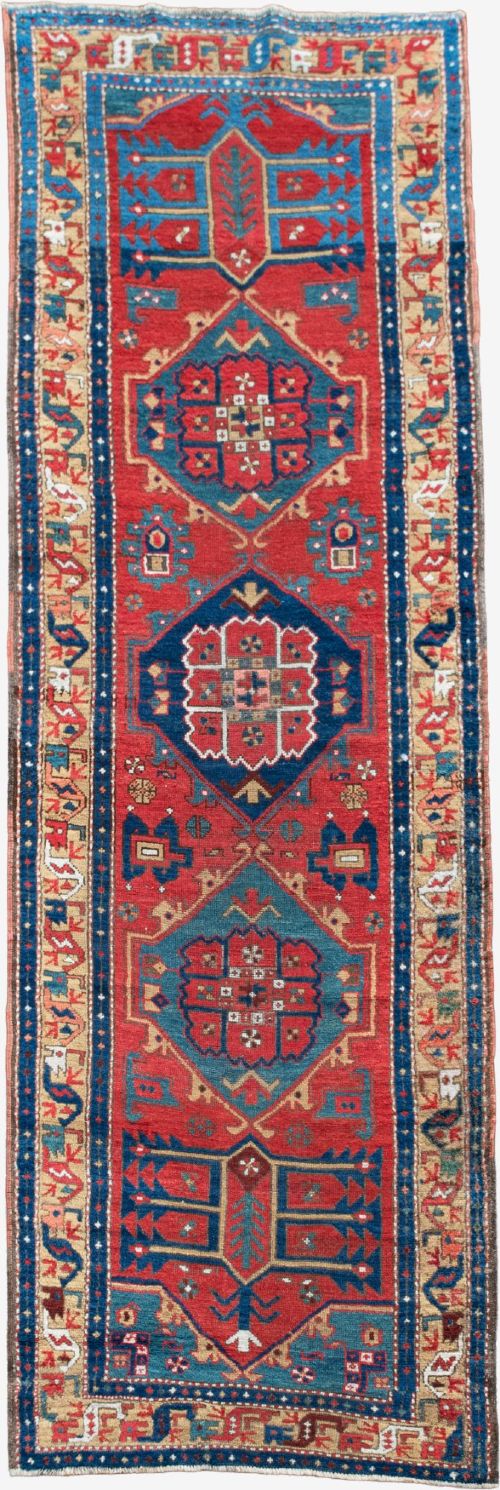
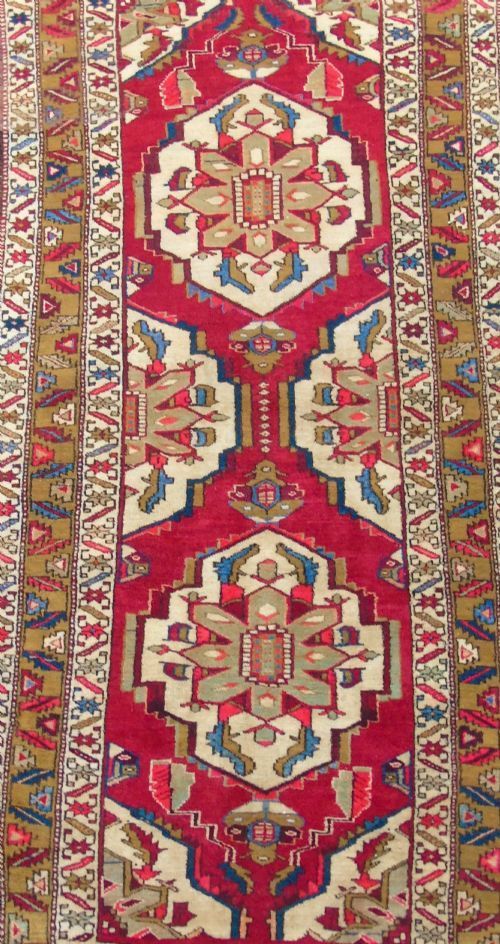
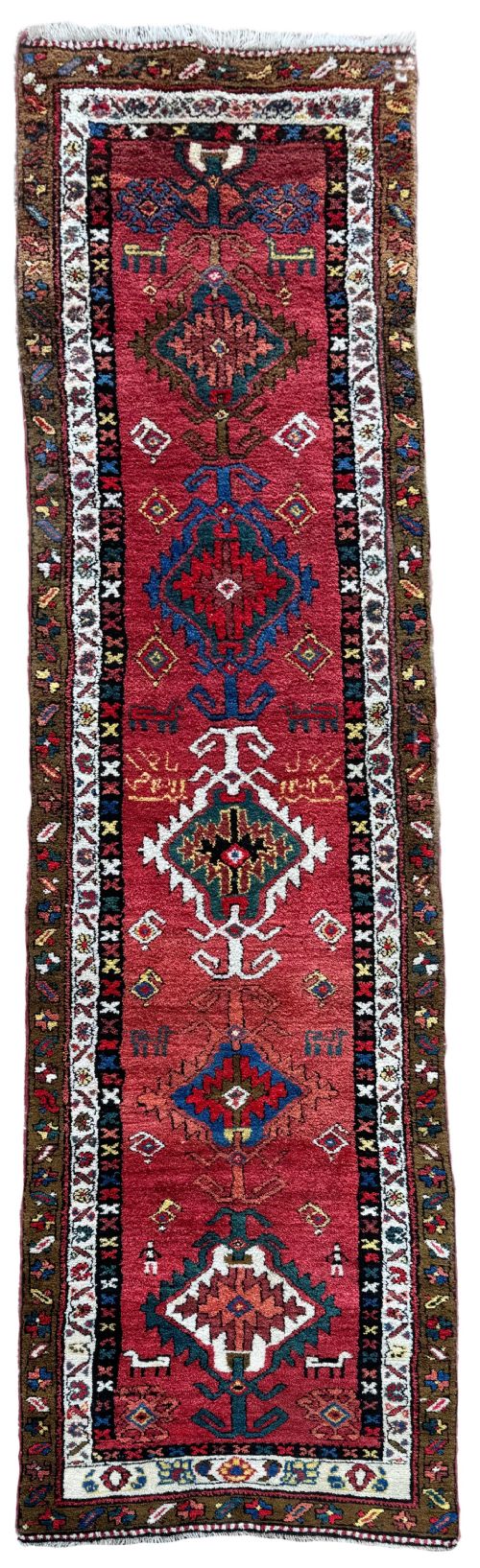
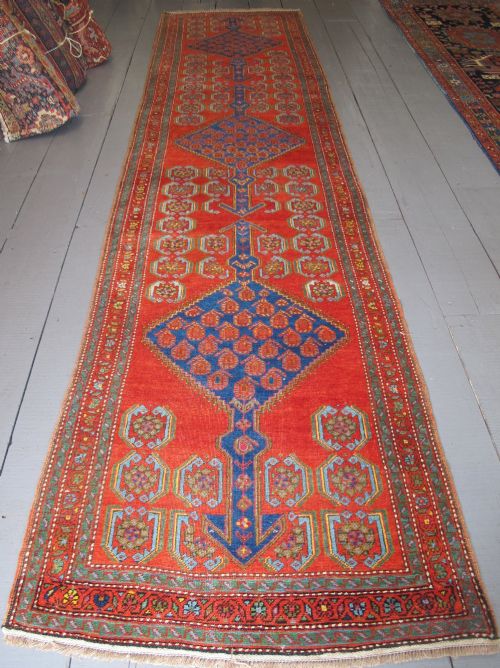
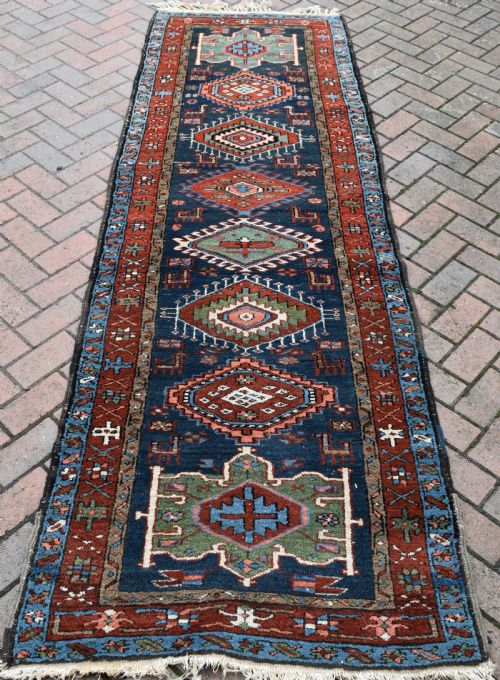
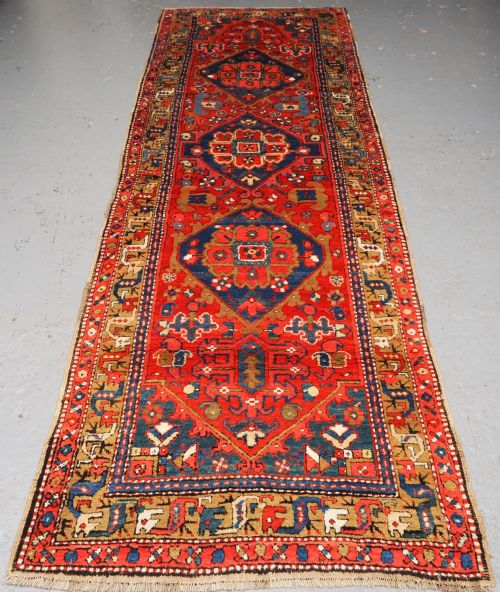
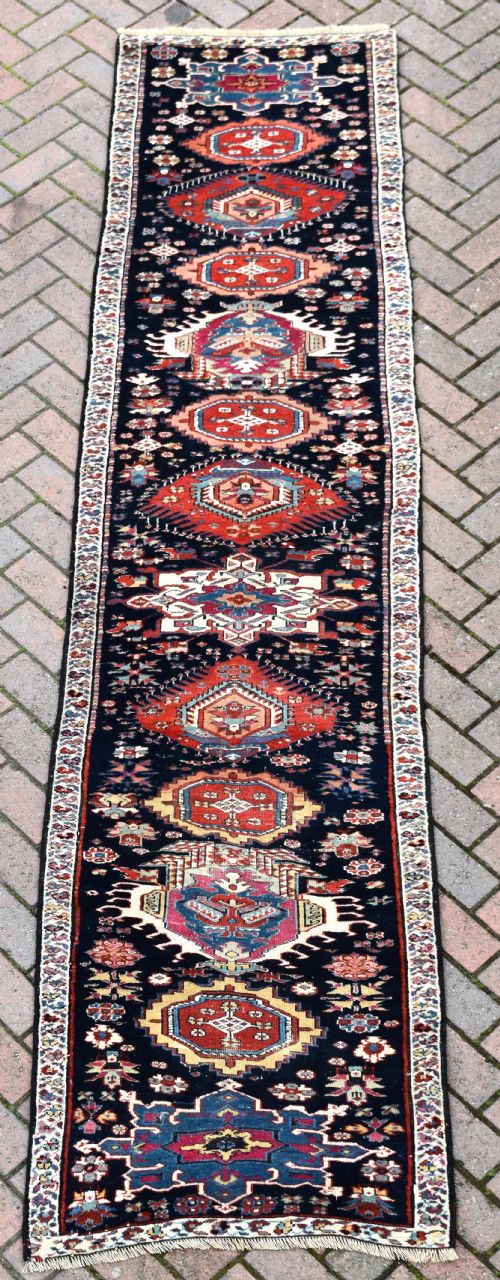
A heriz wool corridor rug is a long, narrow floor covering originating from North-West Persia, designed specifically to traverse hallways, passages and extended corridors. These runners appear across periods spanning the late nineteenth century and the early twentieth century, carrying traditional geometric designs and bold central medallions.
Buyers seeking this phrase encounter formats built for heavy foot traffic, with lengths stretching significantly beyond their width. The selections on this page concentrate heavily on antique Heriz production alongside related regional neighbours from the same geographical cluster.
The dominant forms include narrow runners and long carpet runners constructed from durable materials suited to domestic passages. These pieces combine robust village weaving traditions with grand decorative presence.
How they were made
These floor coverings rely on natural wool pile knotted firmly onto sturdy cotton foundations. The heavy wool supplies resilience against wear, while the cotton warp and weft threads maintain structural stability across extended lengths.
Weavers in North-West Persia utilised hand-spun yarns dyed with traditional pigments to create the characteristic geometric motifs and large-scale medallions. The knotting technique provides the dense, hard-wearing surface necessary for long-term placement in busy corridors.
Heriz Wool Corridor Rug Retail Price Guide 2026
Typical asking prices for heriz wool corridor rug among the pieces listed under this phrase on Sellingantiques today, from the lower quarter to the upper quarter. They describe what is for sale here now, not the wider market.
The listings span from eighteen eighty to nineteen twenty, uniting Persian Heriz, Karaja, Bakshaish, and Hastrud village weaving traditions in wool and cotton.
What varies in quality
The distinction between standard village production and finer examples rests in the crispness of the geometric drawing and the saturation of the wool. Tighter knot counts and more deliberate colour placement elevate certain pieces above simpler utility runners.
Proportions also dictate distinction, particularly in narrow formats where maintaining straight margins and balanced medallion placement requires exceptional skill from the weaver. The integrity of the cotton foundation and the uniform density of the wool pile complete the measure of quality.
Waring and Gillow
The Heriz Wool Corridor Rug Glossary
- Heriz
- A town and carpet-weaving region in North-West Persia known for durable rugs featuring bold geometric medallions and archaic motifs.
- Runner
- A long, narrow carpet format specifically proportioned for hallways, corridors and staircases.
- Medallion
- A large central ornamental design motif placed in the field of the rug, often geometric in Persian village weaving.
- Warp
- The vertical foundation threads running lengthwise through the rug, onto which the wool knots are tied.
- Weft
- The horizontal threads passed alternately over and under the warp threads to bind the rows of knots together.
Heriz Wool Corridor Rug: Frequently Asked Questions
Where should I place a heriz wool corridor rug?
These long runners find their natural home in hallways, corridors and entryways where their narrow proportions and sturdy construction handle frequent foot traffic.
They also work effectively in long galley kitchens or alongside large pieces of bedroom furniture.
How do I care for an antique wool runner?
Regular gentle vacuuming without a rotating brush roll keeps dust from settling into the wool pile. Professional cleaning by a specialist familiar with antique Persian textiles ensures the natural dyes remain protected.
Rotating the runner periodically balances wear across the length of the piece.
How can I tell a Heriz runner from a Karaja runner?
Heriz runners typically display large, architectural geometric medallions with bold corner spandrels across an elongated format. Karaja pieces often incorporate smaller, repeating geometric motifs or grouped village designs within similar narrow proportions.
Both originate from neighbouring districts in North-West Persia and share robust wool and cotton construction.
What periods do these corridor rugs come from?
The pieces available span from the late Victorian era through the early decades of the twentieth century. Production dates cluster around the years between eighteen eighty and nineteen twenty.
Each rug reflects the traditional weaving practices handed down through generations in North-West Persian workshops.