
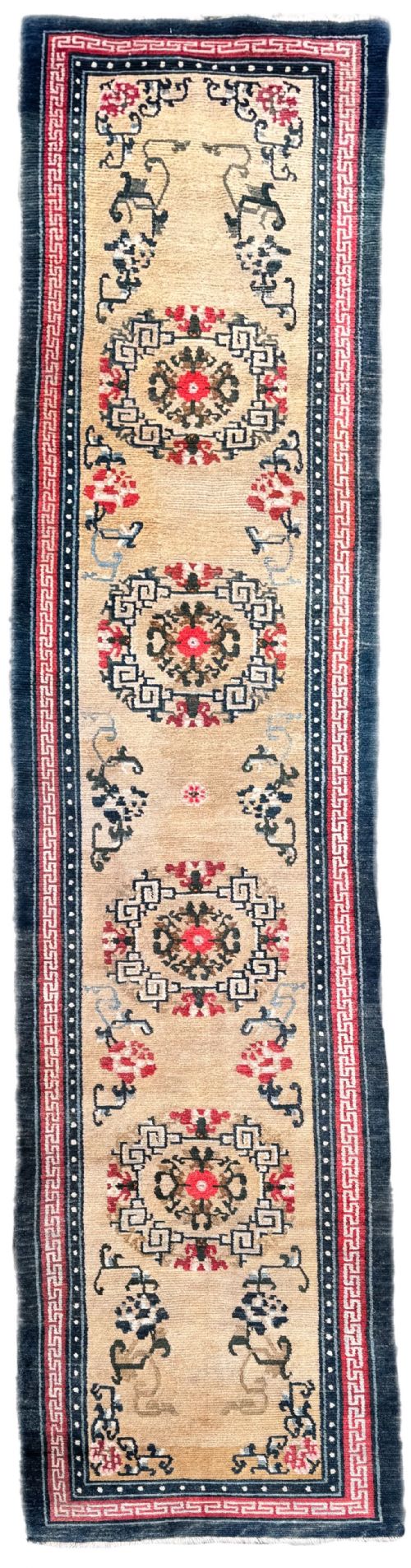

Wool Runner for Corridor
A wool runner for corridor provides a practical, decorative path through long spaces using traditional woven designs.
Wool Runner for Corridor
A wool runner for corridor brings historic character and warmth to narrow spaces through long, linear formats. These pieces originate from various weaving traditions including Persian tribal, Caucasian, and Anatolian workshops.
The selection on this page spans from the nineteenth century into the mid-twentieth century, featuring regional styles like Heriz, Kurdish, Ushak, and Hamadan. Buyers frequently encounter formats specifically tailored for hallways and landings, often measuring several metres in length.
Formats range from narrow strips to wider gallery carpets, utilising traditional proportions designed to fit domestic corridors. Each piece reflects the specific weaving customs of its geographic origin.
Materials and construction
These pieces are constructed primarily from wool pile combined with cotton foundations, utilising hand-knotted techniques developed over generations. The natural animal fibres provide resilience against heavy foot traffic in domestic environments.
Dyes derived from natural sources give the pile its distinct visual depth, ageing gracefully over decades of use. The foundation warps and wefts bind the structure together to maintain the linear rigidity required for long hallway formats.
The listings on this site span from the mid nineteenth century to the mid twentieth century, featuring Persian, Caucasian, and Anatolian traditions.
Distinctions in quality
Quality rests upon the fineness of the knotting and the precision of the geometric or floral design executed by the weaver. Denser pile construction ensures greater longevity under daily corridor use.
The sophistication of the natural dye palette and the integrity of the original borders also separate standard examples from finer collector pieces. Preserved proportions and balanced symmetry elevate certain regional types above simpler utilitarian weaves.
The Wool Runner for Corridor Glossary
- Runner
- A long, narrow carpet format designed specifically for corridors, hallways, and staircases. These pieces measure significantly longer than they are wide.
- Pile
- The upright yarn surface of a rug formed by individual knots tied to the foundation warp threads. This layer absorbs foot traffic and displays the woven pattern.
- Kelleh
- A large, extended format rug that sits between standard room sizes and corridor runners. These pieces offer substantial length for wider halls.
- Warp
- The vertical structural threads stretched tightly on the loom before knotting begins. Cotton or wool warps form the foundational skeleton of the textile.
- Weft
- The horizontal threads passed back and forth through the warp threads to secure each row of knots. This process locks the pile firmly in place.
Wool Runner for Corridor: Frequently Asked Questions
How do I measure a hallway?
Measure the clear floor space between skirting boards, leaving a small margin of exposed wood or tile around the perimeter.
Account for door clearances so that doors swing freely over the thickness of the wool pile without catching.
Are these suitable for busy halls?
Traditional wool pile construction naturally withstands high foot traffic while maintaining its structural integrity over decades of use.
Regular rotation distributes wear evenly across the length of the corridor.
How do I clean an antique runner?
Gentle surface cleaning and regular light vacuuming without a beater bar help remove embedded dirt from the wool fibres.
Professional specialist washing is recommended for deeper maintenance to protect natural dyes.
How do I identify regional designs?
Geometric motifs, specific medallion arrangements, and characteristic colour palettes point towards particular weaving regions such as Kurdistan or the Caucasus.
Border structures and knotting density further clarify the geographical origin of the piece.