





Herbert Royle Painting
Herbert Royle painting works capture early twentieth-century British impressionism through rural landscapes, river scenes, and winter farmyards.
Herbert Royle Painting
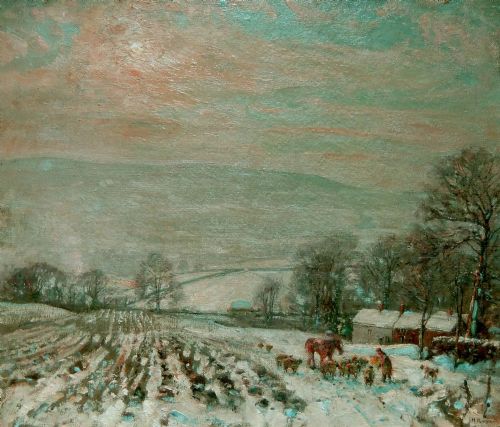
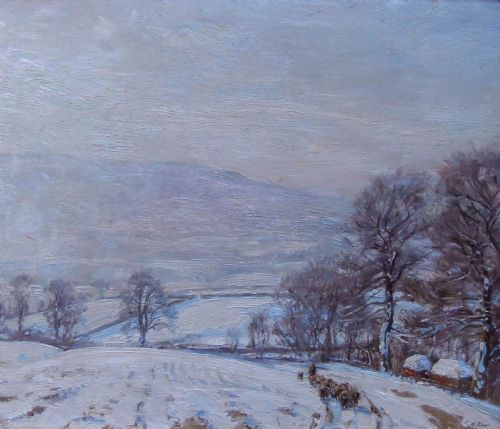
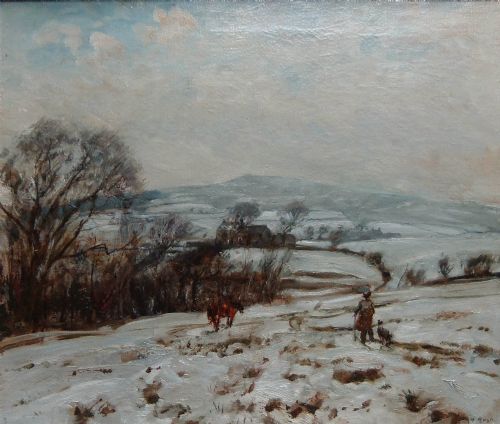
A herbert royle painting typically depicts pastoral scenes, agricultural labour, and northern landscapes rooted in Yorkshire and Wharfedale. These works span the decades from 1910 to 1930, capturing seasonal shifts from summer harvest times to snowy rural winter feeds.
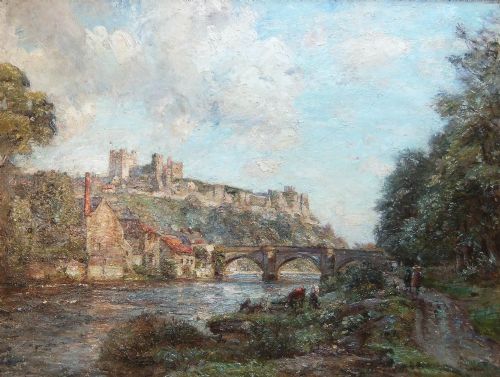
Collectors encounter diverse regional subjects on this page, ranging from Wharfedale farmsteads and Bolton Abbey to Welsh coastal views and Scottish waterways. The most frequent compositions present rural agricultural life, including haymaking, timber hauling, and livestock in pastoral settings.
The artistic style aligns closely with British Impressionism, recording natural light and atmospheric conditions across open countryside and river valleys. Works range from intimate woodland edge studies to large landscape oil paintings on canvas and wood.
How they were made
These pieces are executed primarily in oil paint applied to prepared canvas or wood panels. The handling of the medium relies upon visible brushwork and layered pigment to build texture within the natural scenery.
The technical approach employs impressionistic methods to record shifting daylight across open air, capturing specific moments in places such as Nesfield, Richmond, and the Dee Estuary.
Herbert Royle Painting Retail Price Guide 2026
Typical asking prices for herbert royle painting among the pieces listed under this phrase on Sellingantiques today, from the lower quarter to the upper quarter. They describe what is for sale here now, not the wider market.
Materials recorded across these listings consist entirely of oil paint applied to canvas or wood surfaces.
What varies in quality
Quality differences emerge through the strength of composition and the handling of atmospheric light within the landscape. Works that successfully balance detailed rural activity with broad impressionistic skies command greater visual presence.
The scale of the canvas and the complexity of the subject matter influence the overall impact of the piece. Large landscape examples carrying specific regional topographical interest often display more developed painterly execution.
Herbert Royle
The Herbert Royle Painting Glossary
- Oil paint
- A slow-drying paint made by combining pigments with a drying oil, typically linseed. This medium allows artists to blend colours smoothly or build up thick impasto textures.
- Canvas
- A heavy woven fabric used as a surface for oil paintings. It is stretched tightly across a wooden frame before application.
- British Impressionism
- An art movement reflecting French impressionist techniques adapted by British artists during the late nineteenth and early twentieth centuries. It focuses on loose brushwork and natural outdoor lighting.
- Laithe
- A northern regional term for a barn or farm building, frequently appearing in titles describing rural Yorkshire homesteads.
Herbert Royle Painting: Frequently Asked Questions
What subjects appear most often?
Rural scenes from Wharfedale, agricultural labour like haymaking, and winter farmsteads dominate the recorded titles. River views and northern landscapes also form a substantial part of the output.
Agricultural subjects include stacking hay, carting timber, and feeding livestock during colder months.
Which periods are represented?
The available pieces originate primarily from the early twentieth century, specifically spanning the 1910s, 1920s, and 1930s. These decades encompass the core working years of the artist.
Most dated works on record cluster around the interwar period and the years preceding the First World War.
Where are the locations depicted?
Yorkshire locations, particularly Wharfedale, Bolton Abbey, and Nesfield, provide the inspiration for the vast majority of compositions. Other recorded sites include North Yorkshire, Cheshire, Wales, and Scotland.
Specific regional landmarks such as the Dee Estuary and Kyle of Lochalsh appear alongside local Yorkshire rivers like the Wharfe.
How should these be displayed?
These oil paintings suit traditional domestic interiors where adequate wall space allows for proper viewing distances, particularly for larger landscape formats. Direct sunlight should be avoided to protect the pigment and canvas.
Matching the frame style to the early twentieth-century period helps maintain the historical context of the artwork.