
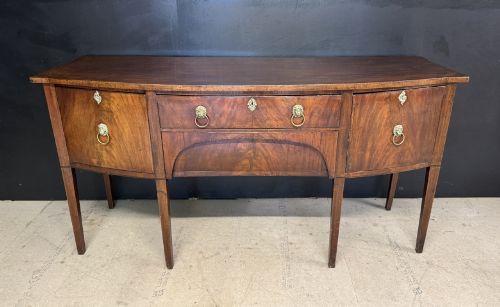
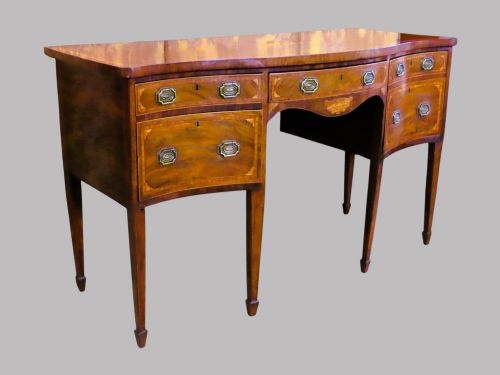
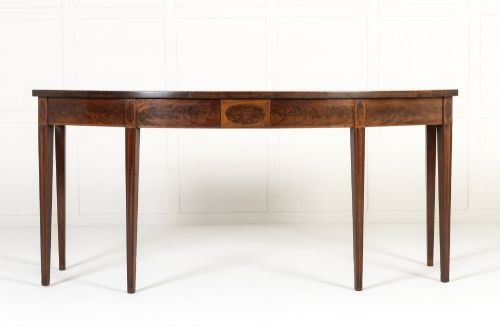
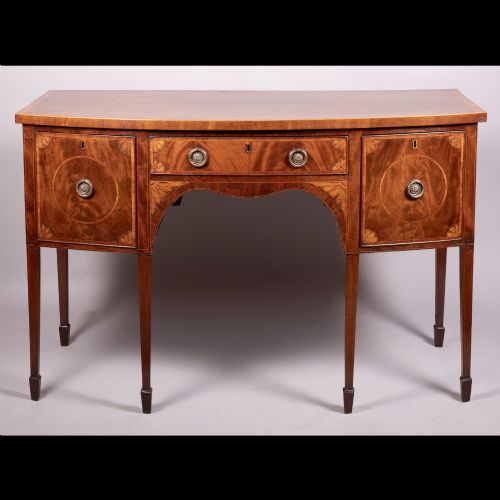

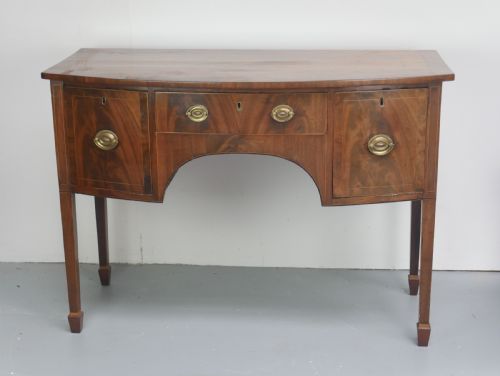
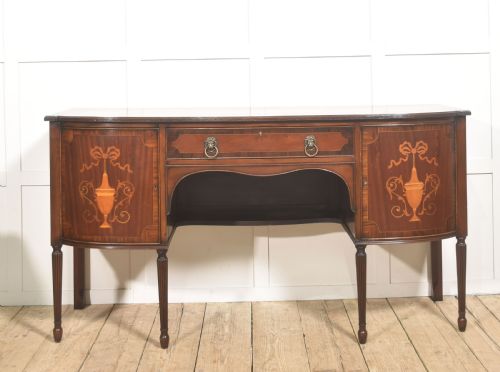


Hepplewhite Sideboard Table
A hepplewhite sideboard table brings elegance to a dining room, offering refined mahogany construction and graceful serpentine or bow fronts designed for formal service.
Hepplewhite Sideboard Table
A hepplewhite sideboard table combines utility with the delicate neoclassical aesthetics popular during the Georgian period and subsequent revival eras. Buyers encounter pieces ranging from authentic late eighteenth century examples to later nineteenth and twentieth century interpretations.
The forms span serpentine fronts, bow fronts, and straight serving tables, often featuring six legs for structural support. These pieces served primarily for the presentation of food and silver during formal dining.
Most entries on this page originate from the Georgian period or reflect George III and Hepplewhite revival styles. Makers utilise traditional proportions, creating functional furniture that anchors a dining space.
Materials and Construction Techniques
Makers constructed these tables predominantly from solid mahogany and flame mahogany veneers, prized for their rich grain and depth. Secondary woods provided structural stability to the carcase and drawer linings.
Inlay work defined the aesthetic, employing satinwood, boxwood, and general wood inlay to create contrasting borders and decorative motifs. Brass hardware, including drop handles and escutcheons, completed the functional elements of the drawers.
Joinery relied on traditional hand-cut dovetails for drawers and mortise and tenon joints for the frame. Surface finishes enhanced the natural colour of the timber through polishing and waxing.
One persistent maker built such convincing revival pieces that even the timber grain seems to whisper of eighteen hundred.
Distinguishing Quality Across the Range
Quality rests heavily on the crispness of the serpentine or bow front curvature and the precision of the boxwood and satinwood inlay. Superior examples display balanced proportions and careful timber selection, such as matched flame mahogany veneers across the drawer fronts.
The integrity of the original brass hardware and the crispness of edge banding indicate higher craftsmanship. Later revival pieces vary depending on whether the maker adhered strictly to eighteenth century proportions or introduced heavier framing.
Gillow
The Hepplewhite Sideboard Table Glossary
- Serpentine front
- A furniture front characterised by a central concave curve flanked by two convex curves, or vice versa, creating a flowing, undulating line. This shape demands high skill from the cabinetmaker.
- Bow front
- A convex, outwardly curving front profile commonly found on Georgian sideboards and serving tables. It softens the rectangular appearance of the furniture.
- Inlay
- A technique where pieces of contrasting wood, such as boxwood or satinwood, are inserted into recesses in the primary timber to form decorative patterns. It defines the neoclassical style.
- Flame mahogany
- A veneer cut from the fork of a mahogany tree where the branches meet the trunk, producing a distinctive flame-like or feather pattern. Cabinetmakers reserved this timber for principal visual surfaces.
- Serving table
- An open-frame table used for holding dishes before service, preceding the fully enclosed sideboard with integrated drawers and cupboards.
Hepplewhite Sideboard Table: Frequently Asked Questions
How do I spot a true Georgian piece?
Examine the timber construction inside the drawers, looking for hand-cut dovetails and traditional secondary woods that indicate eighteenth or early nineteenth century work. The presence of period brass hardware and authentic timber ageing further supports the date.
Compare the proportions and inlay details against documented Hepplewhite designs. Revival pieces from the twentieth century often reveal slight differences in weight and secondary timber selection.
Where should I place a sideboard table?
These pieces suit dining rooms, hallways, or living spaces where surface area for display and storage is beneficial. Their shallow depth, particularly on bow front and narrow variants, allows them to sit comfortably against walls without obstructing walkways.
Ensure the surrounding furniture complements the mahogany tones and neoclassical style. Keeping them away from direct heat sources protects the veneer and polish.
How do I care for antique mahogany?
Maintain the finish by dusting regularly with a soft, dry cloth and applying a quality beeswax periodically to nourish the wood. Avoid commercial silicone sprays that can damage the antique polish over time.
Protect the surface from moisture and direct sunlight to prevent fading and ring marks. Proper humidity control in the room prevents the mahogany and its delicate inlay from warping.