
Hepplewhite Mahogany Armchairs
Hepplewhite mahogany armchairs combine classic Georgian elegance with graceful shield or oval backs, offering both refined comfort and distinct historical presence for the home.
Hepplewhite Mahogany Armchairs
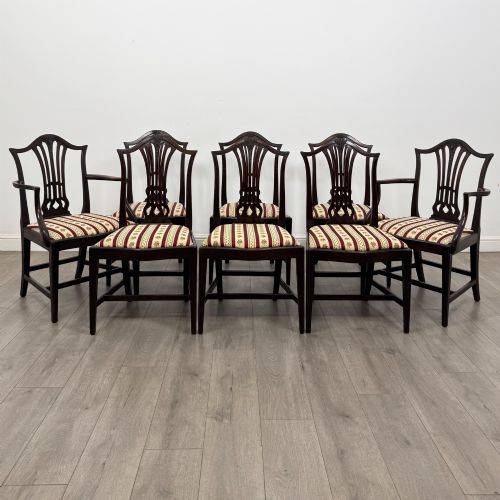
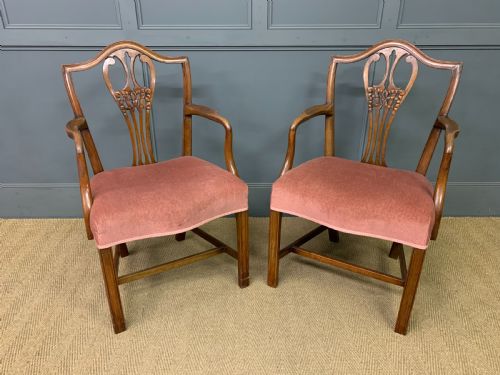
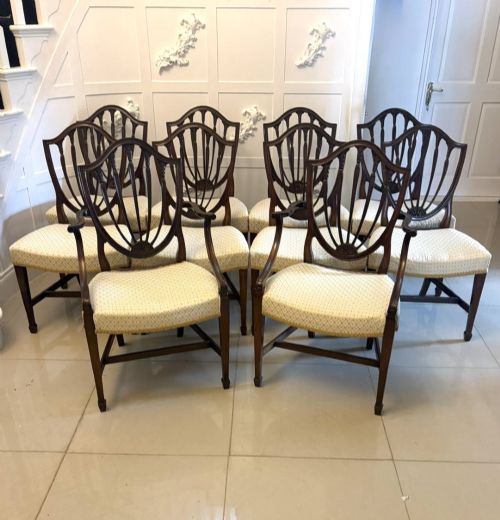
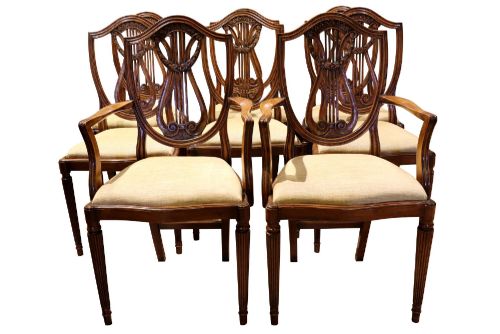
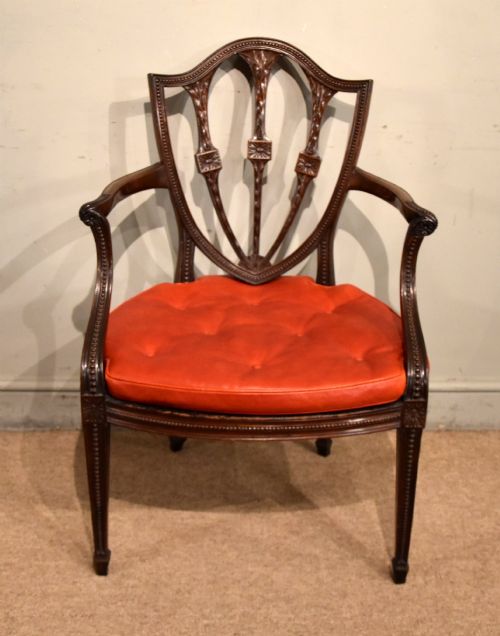
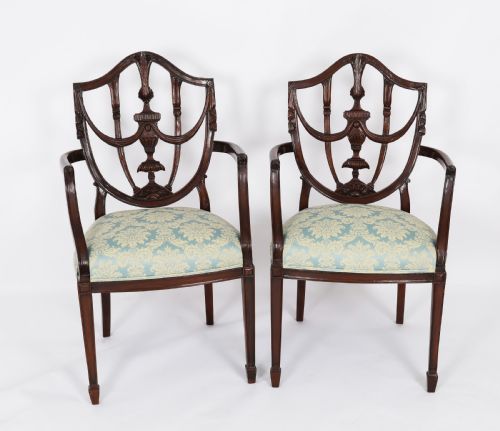
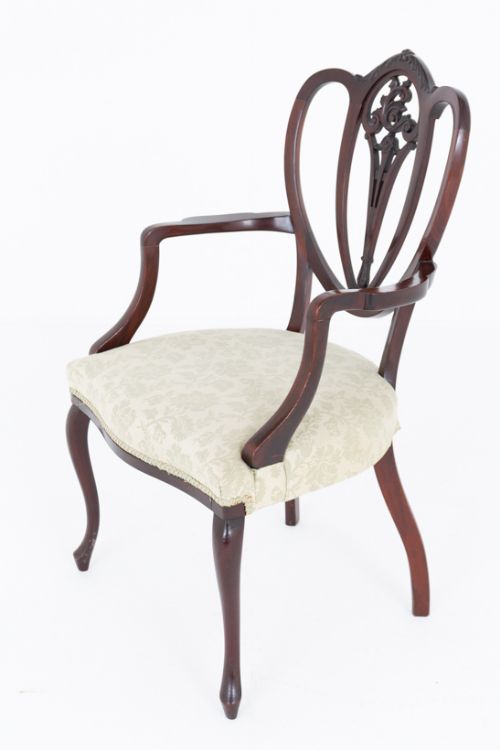
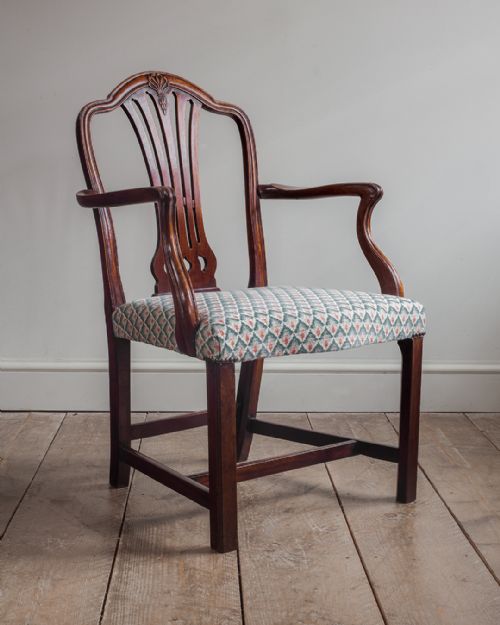
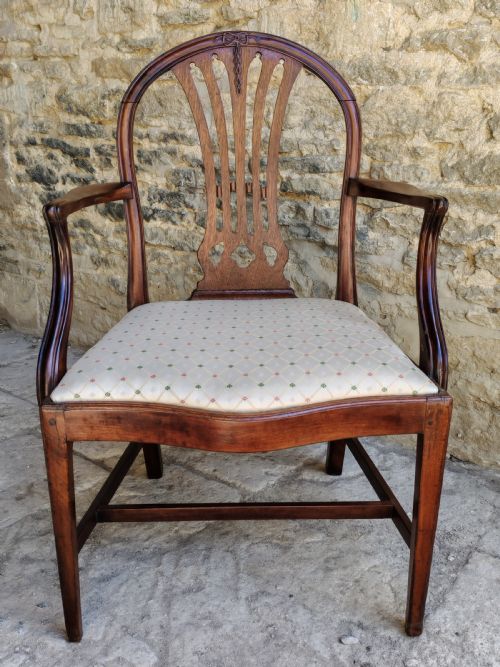
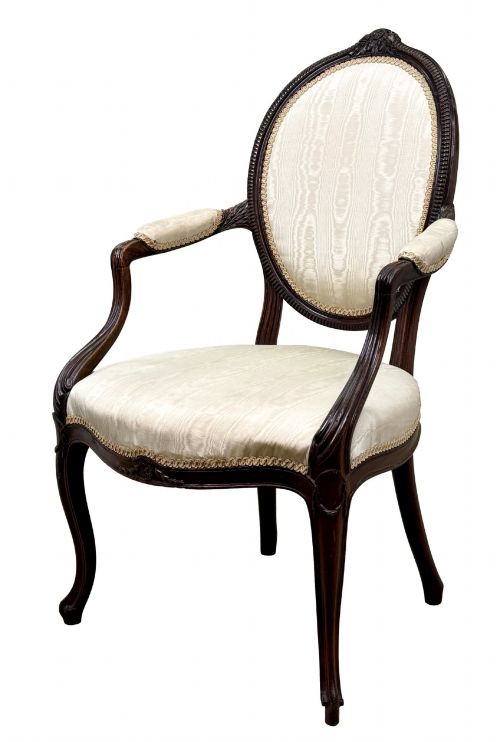
When you search for hepplewhite mahogany armchairs, you encounter seating originating from the eighteenth century alongside revival pieces made during the nineteenth and twentieth centuries. The form typically centres on a distinct shield or wheel back design, accompanied by open arms and mahogany framing.
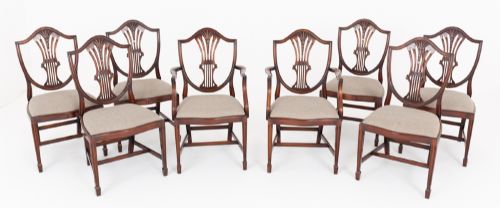
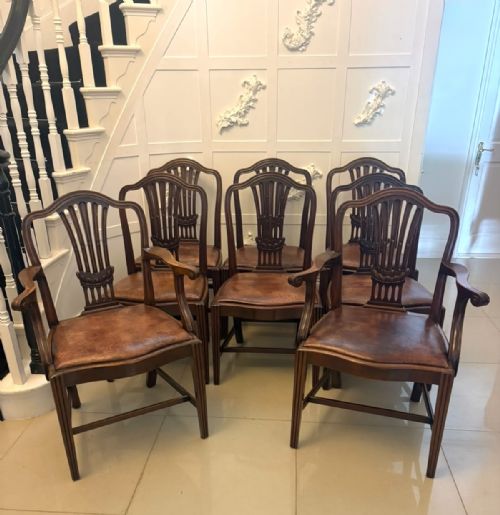
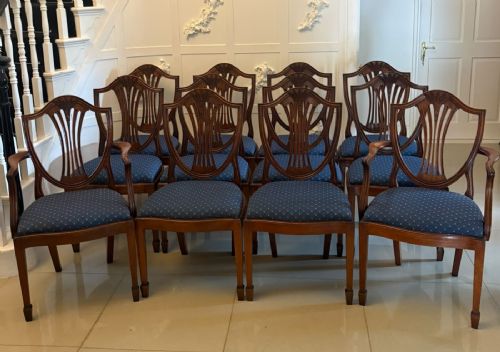
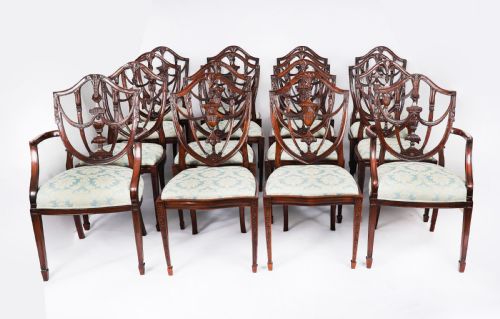
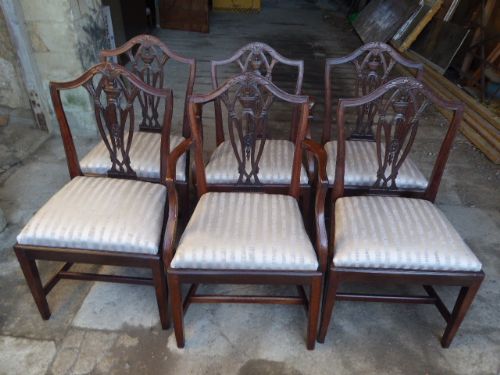
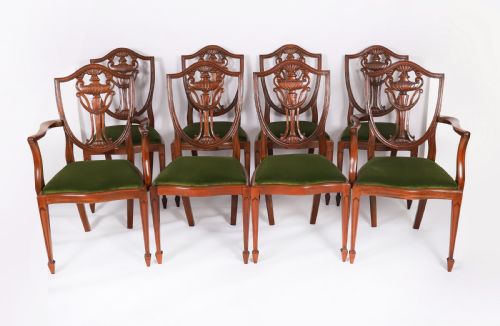
The pieces on this page appear as individual armchairs, pairs, or carvers belonging to larger dining sets. You will find both authentic eighteenth-century examples from the Georgian period and later revival iterations spanning the Victorian and Edwardian eras.
How They Were Made
The primary structural material is mahogany, chosen for its strength and rich grain, often shaped into carved shield backs and delicate legs. Workshops applied various upholstery textiles including leather, velvet, and fabric to pad the seats.
Joinery techniques included mortise and tenon framing to support the open arms and carved back splats. Brass elements occasionally appeared in castors or decorative details on specific chair suites.
The inventory encompasses periods ranging from Georgian origin through Victorian and Edwardian revival movements.
What Varies in Quality
Quality depends upon the crispness of the wood carving and the proportions of the shield back. Master carvers produced deeply articulated drapery, wheat ears, or feather motifs within the back splat, whereas lesser versions remain plain.
The choice of timber grain and the integrity of the original framing joints separate standard production pieces from finer examples. Original upholstery treatments and leather additions also influence the distinction between standard room chairs and high-status carvers.
Maple and Co
The Hepplewhite Mahogany Armchairs Glossary
- Shield back
- A chair back shaped in the outline of a heraldic shield, characteristic of late eighteenth-century design. This silhouette forms the primary visual identifier for these seats.
- Carver
- An armchair designed with open arms, traditionally placed at the heads of a dining table. These match a larger set of smaller side chairs.
- Revival
- A later period of design that reinterprets historical styles, such as nineteenth-century interpretations of eighteenth-century forms. These pieces copy earlier aesthetics using the manufacturing methods of their own time.
- Elbow chair
- An alternative historical term for an armchair, referencing the supportive rests for the arms. The phrase appears frequently in nineteenth-century inventories.
- Splat
- The vertical central strip of wood within a chair back that connects the top rail to the seat. Carvers shaped this element into urns, lyres, or openwork shields.
Hepplewhite Mahogany Armchairs: Frequently Asked Questions
How do I date these armchairs?
Dating relies on examining the timber species, construction joinery, and the style of the carving on the shield back. Eighteenth-century models display hand-cut joinery and period patination, while revival pieces from the Victorian and Edwardian eras exhibit nineteenth-century manufacturing traits.
Comparing the stretcher construction and secondary woods underneath the seat helps confirm the period. Revival makers often copied Georgian proportions precisely, making surface wear and tool marks vital clues.
What is a carver chair?
A carver is an armchair designed with wooden elbow supports, historically positioned at the head and foot of a dining table. They accompanied sets of matching side chairs without arms.
In dining suites, the carvers shared identical shield back motifs and leg styles with the smaller diners. They provided a more commanding presence while maintaining uniformity around the table.
Are these chairs comfortable for daily use?
These chairs provide upright seating supported by padded upholstered drop-in or fixed seats. The open arm design offers adequate space, though the vertical shield backs encourage an upright posture.
Modern placement often involves pairing them with a desk or using them as accent seating in a living space. Their sturdy mahogany frames handle regular daily seating when maintained properly.
How do I distinguish original from revival pieces?
Original eighteenth-century pieces display period tool marks, timber shrinkage, and hand-carved detailing consistent with Georgian cabinet making. Revival iterations from the Victorian and Edwardian eras utilise nineteenth-century machining techniques and standardised hardware.
Checking the underside of the seat frame reveals the age of the webbing and the type of screws utilised. These structural indicators clarify whether a piece belongs to the eighteenth century or later revival periods.