

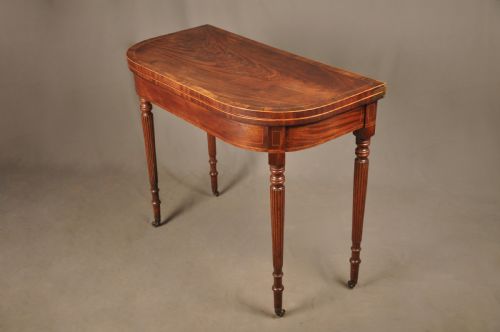
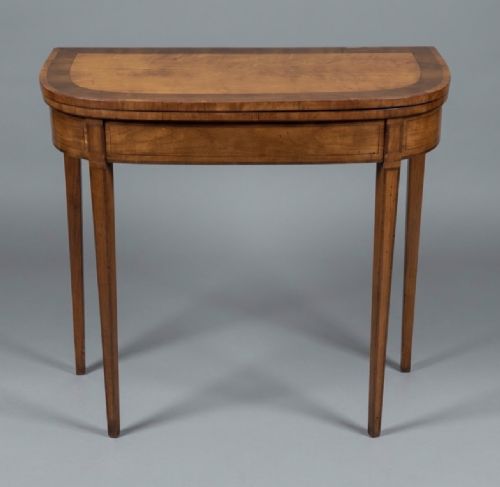
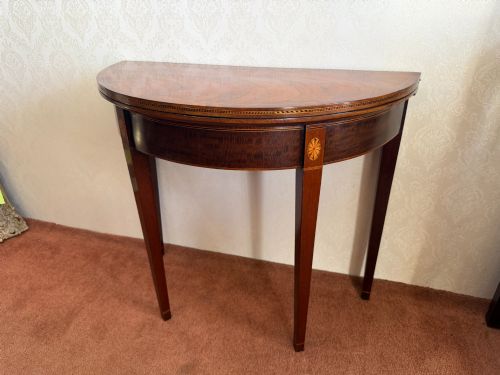
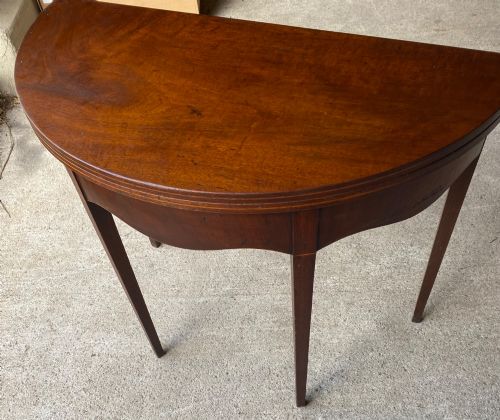
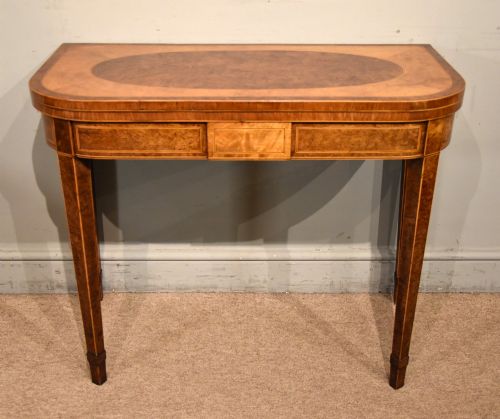
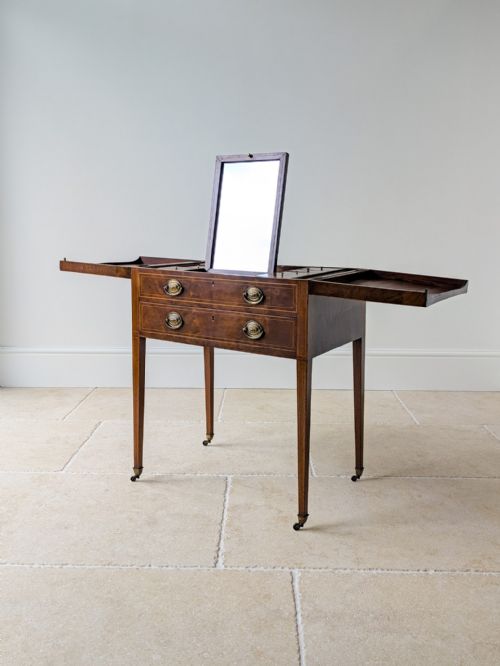
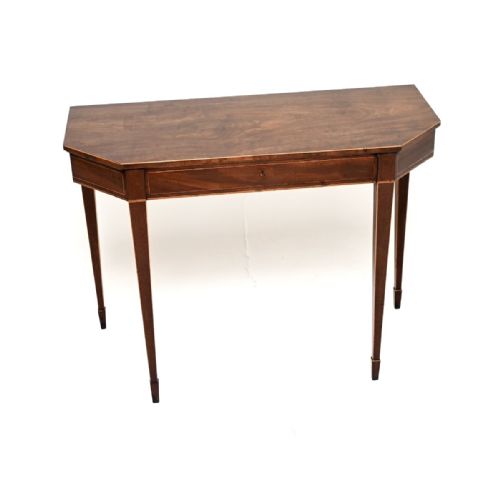
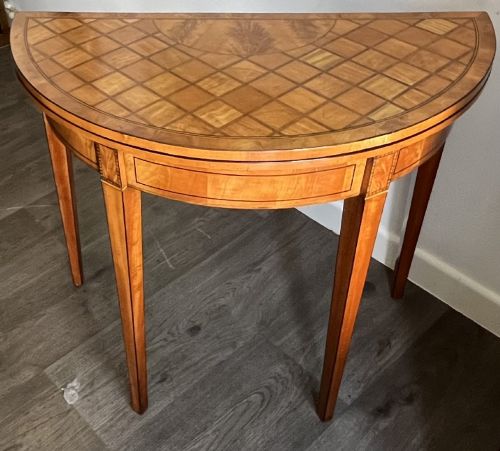
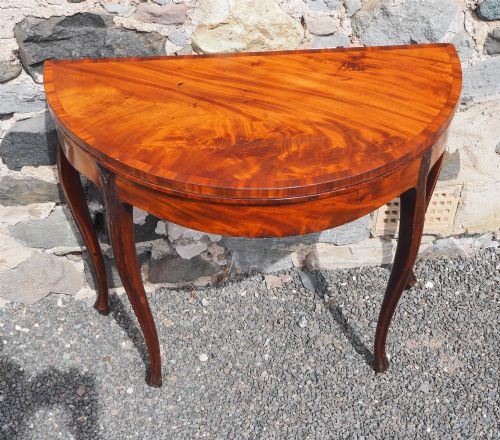
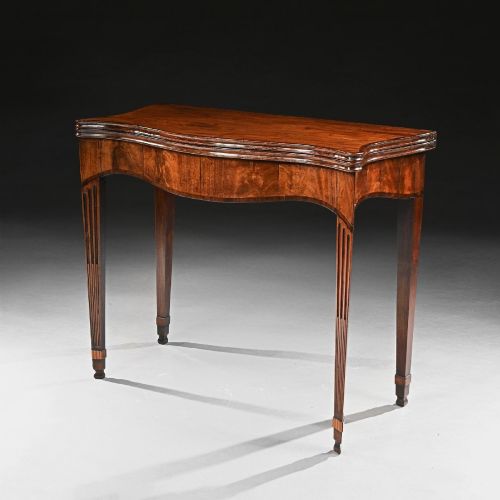
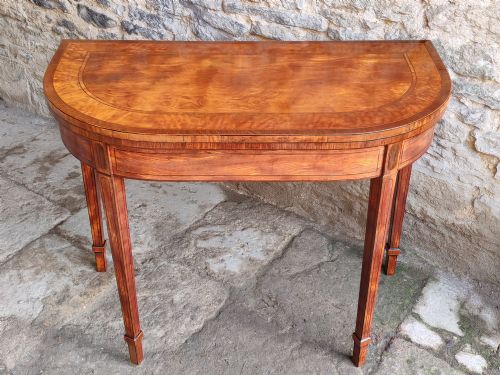
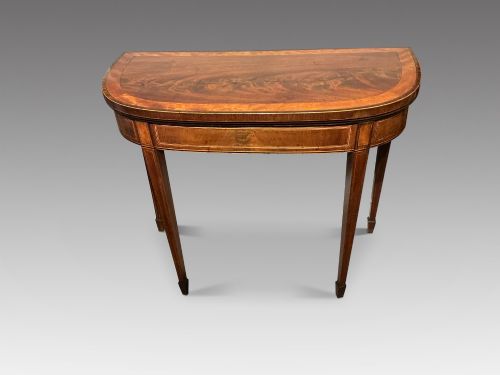

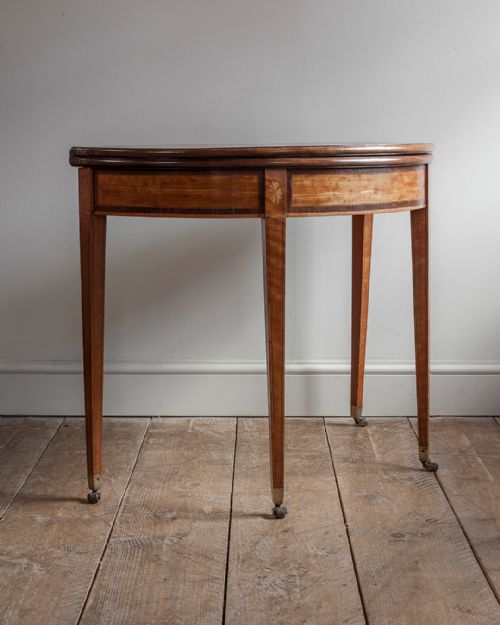


Hepplewhite Folding Table
A hepplewhite folding table offers an elegant surface that swings open to reveal a generous baize-lined top for card games and tea.
Hepplewhite Folding Table
A hepplewhite folding table typically presents as a demi-lune, half moon, or D-shaped console when closed, transforming into a full circular or serpentine playing surface when the hinged top is unfolded. These versatile pieces served Georgian and later households as tea tables, side tables, and dedicated card tables for evening entertainment.
The examples gathered here span from the 18th century and the George III period through to later revival interpretations in the Edwardian era. Alongside genuine period items in mahogany and satinwood, buyers encounter Hepplewhite revival pieces that echo the lightness and refined proportions characteristic of the neoclassical style.
Most items on this page function primarily as card tables and tea tables, utilising folding or swivel mechanisms to support the secondary leaf. Their domestic utility required clever engineering within a slender frame, relying on tapering legs and subtle geometric shapes to maintain stability.
Materials and Construction Methods
Cabinetmakers constructed these tables using solid timbers and decorative veneers, selecting mahogany as the primary structural wood alongside exotic accents like satinwood, rosewood, and burr yew. Surfaces often display contrasting boxwood inlay and delicate crossbanding that define the edge of the folding top and outline the aprons.
The folding mechanism depends on hinged leaves supported by swing-out rear legs or pivoting frames designed to bear weight securely when open. Joinery involves precise tenons and dowels, while brass fittings occasionally secure internal pivots or assist the operation of the folding leaves.
Hepplewhite Folding Table Retail Price Guide 2026
Typical asking prices for hepplewhite folding table among the pieces listed under this phrase on Sellingantiques today, from the lower quarter to the upper quarter. They describe what is for sale here now, not the wider market.
Listings feature mahogany, satinwood, and rosewood across Georgian and Edwardian periods.
Distinctions in Quality and Execution
The upper tier of these tables is distinguished by the choice of cabinet timbers and the intricacy of the inlay, such as finely figured satinwood panels or hand-painted neoclassical motifs on the frieze. Superior examples maintain crisp lines in their serpentine or demi-lune shaping without warping across the folding joint.
Construction fidelity separates standard workshop pieces from master cabinet work, particularly in the smoothness of the hinge action and the stability of the legs when extended. Good patination on the mahogany surface, developed through centuries of careful polishing, further elevates the standing of an individual table.
The Hepplewhite Folding Table Glossary
- Demi-lune
- Half-moon shape. This semicircular design allows the closed table to sit flush against a wall before opening into a full circle for use.
- Crossbanding
- A border of veneer. Strips are laid with the grain running perpendicular to the main panel to create a decorative framing effect.
- Serpentine
- Wavy contour. The curved edge gently undulates outward and inward, demanding high skill from the cabinetmaker.
- Baize
- Woollen felt fabric. This material traditionally lines the interior playing surface of card tables to protect counters and quiet the fall of dice.
- Patination
- Surface sheen developed over time. Years of handling and waxing impart a deep lustre to the timber.
Hepplewhite Folding Table: Frequently Asked Questions
What rooms suit a demi-lune table?
Their shallow profile makes them ideal for hallways, narrow landings, or living room perimeters where floor space is limited.
When guests arrive, the table moves easily to the centre of the room for tea or games.
How do you distinguish original 18th-century tables from revivals?
Examine the secondary woods inside the frame, hand-cut dovetails, and the wear patterns on the pivot hinges and feet.
Edwardian revival pieces often use more uniform machine-sawn timbers and lighter internal construction.
Can these tables handle daily use?
Their original purpose involved active card playing and tea service, meaning they are built to withstand standard domestic weight when properly supported.
Use coasters and avoid placing excessive loads on the unsupported outer edge of the folded leaf.