
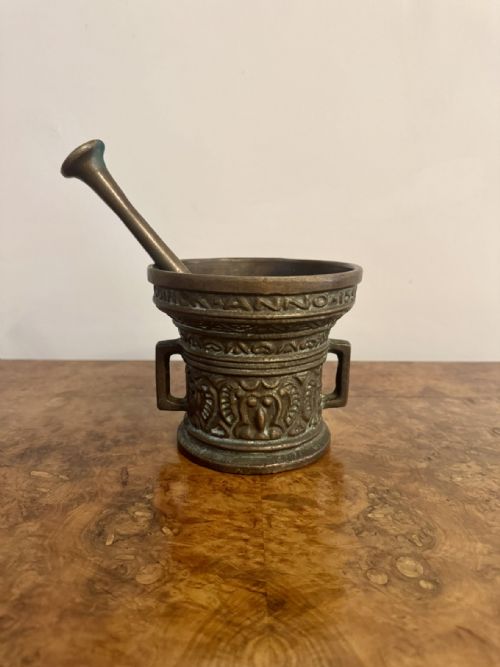
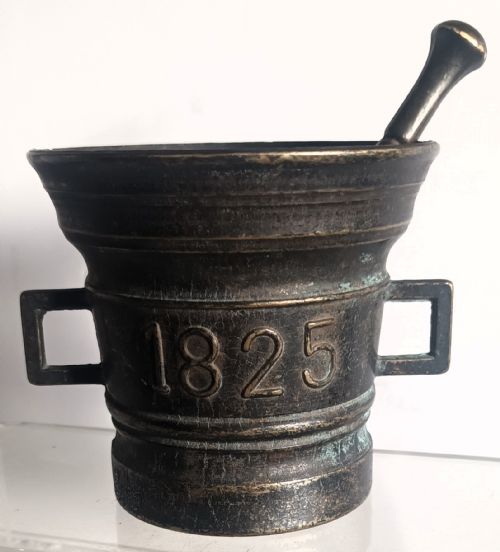
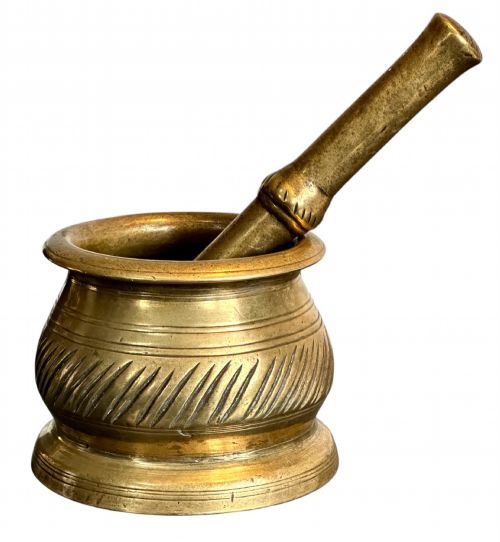
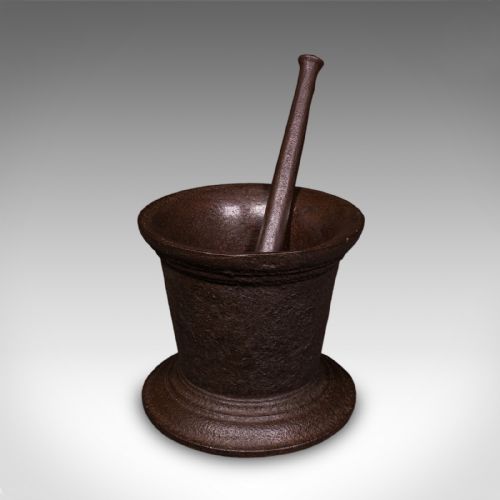


Heavy Metal Pestle Mortar
Heavy metal pestle mortar sets are utilitarian kitchen and apothecary implements cast in bronze or brass that bring centuries of functional craft to modern spaces.
Heavy Metal Pestle Mortar
When you search for a heavy metal pestle mortar, you are looking at resilient kitchen and apothecary grinders designed to crush dry ingredients or botanical remedies. The examples gathered here span from the seventeenth century through the Victorian era, reflecting centuries of domestic and professional preparation.
You are most likely to meet solid bronze and brass vessels originating from English workshops, frequently associated with apothecaries, chemists, and dye makers. These surviving pieces range from simple utilitarian bowls to larger industrial formats like dye maker first stage grinders.
How They Were Made
These vessels were formed primarily through traditional metal casting using copper alloys such as bronze, brass, and bell metal, alongside durable cast iron. Molten metal was poured into moulds to create thick, rigid walls capable of withstanding intense downward pressure from a matching hand-held pestle.
Surface detailing on these pieces often includes turned ridges, ribbed mouldings, and decorative cast motifs inspired by Gothic Revival and Renaissance Revival styles. The resulting texture comes straight from the foundry process rather than subsequent surface plating.
The listings span from the seventeenth century through the Victorian era, utilising bronze, brass, and iron materials.
What Varies in Quality
The distinction between ordinary utility items and superior examples lies in the heft, wall thickness, and integrity of the cast metal. Heavier vessels with well-balanced proportions and crisp foundry details command greater presence.
The presence of a matching period pestle significantly elevates a set, as many surviving mortars have lost their original grinders over centuries of use. Furthermore, intentional decorative programmes like heraldic motifs or crisp ribbed bands elevate standard kitchenware into finer collector pieces.
The Heavy Metal Pestle Mortar Glossary
- Bell Metal
- An alloy of copper and tin traditionally used for casting bells, valued here for its density and resonant tone in heavy mortars.
- Apothecary
- A historical practitioner who prepared and sold medicines, often utilising sturdy metal mortars to grind medicinal roots and herbs.
- Cast Bronze
- A strong copper alloy shaped by pouring liquid metal into a mould, creating the thick walls typical of seventeenth and eighteenth century kitchen grinders.
- Jardiniere
- An ornamental pot for holding plants, a decorative secondary use sometimes ascribed to large antique mortars found in country houses.
- Renaissance Revival
- A nineteenth century design movement that revived classical ornamentation, visible on some mortars through sculpted bands and architectural moulding.
Heavy Metal Pestle Mortar: Frequently Asked Questions
What were heavy metal pestle mortars used for?
These implements served primarily to grind, crush, and pulverise dry herbs, spices, and chemical ingredients for culinary or medical use. Apothecaries and domestic cooks relied on their weight to break down stubborn substances.
The thick metal walls ensured that ingredients could not escape the bowl during vigorous pestle action, making them essential preparation tools before the advent of mechanical grinders.
How do I date an old brass mortar?
Dating relies heavily on observing the form, rim profile, and decorative vocabulary, such as seventeenth century ribs or Victorian apothecary stamps. Earlier pieces tend to show heavier casting marks and simpler, robust proportions.
Matching the accompanying pestle style and checking for regional English casting traits also help narrow down the production era to specific centuries.
Are bronze and brass mortars safe for food?
Most antique metal mortars are collected as historical decorative objects or display pieces rather than for modern culinary food preparation. Over centuries, the metal alloys may have accumulated residues or patination unsuited for contemporary hygiene standards.
If utilised today, they are best suited for dry grinding spices where the interior can be thoroughly inspected and cleaned beforehand.
Why do some mortars have unusual handles?
Certain seventeenth and eighteenth century mortars feature cast-in loop handles or lug grips to help steady the vessel during heavy grinding tasks. These additions indicate professional or heavy-duty domestic deployment.
Such structural variations distinguish standard kitchen bowls from specialised apothecary aids and large industrial dye maker vessels.