
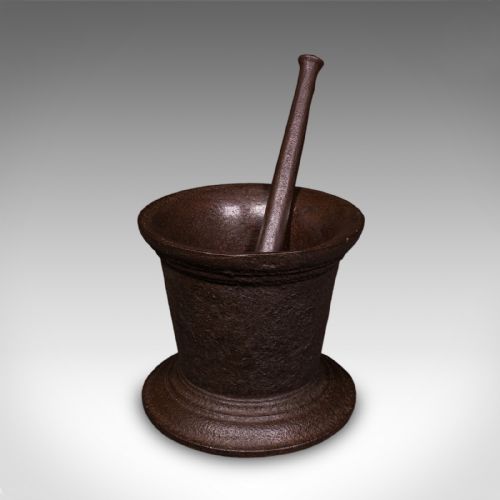


Heavy Metal Mortar
A heavy metal mortar is a substantial kitchen, apothecary or laboratory vessel designed for crushing and grinding ingredients.
Heavy Metal Mortar
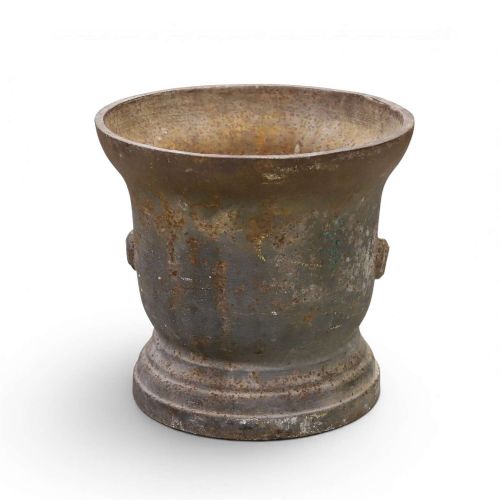
A heavy metal mortar serves as a utilitarian vessel for grinding kitchen ingredients, apothecary remedies or dye maker materials. When searching for a heavy metal mortar, buyers encounter robust pieces designed to withstand significant downward pressure during use.
The selections available range widely in scale and period, from small apothecary grinders to large dye maker examples and substantial kitchen vessels. Most pieces on this page originate from the 17th century through to the Victorian era.
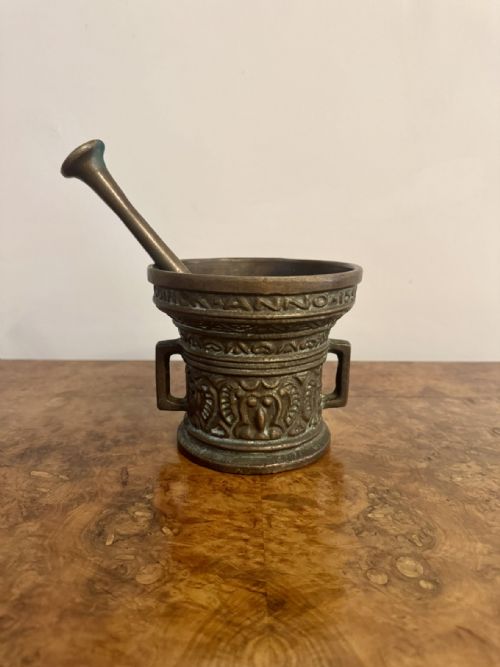
Common forms include traditional flared vessels alongside matched pairs, often accompanied by their original pestles. English and French origins dominate the pieces recorded in the listings.
Distinctions in quality and execution
Quality in these vessels rests upon the thickness of the metal walls and the integrity of the casting. Superior examples display clean casting lines, well-defined decorative details and substantial weight that ensures stability during use.
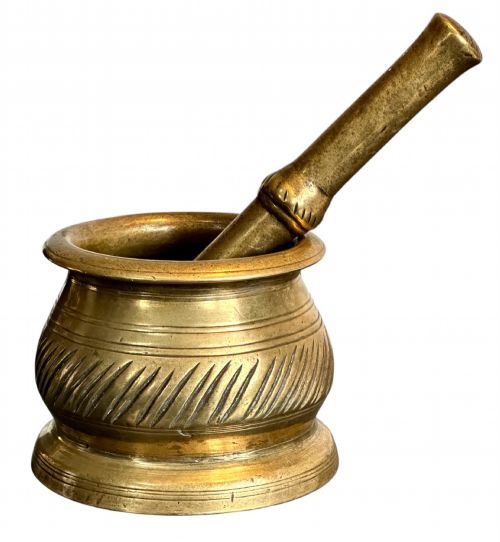
The presence of a matching original pestle significantly elevates a piece, particularly when the pestle exhibits the same metal composition and wear characteristics as the mortar. Surface patination, ranging from aged bronze tones to dark iron finishes, reflects the historic handling and environment of each individual vessel.
Listings span from the 17th century through the Victorian era, utilising bronze, brass, bell metal and cast iron.
The Heavy Metal Mortar Glossary
- Mortar
- A heavy bowl-shaped vessel used with a pestle for grinding or crushing materials. The thick walls absorb the force applied during preparation.
- Pestle
- A heavy, club-shaped tool used to grind and mix substances inside a mortar. It is shaped to fit the interior contour of the bowl.
- Bell metal
- An alloy of copper and tin traditionally used for casting bells, prized for its strength and sonorous qualities. This dense metal appears frequently in early mortar construction.
- Apothecary
- A historical practitioner who prepared and sold medicines and drugs. Mortars served as essential tools in their trade for compounding powders and mixtures.
Heavy Metal Mortar: Frequently Asked Questions
What were heavy metal mortars used for?
These vessels were utilised in kitchens, apothecary shops and dye works to grind, crush and mix raw ingredients into fine powders or pastes. Their thick metal walls provided the necessary resistance for breaking down tough substances.
Over the centuries, chemists, cooks and artisans relied upon them daily for compounding medicines, preparing culinary spices and processing colour pigments for textiles.
How do I date an antique mortar?
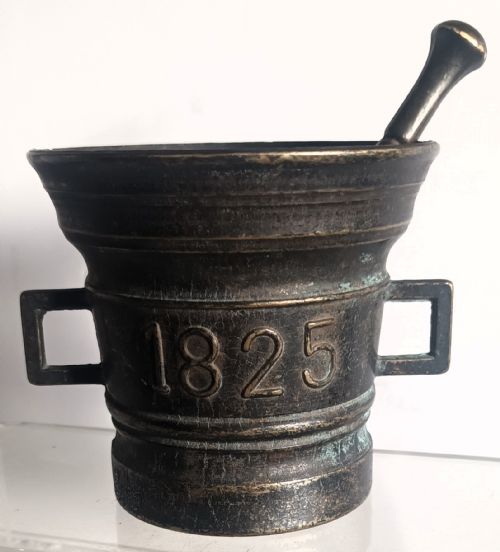
Dating relies heavily on the style of the rim, base profiles, and any cast decorative bands or handles. Earlier 17th-century examples often feature simpler, heavier proportions with distinct Gothic or Renaissance Revival influences.
Later Victorian and 19th-century pieces tend to show cleaner turned surfaces, standardised apothecary markings, or brighter brass finishes compared to older bronze and bell metal variants.
Are pestles always original to the mortar?
Pestles frequently become separated from their mortars over centuries of use and relocation. Finding a matched pair where the wear and metal composition correspond exactly is a notable advantage.
Many surviving listings present assembled duos or pieces where the pestle has been paired later based on size and proportion rather than original manufacture.
How do I clean an antique metal mortar?
Maintenance typically requires only gentle dusting or wiping with a soft, dry cloth to preserve the historic patination. Aggressive polishing or chemical cleaners can strip away centuries of accumulated surface character and should be avoided.
Allowing the natural metal tones to remain untouched maintains the visual integrity and historical honesty of the piece.