



Heavy Iron Hearth Dogs
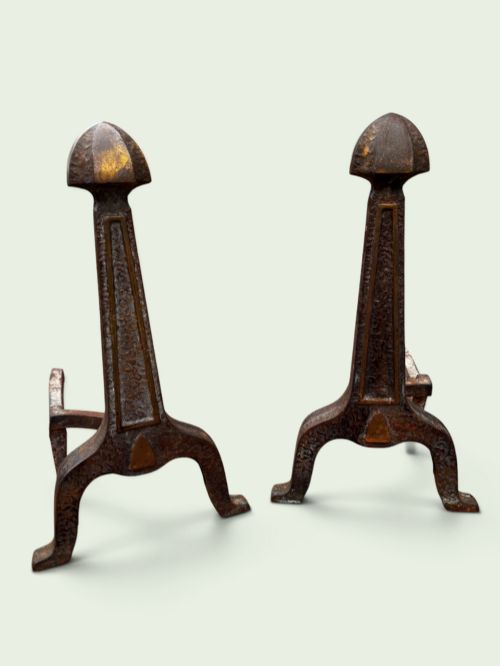
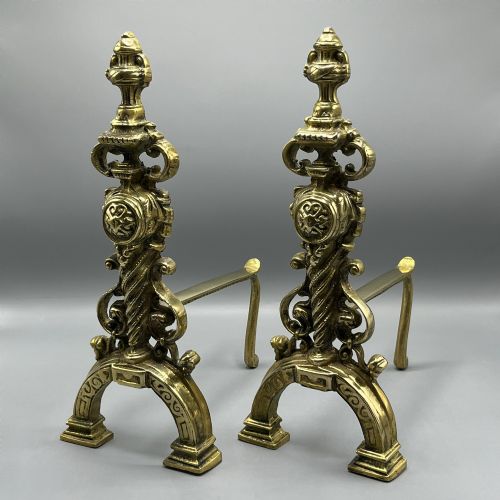
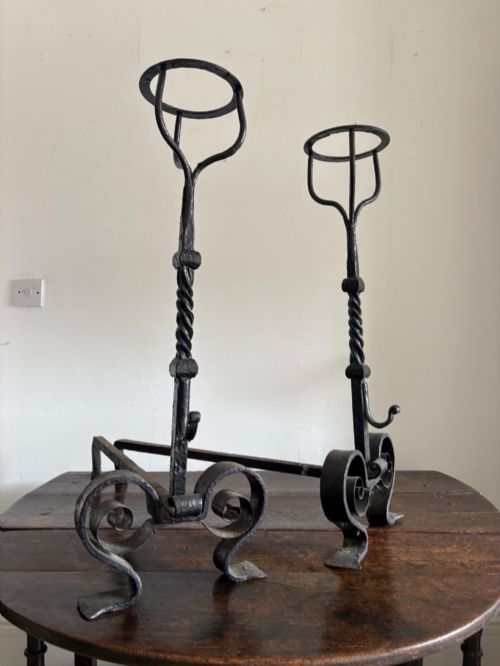
Heavy iron hearth dogs anchor the open fire with substantial weight and functional stability, supporting logs above the ash floor.
Heavy Iron Hearth Dogs
Heavy iron hearth dogs serve as the robust structural supports placed within an open fireplace to hold burning logs aloft. When you search for heavy iron hearth dogs, you encounter utilitarian pairs designed to improve airflow beneath wood fuel.
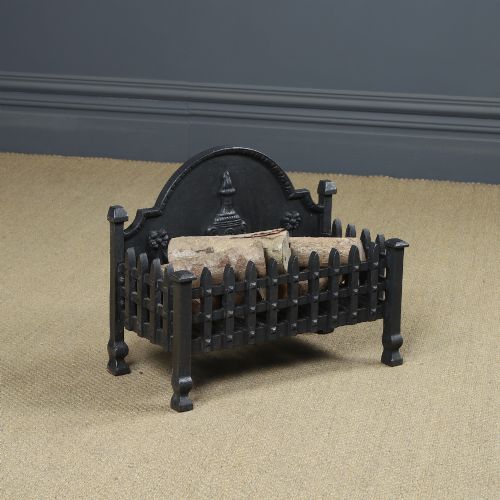
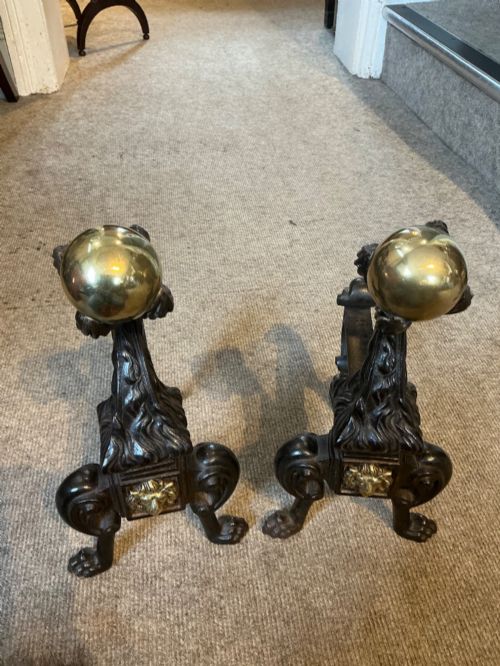
The versions most common on this page date primarily from the nineteenth century, taking the form of sturdy firedogs and andirons manufactured in cast iron, wrought iron, and steel. Many examples arrive paired with companion fire baskets, grates, or backs.
Origins span English, French, and continental workshops, ranging from modest domestic grates to monumental pairs standing over eighty centimetres tall. These objects combine practical hearth management with period decorative styles such as Gothic Revival and Arts & Crafts.
Materials and construction methods
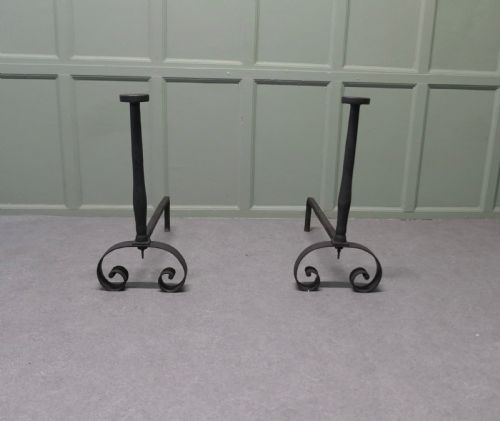
Construction relies heavily on cast iron and wrought iron, utilised for their ability to withstand intense hearth temperatures over prolonged periods. Foundries poured molten metal into moulds for ornate forms, while smiths hammered wrought iron into strong, functional shafts.
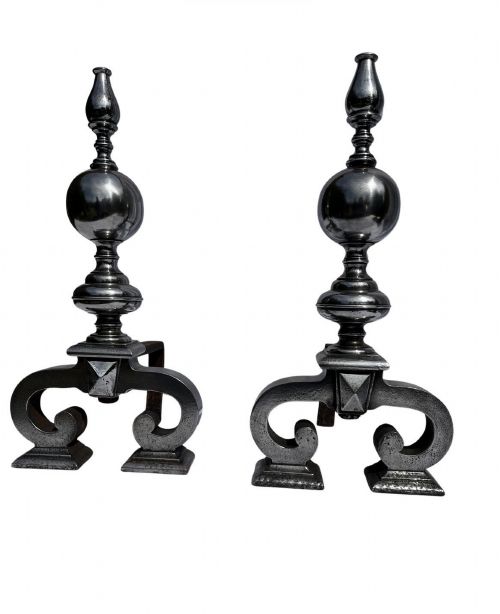
Brass, solid brass, and polished iron appear frequently as decorative accents or primary materials, particularly on Victorian and Dutch Baroque style pairs. Steel and firebrick also contribute structural integrity and thermal resistance to grates and fire baskets.
Design styles represented span Victorian, Gothic Revival, Arts & Crafts, Neoclassical Revival, and French Country.
Distinctions in quality and execution
Quality separates everyday utilitarian hearth furniture from exceptional sculptural pairs through the crispness of the iron casting and the precision of the forging. Heavier gauge metal and substantial overall proportions indicate superior utility and longevity in daily use.
Artistic execution distinguishes standard regional work from refined examples incorporating detailed Neoclassical, Gothic, or Arts & Crafts motifs. The integration of complementary elements like firebacks and baskets further defines a cohesive, high-grade assembly.
The Heavy Iron Hearth Dogs Glossary
- Andirons
- Supports for logs in an open fireplace, consisting of a horizontal bar on legs with an upright pillar at the front. They are often synonymous with fire dogs.
- Fire dogs
- Traditional heavy iron supports used to keep burning wood elevated off the hearth floor. Their substantial weight prevents movement under heavy timber.
- Fire basket
- A metal container designed to hold coal or wood within an open fireplace, frequently paired with andirons. These units combine log support with a contained grate.
- Fireback
- A heavy iron plate placed against the back wall of a fireplace to reflect heat into the room and protect the masonry. They appear in sets alongside hearth dogs and grates.
- Wrought iron
- Iron that has been heated and shaped with tools by a blacksmith, yielding a fibrous structure visible in the finished grain. It offers high tensile strength compared to cast iron.
Heavy Iron Hearth Dogs: Frequently Asked Questions
What are heavy iron hearth dogs used for?
Heavy iron hearth dogs support logs inside an open fireplace, keeping the wood elevated to allow proper air circulation underneath.
This elevation promotes a cleaner burn and helps the fire draw efficiently within the chimney flue.
How do I style them in a modern room?
Place a matched pair within the fireplace opening to anchor the hearth visually, even when the hearth remains unlit during warmer months.
Their dark iron surfaces and sculptural uprights complement exposed brick, stone surrounds, and traditional interior spaces.
How do I identify nineteenth-century examples?
Nineteenth-century pieces often display characteristic casting textures, heavy gauge iron construction, and stylistic influences like Gothic Revival or Arts & Crafts.
Examining the manufacturing marks, surface oxidation, and assembly joints helps distinguish these period pieces from modern reproductions.
Can these fire dogs still be used with a real fire?
Most heavy iron hearth dogs remain structurally capable of supporting burning wood in an active open fireplace.
Inspect the metal for deep structural cracks or severe thinning from past heat exposure before lighting any fire.