

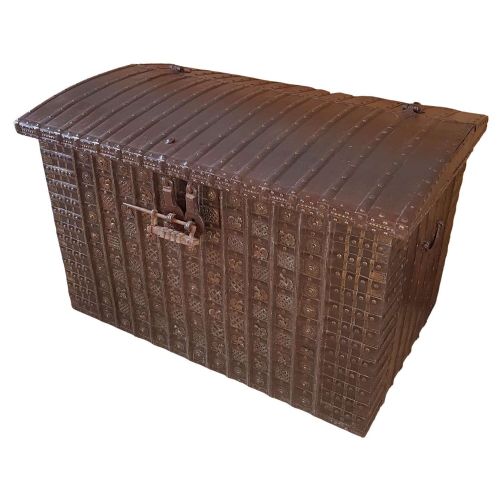


Heavy Iron Bound Box
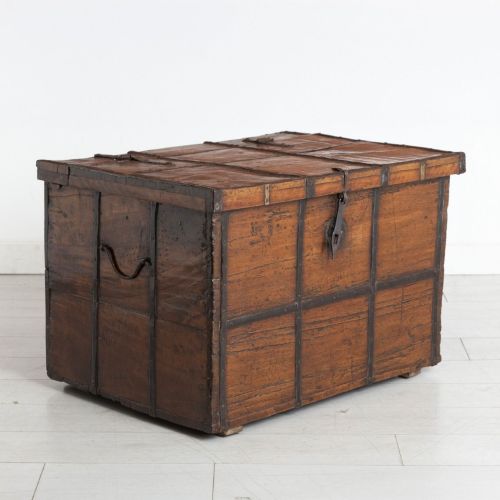
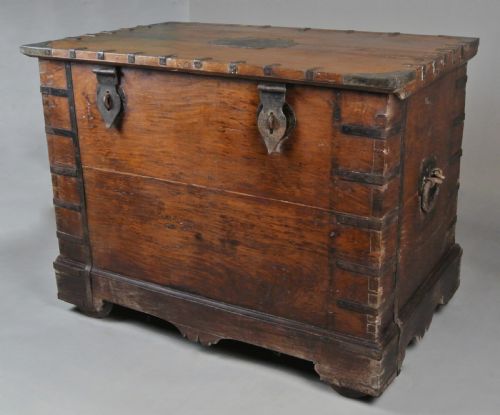
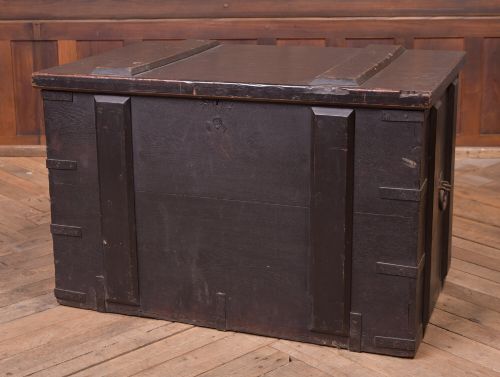
A heavy iron bound box brings structural strength and utilitarian purpose into a room through thick timbers reinforced with metal straps.
Heavy Iron Bound Box
When you search for a heavy iron bound box, you encounter robust storage vessels designed for transit and security across the centuries. The pieces on this page span the 16th century through to the 1900s, encompassing forms such as silver chests, dowry chests, campaign cases, strongboxes, and country house log bins.
The origins stretch from English country houses to colonial outposts, Rajasthan, and continental workshops. Each heavy iron bound box retains the marks of its demanding utilitarian origins.
How they were made
Makers constructed these sturdy containers using dense hardwoods like oak, teak, and mahogany, alongside softer structural timbers such as pine and elm. Thick planks formed the primary carcass, joined to withstand heavy loads and long journeys.
Iron, steel, and brass straps, bands, and hasps were secured across the wood to reinforce corners and lids against splitting. These metal mounts were riveted or bolted directly through the timber, often accompanied by heavy carrying handles or hoops for transport.
Heavy Iron Bound Box Retail Price Guide 2026
Typical asking prices for heavy iron bound box among the pieces listed under this phrase on Sellingantiques today, from the lower quarter to the upper quarter. They describe what is for sale here now, not the wider market.
Materials recorded across the inventory include wrought iron, brass, teak, oak, pine, elm, and mahogany.
What varies in quality
The distinction between ordinary utility items and superior examples lies in the integrity of the timber selection and the sophistication of the ironwork. Better boxes display precisely forged straps and brackets that integrate cleanly with the primary wood.
Internal arrangements also set pieces apart, distinguishing plain storage compartments from sophisticated fitted interiors with specialised trays and compartments for silver or documents. The retention of original locks, keys, and functional hardware elevates the integrity of a piece.
Allen of London·H D Dean
The Heavy Iron Bound Box Glossary
- Silver chest
- A heavy storage box specifically lined to protect and organise household silver service. These are typically constructed from stout oak with iron binding.
- Campaign case
- A portable container designed for military officers on the move, featuring robust iron reinforcements for transport. These items prioritize rugged durability and practical deployment.
- Coffer
- A traditional chest with a lid, frequently used for safekeeping valuables. Early examples often exhibit dense iron strapwork over heavy timber construction.
- Hasps
- A slotted metal plate that fastens over a staple and is secured with a pin or padlock. This hardware is essential to the security function of a strongbox.
- Dowry chest
- A large storage trunk intended to hold household goods and valuables for a bride. These pieces often incorporate regional decorative elements alongside structural iron banding.
Heavy Iron Bound Box: Frequently Asked Questions
What were these boxes used for?
These containers served practical roles in domestic, military, and commercial spheres. They transported valuables, stored silver, held regimental equipment, or secured personal belongings during long journeys.
Over time, many transitioned from utilitarian travel equipment to stationary storage within country houses and colonial residences.
How do I care for the wood and iron?
Maintain the timber by applying appropriate wax to nourish the dry grain and protect the surface from moisture. Keep the metal components clean and dry to prevent active corrosion on the iron straps.
Avoid placing these heavy boxes near direct heat sources to prevent the wood from splitting against the rigid metal bindings.
How can I tell the age of a box?
Examine the construction methods, the type of timber used, and the style of the ironwork and locks. Hand-forged iron straps and traditional joinery generally indicate earlier manufacture, while later 19th-century pieces often show standardised machine-cut elements.
Consider regional characteristics and historical forms to help narrow down the period of origin.
Can I use a strongbox as a coffee table?
The low profile and flat top of many large chests make them suitable for alternative domestic uses in modern living spaces. Their sturdy construction easily supports everyday items placed on the surface.
Ensure the lid remains secure and the interior is clean if you intend to utilise the box for hidden storage beneath the surface.