


Heavy Gold Link Necklace
A heavy gold link necklace brings substantial weight and secure fastenings to the neckline, drawing on Victorian and Edwardian utility.
Heavy Gold Link Necklace
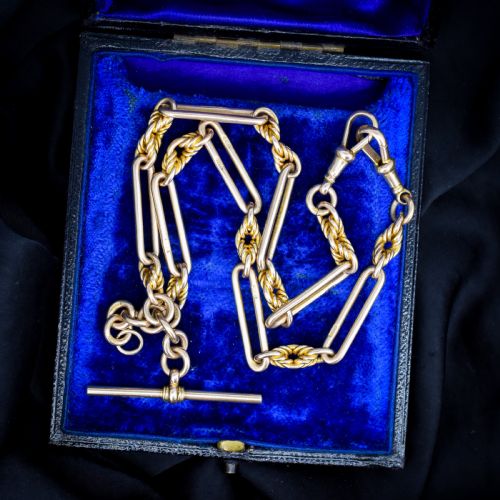
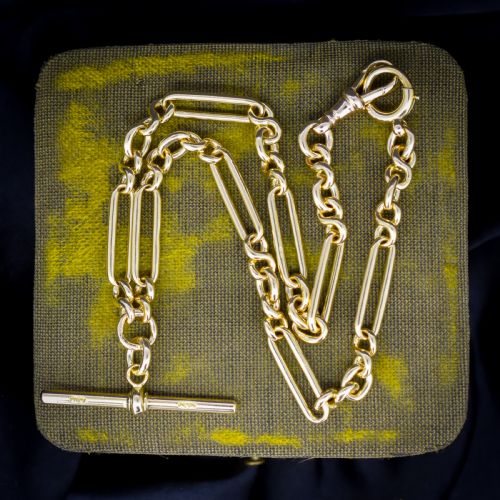
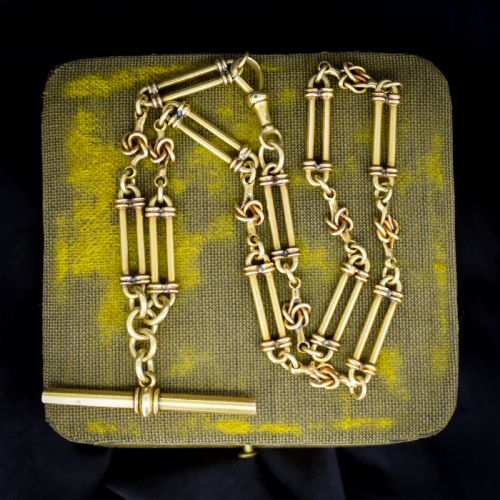
A heavy gold link necklace adapts traditional pocket watch chains, such as Albert chains and watch chains, into substantial neckpieces. These items emerge from the nineteenth century, the Edwardian period, and the nineteen-twenties.
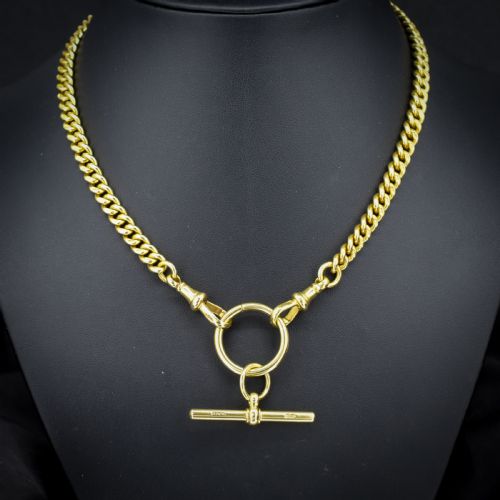
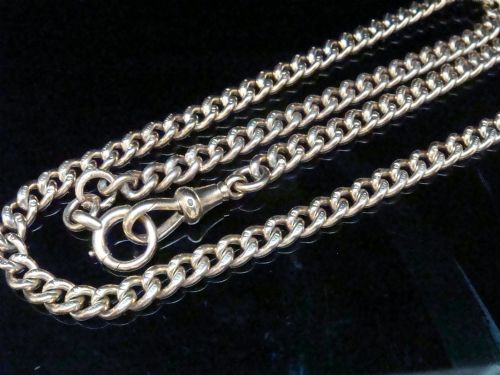
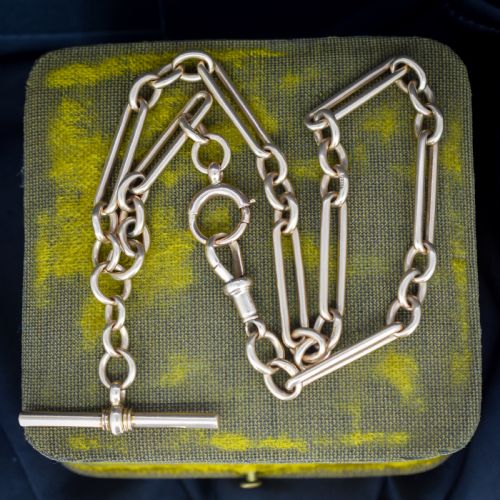
The common form on this page uses robust links like trombone, love knot, curb, and belcher patterns, frequently fitted with dog clips, bolt rings, and T-bars. Lengths span from fourteen inches up to thirty inches to suit different preferences.
Makers fashioned these pieces from nine-carat and eighteen-carat gold, utilising both yellow and rose shades. Many examples retain functional clasps designed originally to secure pocket watches rather than pendants.
Materials and construction
Goldsmiths constructed these chains predominantly from nine-carat and eighteen-carat yellow gold and rose gold, giving each link substantial heft and durability. Hallmarks frequently appear stamped on individual links to verify the metal purity and assay office origin.
Interlocking hand-assembled links create the structural framework, joined by sturdy mechanical elements like dog clips and spring-loaded bolt rings. The fabrication relies on soldered joints and robust wire-drawing methods typical of nineteenth-century and early twentieth-century workshops.
Object forms include Albert chains, watch chains, belcher chains, and custom necklaces incorporating dog clips and T-bars.
Distinguishing quality across pieces
Quality rests upon the uniformity of the link construction and the crispness of the individual hallmarked stamps. Superior examples maintain structural integrity across every single interconnected element without thinning at the pivot points.
The presence of original, fully operational dog clips and secure T-bars elevates a piece, alongside the density and gauge of the gold wire used in the primary links.
The Heavy Gold Link Necklace Glossary
- Dog clip
- A spring-loaded swivel clasp used to secure pocket watches or charms. Collectors value chains retaining their original functional dog clips.
- T-bar
- A short metal bar attached to the centre of a watch chain. It served to anchor the chain through a buttonhole on a waistcoat.
- Trombone link
- A distinctive watch chain link formed by alternating elongated rectangular bars and smaller circular connections. This geometry creates a balanced visual rhythm along the length.
- Curb link
- A chain pattern composed of identical uniform links that have been twisted and flattened to lie flat. This design provides exceptional strength and a smooth drape.
Heavy Gold Link Necklace: Frequently Asked Questions
How do I wear a pocket watch chain as a necklace?
These chains often feature dog clips and T-bars originally intended for waistcoats, which now fasten directly around the neck. You can attach the dog clip to a jump ring or connect the ends together to vary the drop.
The T-bar can hang loosely as an ornamental drop or be tucked discreetly behind a link depending on your preferred look.
What is the difference between nine-carat and eighteen-carat gold?
Nine-carat gold contains a lower proportion of pure gold alloyed with other metals to increase durability and strength. Eighteen-carat gold contains a higher proportion of pure gold, resulting in a richer, deeper colour and heavier feel.
Both purities appear frequently across nineteenth-century and Edwardian watch chain designs.
Are all links hallmarked on these chains?
Some pieces feature individual hallmarks stamped onto every single link to verify metal standards. Other chains bear marks restricted to the end links, dog clips, or T-bars.
Assay practices varied by workshop and period, meaning hallmark placement differs from one item to another.
How do I date a heavy gold link necklace?
Dating relies on stylistic clues such as trombone link geometries, hallmark stamps, and the inclusion of specific components like dog clips and T-bars. Pieces span the nineteenth century, the Edwardian era, and the nineteen-twenties.
Examining the construction methods and fastener types helps place the piece within its historical manufacturing window.