
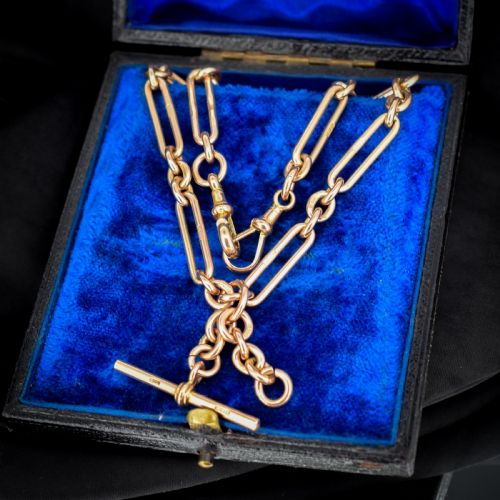
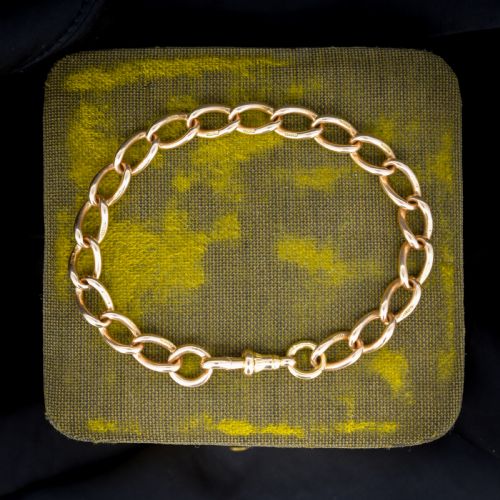

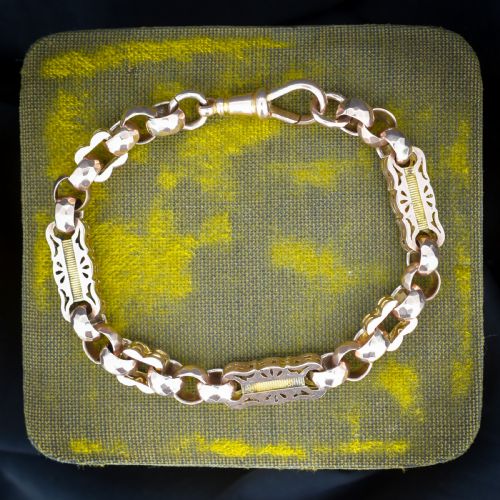
Antique Swivel Clasp Chain
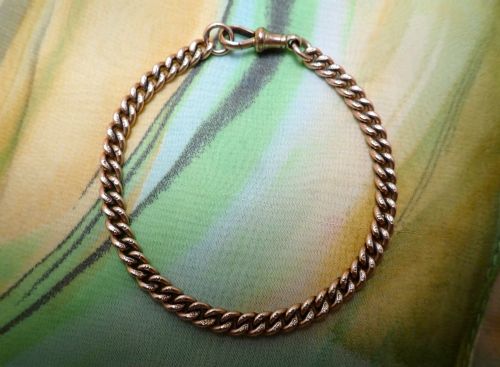
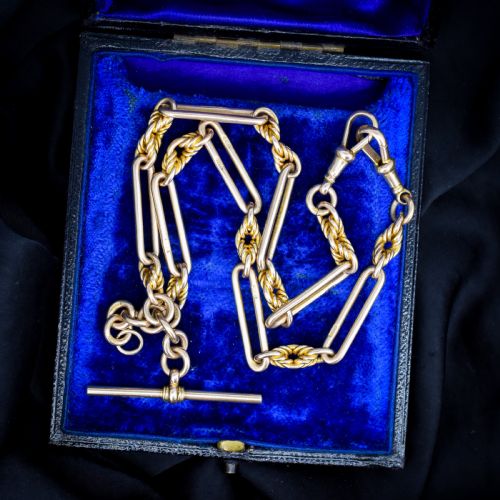
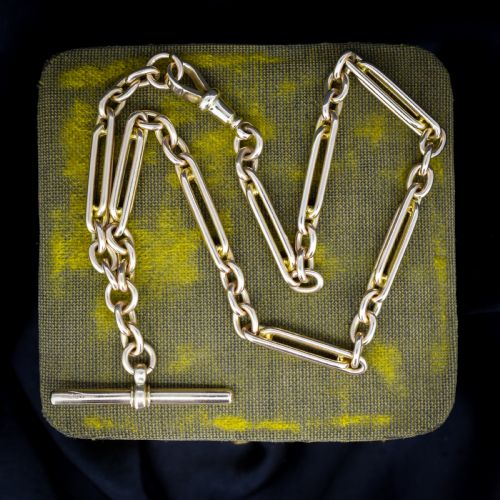
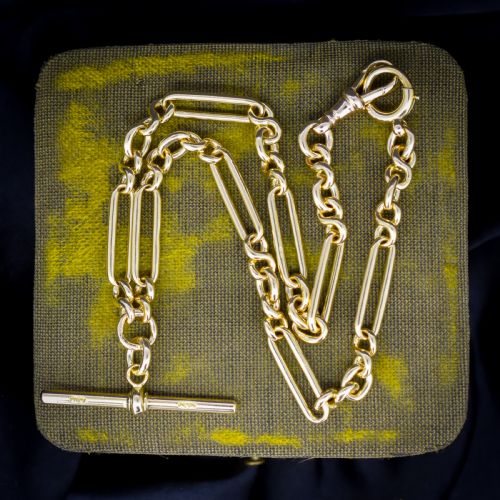
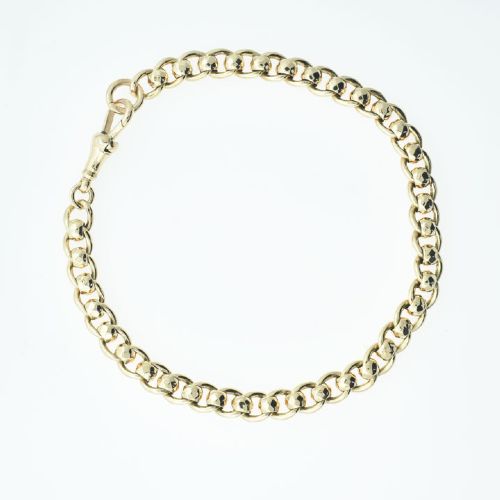
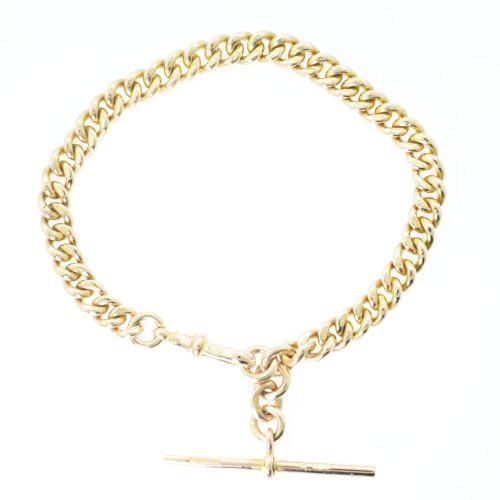
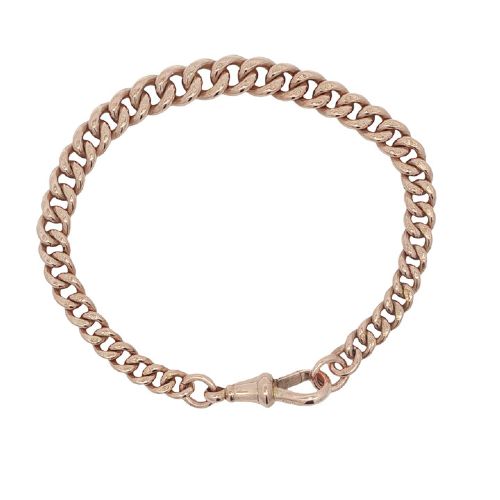
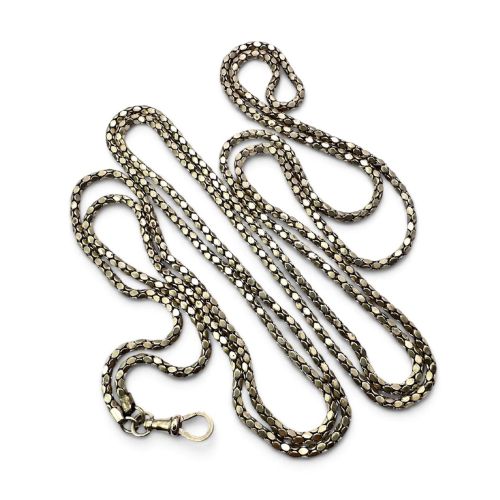
These antique swivel clasp chain examples bring together Victorian and Edwardian watch chains, bracelets, and necklaces fitted with secure mechanical fastenings.
Antique Swivel Clasp Chain
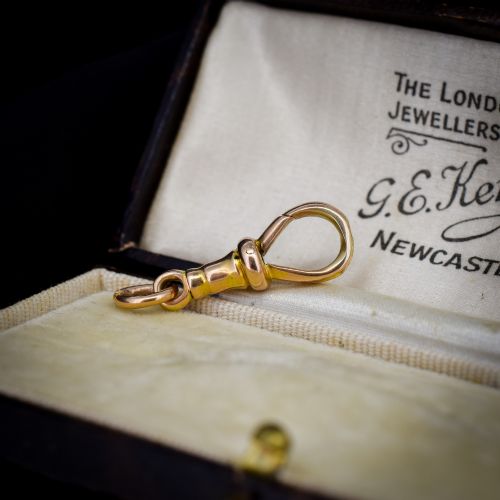
An antique swivel clasp chain brings together wearable items designed to secure pocket watches, charms, or pendants through integrated mechanical fastenings. Buyers seeking this category examine watch chains, longuard chains, and bracelets originating from the nineteenth and early twentieth centuries.
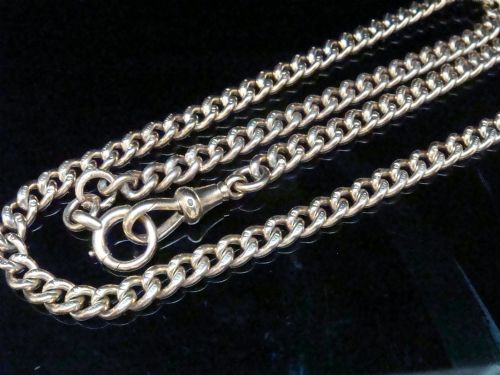
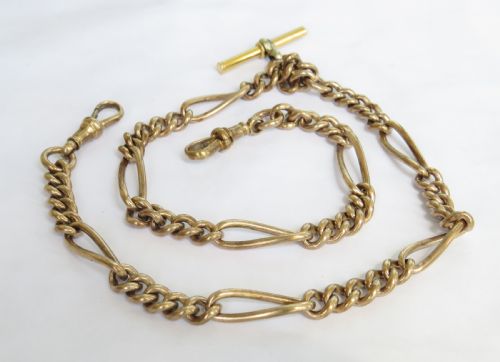
The versions most frequently encountered on this page span Victorian, Edwardian, and Art Deco periods, created in forms such as the Albert chain, guard chain, and standard necklace. These pieces often incorporate specific link formations like the trombone, curb, rollerball, and paper link.
Originating from British workshops and French makers, these items reflect the practical utility of period timekeeping gear transformed into decorative jewellery. The inclusion of a swivel clasp or dog clip remains the defining mechanical element linking these varied formats.
Materials and construction methods
Metals employed across these pieces range from sterling silver and rolled gold to varying purities of yellow, rose, and white gold, including nine-carat, fifteen-carat, and eighteen-carat standards. Certain items combine gold with platinum or integrate gemstones such as turquoise.
Link construction involves hand-assembling patterned components, with specific items showing hallmarks stamped on every individual link. Fastening mechanisms utilise spring-loaded dog clips and swivel clasps designed to rotate freely and prevent twisting.
Certain Victorian items combine secure watch attachments with unexpected additions, including an Irish football fob.
Distinctions in quality and execution
Quality rests upon the structural integrity of the links and the precise operation of the swivel mechanism. Pieces displaying hallmarks on every link demonstrate a higher level of individual component certification.
Substantial weight and gauge of the wire distinguish more robust guard and watch chains from lighter variations. The crispness of patterned stampings on fancy links and the tight action of the spring clips further separate standard production from superior examples.
The Antique Swivel Clasp Chain Glossary
- Swivel clasp
- A mechanical fastening featuring a revolving loop that prevents the attached chain from twisting during wear. This component forms the primary connection point for pendants and pocket watches.
- Dog clip
- A spring-loaded snap fastener resembling a miniature hound clip, commonly found on period watch chains and bracelets. It allows for rapid attachment and removal of charms and fobs.
- Albert chain
- A specific type of pocket watch chain designed to be worn across a waistcoat or draped from a garment buttonhole. It typically incorporates a T-bar at one end and a swivel clasp at the other.
- Trombone link
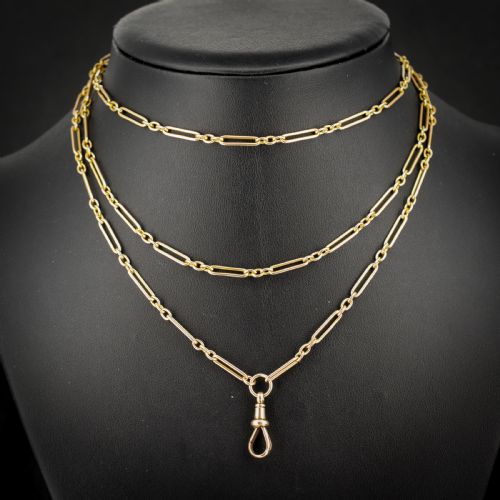
- A jewellery link shape characterised by elongated rectangular sections interspersed with smaller circular connectors. This pattern appears frequently in nineteenth and early twentieth-century watch chains.
- Longuard chain
- An exceptionally long necklace format originally designed to suspend a lorgnette, watch, or pendant safely from the neck. These pieces often measure sufficient length to be doubled over the head.
- Belcher chain
- A style formed from uniform, slightly broad links that are wider than they are thick. The design provides a sturdy structure suited to carrying heavier pocket watches.
Antique Swivel Clasp Chain: Frequently Asked Questions
How do I wear a long guard chain?
These extended pieces hang down in a single continuous loop or double over the neck for a shorter drape. They accommodate watches or pendants attached directly to the integrated swivel clasp.
Their substantial length allows them to function as versatile neckwear suited to both historical presentation and contemporary styling.
What is the purpose of a T-bar?
The T-bar slips through a waistcoat buttonhole to anchor a pocket watch securely inside a pocket. This horizontal bar acts as a counterweight against the pull of the timepiece.
Many surviving pieces retain this fixture even when worn purely as decorative necklaces or bracelets.
How are different gold purities identified?
British items typically display hallmarks stamped directly onto the metal indicating the exact gold standard, such as nine-carat or fifteen-carat. These official marks provide verified proof of composition.
Items lacking clear stamps rely on metal testing or historical context to determine their precise gold content.
Can these chains support modern pendants?
The mechanical dog clips and swivel fasteners easily accommodate modern charms, lockets, and pendants. The sturdy construction of these historic links provides reliable support for daily wear.
Care should be taken to match the weight of the pendant to the gauge of the chain.