


Heavy Copper Cauldron Pot
These heavy copper cauldron pot pieces are robust vessels from the nineteenth century, offering both utility and character for modern firesides.
Heavy Copper Cauldron Pot
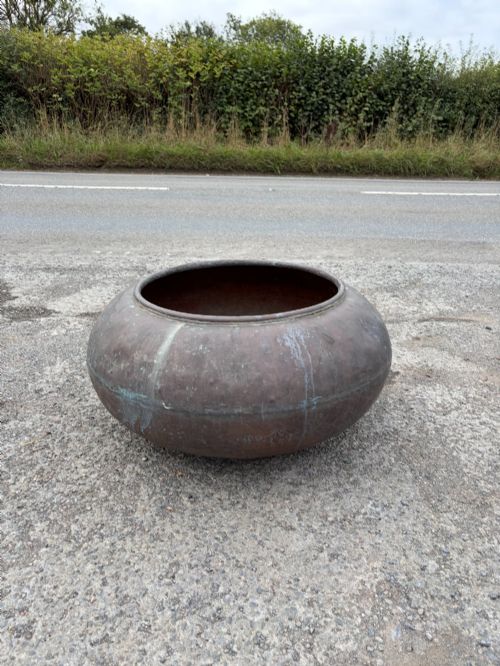
A heavy copper cauldron pot is a utilitarian vessel, frequently adapted as a log bin, garden planter, or hearth accessory. These pieces emerge predominantly from the nineteenth century, reflecting centuries of domestic and agricultural service.
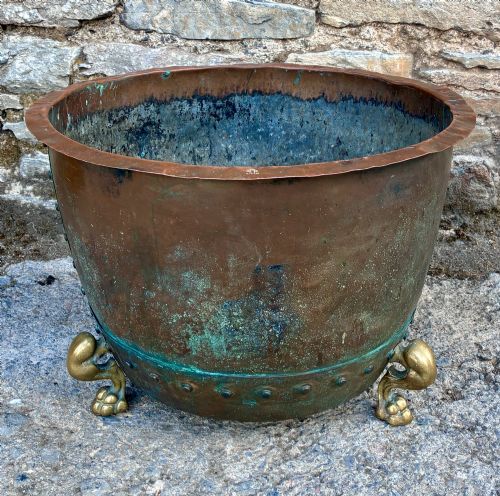
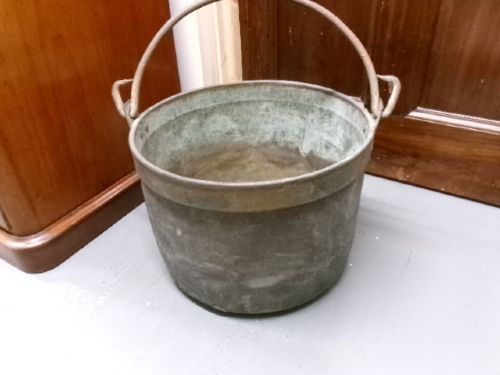
The common iterations on this page include large riveted boilers, swing-handled cauldrons, and lidded vessels designed for utilitarian duties. Such items transition easily from traditional firesides to contemporary country interiors as storage or botanical containers.
Origins span British, Victorian, and French country traditions, bringing diverse regional forms to the selection. Buyers encounter everything from simple cooking vessels to decorative log buckets.
Distinctions in quality and finish
Quality rests in the integrity of the metalwork, the weight of the copper, and the stability of the handles. Superior examples retain their original riveted construction without modern structural repairs.
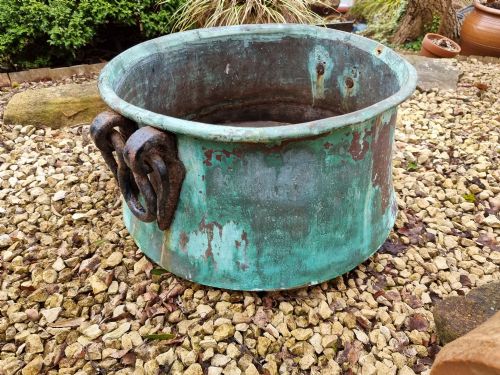
The character of the surface patina dictates visual appeal. Vessels that display an untouched verdigris finish or deep original oxidation command greater interest than those stripped of their history.
Some nineteenth-century pots still carry the stubborn soot of hearth fires, proving they did proper work before retiring to the living room.
The Heavy Copper Cauldron Pot Glossary
- Cauldron
- A large metal pot with a swing handle, traditionally used over an open fire for boiling or cooking. These deep vessels now find new life by the hearth.
- Verdigris
- The green patina that forms naturally on copper over decades of exposure to moisture and air. This chemical layer protects the underlying metal.
- Dinanderie
- The French term for artistic brass and copper object manufacture, seen in decorative vessels. It denotes skilled hammering and shaping of base metals.
- Patina
- The surface sheen and colour acquired by metal through age, use, and environment. A genuine patina tells the story of the object's past.
- Wrought iron
- Tough, malleable iron beaten into shape by a blacksmith, commonly utilised for sturdy handles on heavy pots. It resists bending under heavy loads.
Heavy Copper Cauldron Pot: Frequently Asked Questions
What were heavy copper cauldron pots used for originally?
These vessels served hardworking domestic and industrial roles, primarily for boiling water, laundry, or cooking over open hearths. Their robust construction allowed them to handle heavy daily tasks.
Over time, many lost their culinary function and transitioned into practical storage items around the home and garden.
How do I use a heavy copper pot as a log bin?
Simply place the vessel beside your fireplace or woodburning stove to store split logs and kindling cleanly. The wide opening allows for easy access while containing bark and debris.
Ensure the interior is dry before loading timber to protect the historic metal from unnecessary moisture damage.
Can I put a copper cauldron outside in the garden?
Yes, many examples function brilliantly as large planters for shrubs, small trees, or seasonal flowers. Copper withstands outdoor conditions well, gradually developing a rich verdigris finish.
Check whether the base has natural drainage holes or add suitable material at the bottom to prevent waterlogging.
How do I tell a Georgian copper pot from a Victorian one?
Georgian and early nineteenth-century vessels often display hand-beaten panels and simpler, heavier iron fittings forged by local smiths. They carry the marks of early workshop production.
Victorian pieces frequently show more standardised manufacturing techniques alongside mass-produced rivets, reflecting the industrial expansion of the era.