
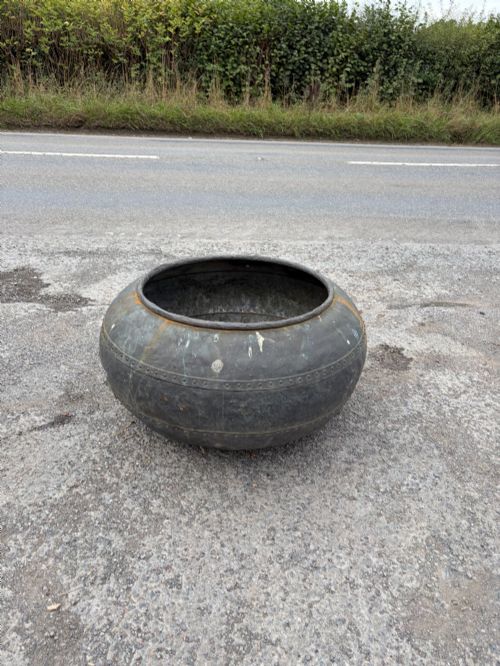
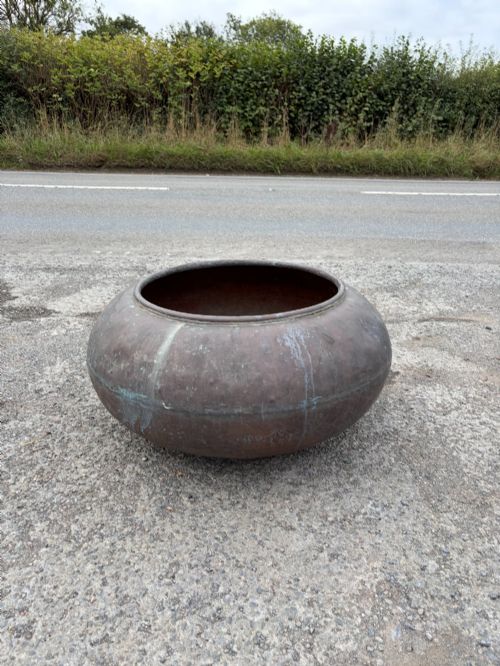
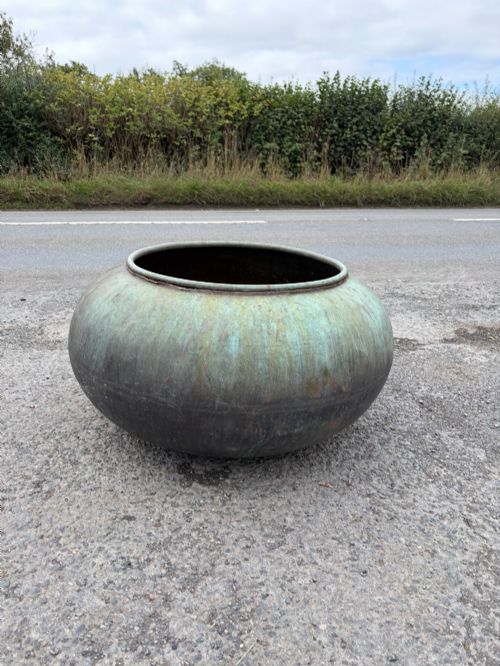
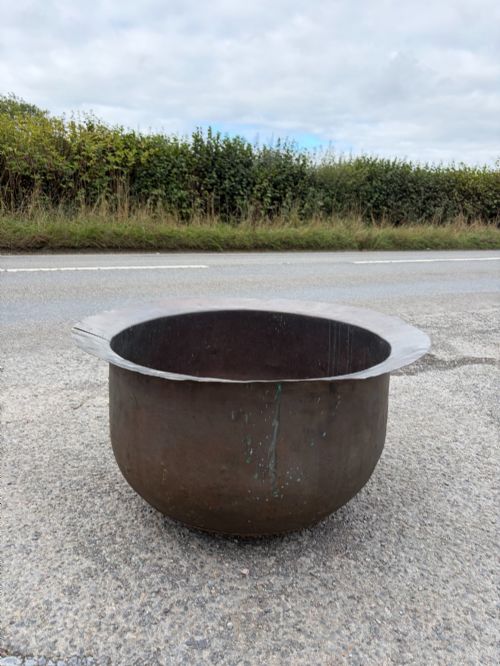



Victorian Copper Log Basket
A victorian copper log basket brings weight and warmth to a fireside, holding wood in heavy metal shaped by nineteenth-century hands.
Victorian Copper Log Basket
A victorian copper log basket encompasses sturdy containers designed for fuel storage, appearing across this selection as large pots, riveted buckets, cauldrons, helmet scuttles, and bins. These vessels hail from the nineteenth century, bridging utilitarian fireside service and decorative rustic forms.
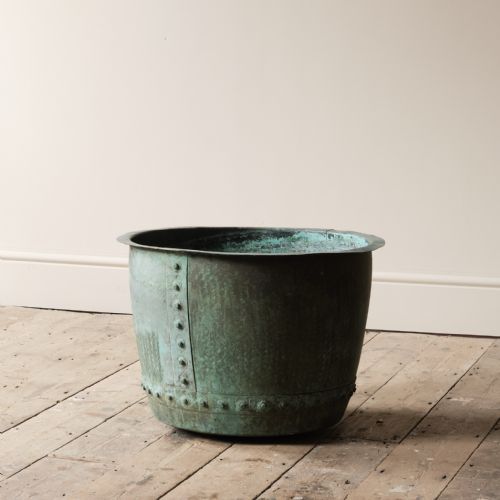
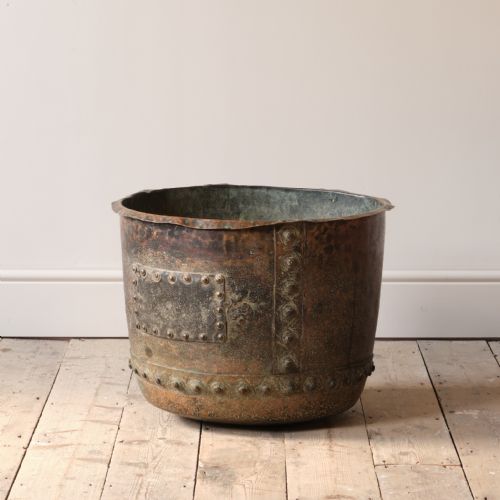
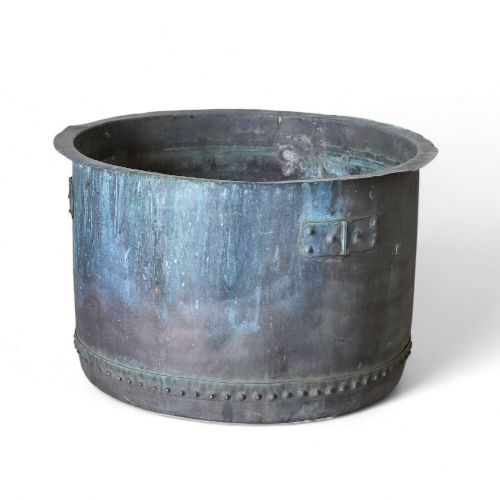
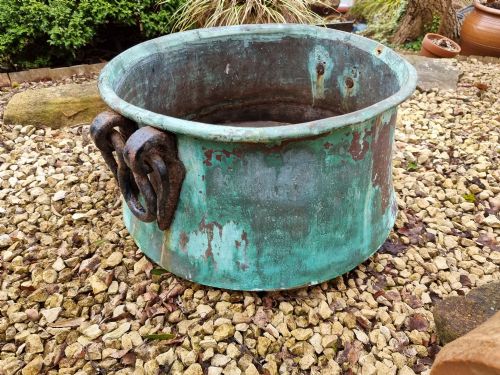
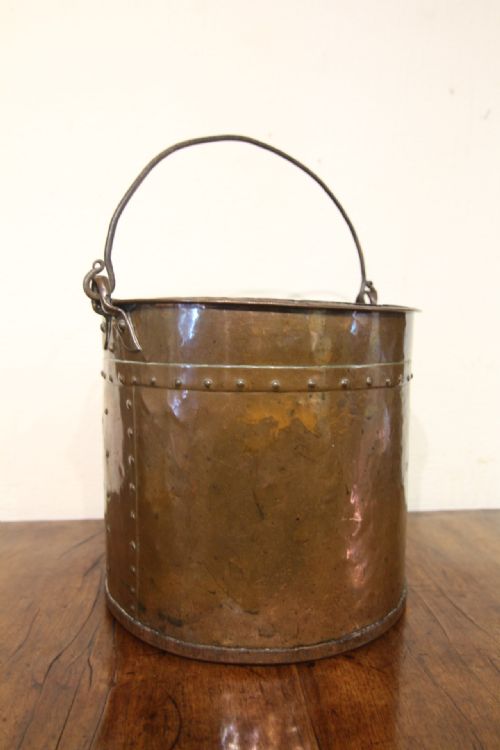
The version most commonly met on this page is the large riveted copper pot or bucket, often fitted with a wrought iron handle for lifting heavy loads of wood. Buyers also encounter specialised helmet-shaped coal scuttles and lidded log bins dating from eighteen-fifty onwards.
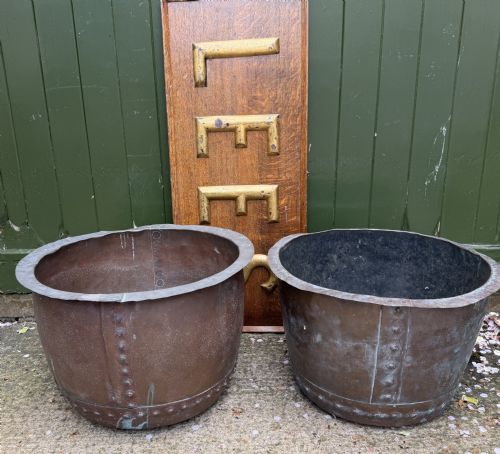
Many examples double as garden planters or vessels, showing how durable metal containers transitioned from active hearth duty to domestic and decorative roles. Their stylistic origins span nineteenth-century country, rustic farmhouse, arts and crafts, and industrial utility.
Construction and Materials
Makers built these pieces primarily from sheet copper, joining heavy plates with visible hand-riveted seams that provided structural strength for holding logs and coal. Brass components, including handles and rims, appear alongside the copper body to add durability and contrast.
Support and mobility relied on iron, with wrought iron swing handles and cast iron elements incorporated into heavier vessels and boilers. Wood and zinc also feature in specific constructions, while protective surface treatments range from polished finishes to natural patinas and verdigris.
Materials across these listings include copper, brass, iron, wrought iron, wood, tin, zinc, and cast iron.
Judging Quality and Character
Quality rests in the substantial weight of the metal and the integrity of the riveted construction, separating robust working vessels from lighter decorative pieces. Substantial gauge copper resists denting and holds its structural form under the heavy impact of timber.
Surface character distinguishes individual examples, where a rich natural patina and authentic verdigris develop through decades of exposure and age. The presence of original wrought iron swing handles and matching brass fittings completes a balanced, authentic composition.
The Victorian Copper Log Basket Glossary
- Patina
- The surface oxidation and mellowing accumulated on copper over decades of use. This natural skin provides visual depth and confirms genuine age.
- Verdigris
- The green crust or patina formed on copper by atmospheric oxidation. It adds distinct coloration highly prized by collectors of nineteenth-century metalwork.
- Riveted
- Joined securely by metal pins hammered flat during construction. This technique holds heavy copper plates together under continuous stress.
- Helmet Scuttle
- A fireside coal container featuring a shaped mouth resembling a classical helmet. It includes a hinged handle for controlled pouring.
- Cauldron
- A large rounded cooking vessel adapted for heavy domestic storage. These heavy-duty pots provide substantial volume for logs.
Victorian Copper Log Basket: Frequently Asked Questions
How do I clean a copper log basket?
Wipe the surface gently with a soft, damp cloth to remove dust and loose debris.
Avoid harsh chemical metal polishes that strip away the authentic aged patina built up over generations.
Were these baskets meant for logs or coal?
Nineteenth-century metal vessels served both fuel types depending on their specific form and size.
Open buckets and large pots held heavy timber logs, while shaped helmet scuttles accommodated loose coal near the hearth.
Can I use these outdoors as planters?
Durable copper and iron construction suits these vessels for holding plants in gardens or patios.
Many period pieces already carry a dual history of garden utility alongside their original fireside purpose.
How do I identify a nineteenth-century piece?
Examine the construction methods, looking for hand-beaten sheet metal and solid riveted seams rather than modern welding.
Materials like wrought iron handles and heavy cast brass fittings point directly to nineteenth-century manufacturing traditions.