


Heavy Carved Oak Mirror
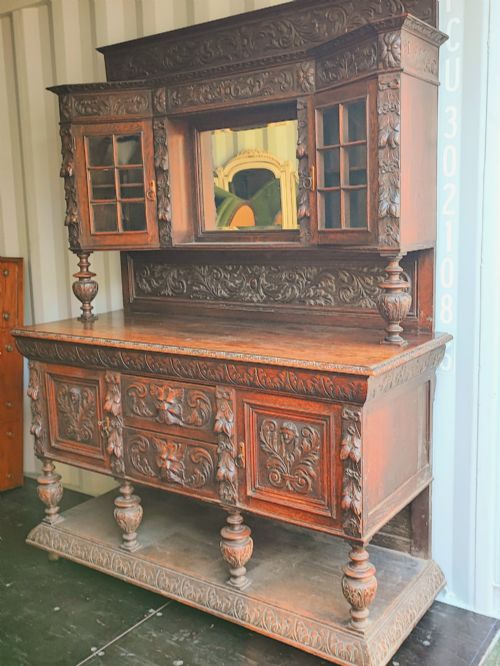
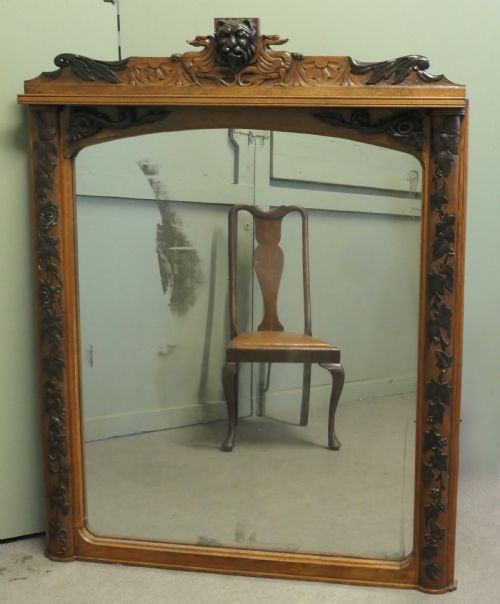
These heavy carved oak mirror pieces deliver substantial timber frames and deep relief work, offering the solid presence that period rooms demand.
Heavy Carved Oak Mirror
A heavy carved oak mirror brings substantial nineteenth-century timber and deep relief work into an interior, appearing primarily as wall-hanging frames or expansive overmantel designs. These pieces often draw on Jacobean, Gothic, and Renaissance revival styles to create a commanding architectural presence.
The selection ranges from cushion frame designs to large wall mirrors, frequently sharing room space with sideboards, hall stands, and buffet cabinets from the Victorian and Edwardian eras. Buyers encounter formats intended for principal rooms, where dark timber and bold proportions dictate the character of the space.
Materials and construction
Makers built these frames from solid oak, chosen for its strength and ability to hold deep, crisp chisel work without splintering. The timber is often stained to a darker tone, reflecting the taste for substantial, historicized furniture during the nineteenth and early twentieth centuries.
Glazing typically involves mirror glass with bevelled edges, secured within the heavy wooden rebates alongside zinc backing or brass hardware. The structural weight demands robust joinery to support both the dense timber frame and the substantial glass panel.
A hidden Green Man peers out from the foliage on select carvings, watching over the room with leafy discretion.
Judging quality in carved oak mirrors
Quality rests in the depth and execution of the carving, where confident, undercut relief distinguishes superior work from mechanical or shallow tooling. The crispness of foliate scrolls, strapwork, or figural elements reveals the hand of a skilled carver rather than a factory template.
Proportion and timber selection further separate standard examples from finer ones, visible in the grain pattern of the oak and the harmonious scale of the moulding. Well-balanced frames retain their structural integrity despite the considerable weight of the timber and glass.
The Heavy Carved Oak Mirror Glossary
- Cushion frame
- A moulded frame profile that swells outward like a pillow before sloping down to the glass. This form provides a broad surface for bold carving.
- Overmantel mirror
- A large mirror designed to hang directly above a fireplace mantelpiece. These pieces often feature grand proportions to span the width of the fireplace below.
- Bevelled edge
- A sloping edge ground around the perimeter of the mirror glass. This technique catches the light and adds a decorative border to the reflection.
- Renaissance Revival
- A nineteenth-century design movement borrowing motifs from sixteenth-century European architecture. It emphasises symmetry, classical columns, and heavy relief carving.
- Green Man
- A sculptural face carved from foliage or branches, symbolizing rebirth. This motif frequently appears in nineteenth-century architectural woodwork and furniture.
Heavy Carved Oak Mirror: Frequently Asked Questions
How do I hang a heavy carved oak mirror safely?
These frames carry considerable weight due to the dense oak timber and thick glass. Secure mounting requires heavy-duty fixings anchored directly into structural wall studs or masonry.
Professional installation is often advisable to ensure the brackets and wire support the total load without shifting over time.
Which rooms suit a large overmantel mirror?
An overmantel mirror suits reception rooms, dining spaces, or entrance halls with high ceilings and substantial proportions. The expansive dark timber frame anchors large wall spaces and reflects natural light across the room.
Placement above a fireplace remains the traditional position, mirroring historical interior arrangements.
How do I care for antique oak and mirror glass?
Dust the carved oak regularly with a soft, dry cloth to prevent dirt accumulation in the recesses of the relief work. Avoid silicone polishes that build up a residue on the timber over time.
Clean the mirror glass with a mild glass cleaner applied to a cloth rather than sprayed directly, protecting the wood frame from moisture damage.
How can I date an oak mirror?
Dating relies on examining the construction methods, the type of mirror glass, and the revival style influences present in the carving. Nineteenth-century examples often display machine-sawn timber elements alongside hand-finished details.
Backboards, fixings, and the bevel style on the glass provide additional clues to the manufacturing period.