




Heavy Carved Oak Cupboard
A heavy carved oak cupboard brings substantial presence and deep historical character into a room through dense timber and confident ornamentation.
Heavy Carved Oak Cupboard
A heavy carved oak cupboard comprises robust storage furniture built from solid oak and finished with elaborate ornamentation. These pieces emerge predominantly from the Victorian period through the early twentieth century, spanning stylistic revivals from Gothic and Renaissance to Jacobean and Flemish Baroque.
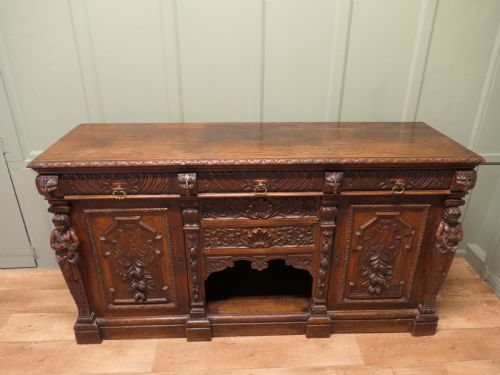
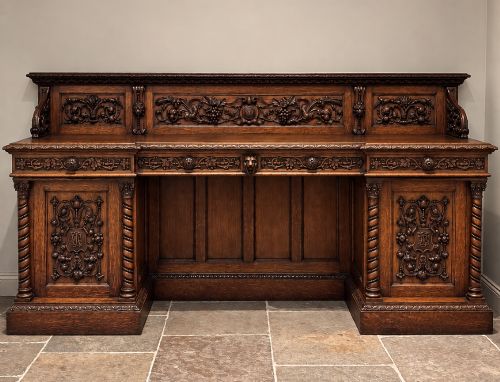
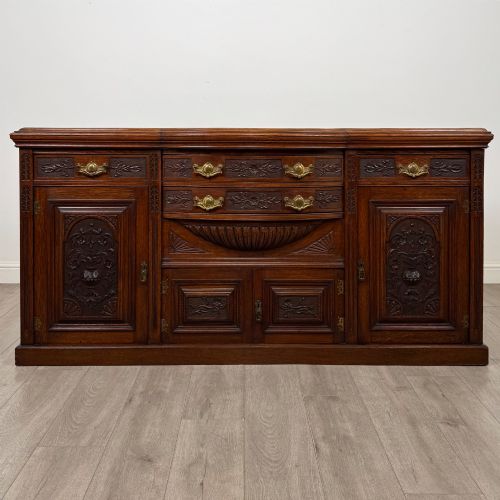
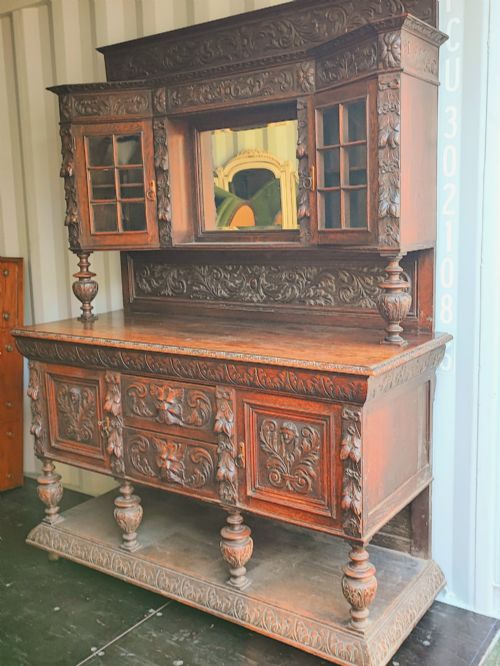
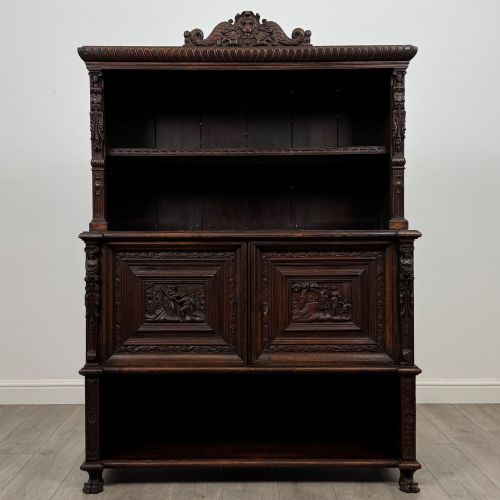
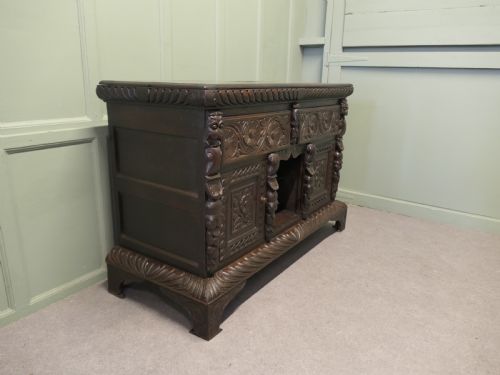
Buyers encounter diverse forms ranging from large sideboards and mirror back buffets to tall library bookcases, court cupboards, and Welsh dresser bases. The dominant presence on this page is the Victorian carved oak sideboard or buffet, frequently featuring substantial proportions and deep relief carving.
Origins stretch across the nineteenth century, including specific dates from the eighteen-sixties and eighteen-eighties, alongside Edwardian examples. Pieces integrate practical storage with sculptural woodwork, functioning as focal points in dining rooms, halls, and libraries.
Materials and construction methods
Makers utilised solid oak as the primary structural timber, chosen for its durability and capacity to hold deep, crisp chisel work. Golden oak variations and darker fumed finishes appear alongside secondary metals like brass handles, iron hardware, and internal mirror glass.
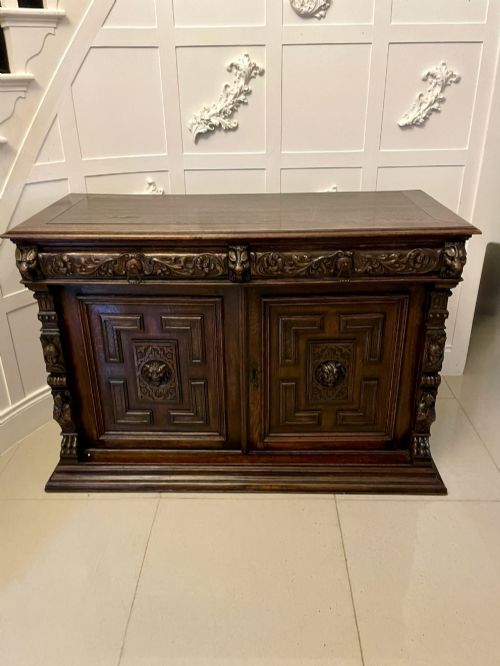
Construction relies on traditional joinery methods that support massive weights, particularly in monumental bookcases and multi-door cabinets. Surfaces receive extensive hand carving, incorporating motifs such as Green Man masks, geometric panels, and architectural pilasters typical of revivalist movements.
Keep watch for hidden Green Man faces peering out from the foliage within the deep carved panels.
Assessing quality in carved oak furniture
The distinction between standard production and exceptional quality rests entirely on the depth, clarity, and ambition of the carving. Superior examples exhibit sharply defined relief work with expressive figurative elements, such as Green Man faces or intricate scrollwork, rather than shallow, mechanical stamping.
Proportion and structural integrity dictate the standing of a piece, with finer cabinets balancing massive scale with refined architectural details. The integration of original hardware, bevelled glass panels, and well-figured oak timber elevates the distinction of a sideboard or bookcase.
The Heavy Carved Oak Cupboard Glossary
- Renaissance Revival
- A nineteenth century design movement drawing inspiration from sixteenth century Italian and French architecture. It employs heavy symmetry, bold mouldings, and classical motifs.
- Green Man
- A sculptural architectural ornament depicting a human face entwined with foliage, branches, or vines. This motif frequently appears carved into nineteenth century oak furniture.
- Court Cupboard
- A traditional enclosed piece of storage furniture featuring recessed upper sections supported on pillars. Edwardian and Victorian makers reinterpreted this form in solid oak.
- Flemish Baroque
- A flamboyant seventeenth century stylistic influence revived by Victorian cabinet makers. It is characterised by dramatic curves, rich sculptural carving, and dynamic movement.
- Bevelled Glass
- Glass panes featuring angled, ground edges designed to catch and refract light. This technique appears within the doors and mirror backs of larger nineteenth century cabinets.
Heavy Carved Oak Cupboard: Frequently Asked Questions
How do I style a heavy carved oak cupboard today?
These substantial pieces anchor a modern interior by introducing texture, history, and deep warm timber tones. Balance their visual weight by placing them against neutral walls and pairing them with simpler, understated furnishings.
Allow the carved details and brass or iron hardware to stand as focal points in a dining room, hallway, or living space. Avoid overcrowding the top surface so the architectural presence of the woodwork remains prominent.
What is the difference between a sideboard and a buffet?
Sideboards traditionally incorporate a combination of enclosed cupboards and drawers designed for storing dining ware and serving food. Buffets serve a similar function but frequently include upper tiers, shelving, or mirror backs.
In nineteenth century oak furniture, these terms often overlap as makers combined storage cupboards with display shelving and monumental proportions.
How do I care for antique oak furniture?
Maintain the timber by keeping pieces away from direct heat sources and fluctuating humidity that can cause oak to split. Dust regularly with a dry, soft cloth and apply a natural beeswax sparingly to nourish the grain.
Avoid silicone-based sprays which build up over time and dull the original finish of the carved surfaces.
How can I tell the period of a carved oak cupboard?
Examine the specific stylistic revival indicators, such as Gothic pointed arches, Jacobean geometric moulding, or Flemish Baroque scrolls. Construction marks, screw types, and backboard construction methods help narrow down the date from early nineteenth century examples to Edwardian pieces.
Dates carved into the woodwork or stamped hallmarks occasionally provide a direct point of reference for the year of manufacture.