

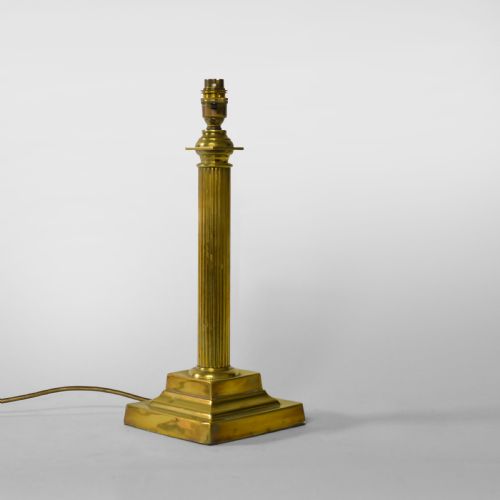
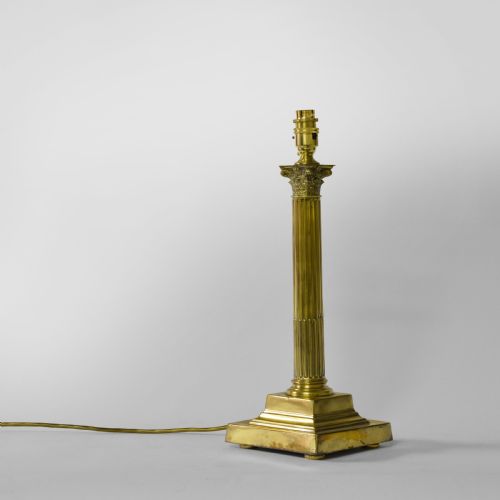


Heavy Brass Table Light
A heavy brass table light brings tangible presence and bright metallic warmth to a room, offering solid construction built to endure.

Heavy Brass Table Light
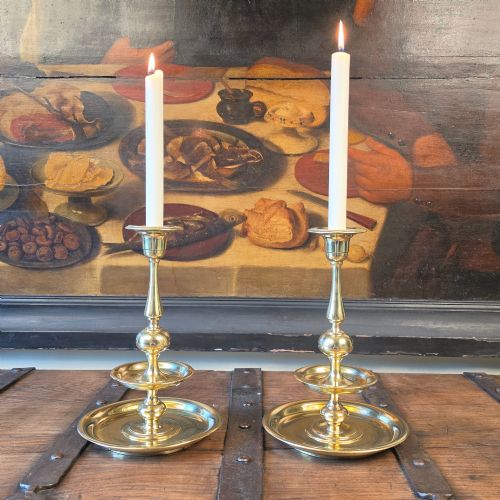
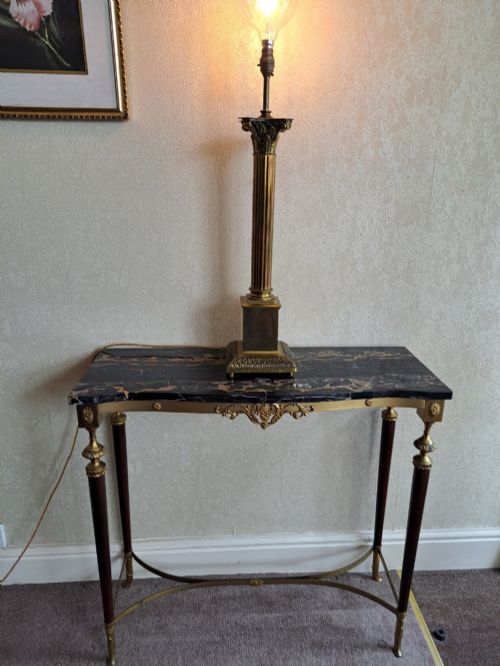
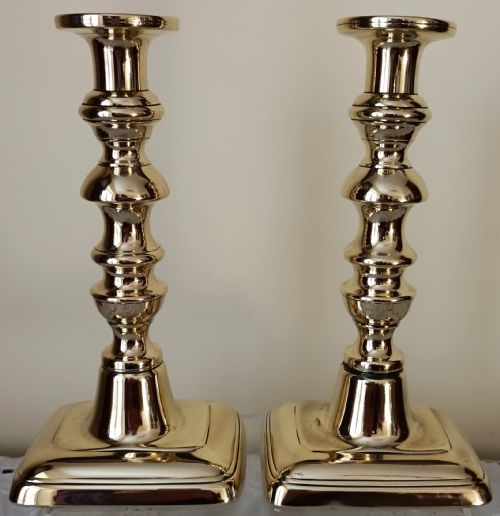
A heavy brass table light encompasses sturdy candlesticks, converted oil lamps, and columnar lamps spanning from the eighteenth century through the Edwardian era. Buyers seeking a heavy brass table light will frequently encounter Victorian columnar designs and nineteenth-century pairs built with substantial metal foundations.
The selections on this page draw from periods including Georgian, Victorian, and Edwardian production, showing forms ranging from Gothic Revival altar pieces to neoclassical ionic and corinthian columns. Candlesticks and candelabra frequently cross over into functional table lighting through period or later conversion.
Materials and construction methods
Foundry work relied on heavy cast brass, often combined with cut glass inserts, polished marble bases, and iron components to add structural heft and stability. Components were turned, cast, and threaded together to support tall shafts and multi-stem arrangements.
Lamps utilising fabric shades or silk fringe sit atop bases enriched with patinated finishes, whilst cut glass elements introduce textural contrast to the dense metallic structure.
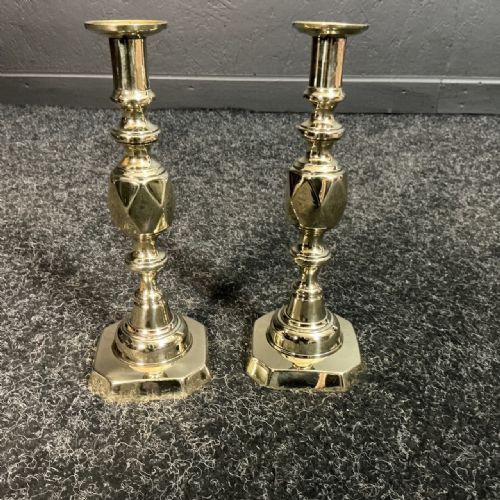
One listed pair of nineteenth-century candlesticks carries the delightful name King of Diamonds.
Distinctions in quality and manufacture
Quality rests in the crispness of casting detail, particularly visible on architectural capitals like Corinthian and ionic columns, and the sheer weight of the metal used in the base. Finer examples display meticulous finishing and uncompromised structural integrity across heavy pairs.
Maker attribution, such as pieces stamped by J.T. & Co or T. Thomason & Co, adds documentary interest to a piece, separating standard utility items from documented workshop productions.
J.T. & Co·T Thomason & Co
The Heavy Brass Table Light Glossary
- Corinthian column
- A classical architectural column style featuring ornate acanthus leaves at the capital. This motif appears frequently on Victorian lamp bases.
- Altar candlestick
- A tall, stable ecclesiastical candlestick designed for church use. These often feature heavy Gothic Revival decoration and substantial weight.
- Candelabra
- A multi-branched lighting device holding several candles or light sources. Examples span French nineteenth-century production with multiple stems.
- Beehive
- A rounded, ribbed turning style reminiscent of a skep hive. This profile characterises specific nineteenth-century candlesticks.
Heavy Brass Table Light: Frequently Asked Questions
How do I date a brass table light?
Dating relies on stylistic clues such as neoclassical column orders, Gothic Revival motifs, or specific turnings like beehive profiles. Material combinations, including polished marble and cut glass, also point toward particular decades within the nineteenth and early twentieth centuries.
Examining construction seams and casting methods helps separate earlier Georgian and Victorian work from later Edwardian manufacturing.
Were these always electric lamps?
Most pieces started life as oil lamps, candlesticks, or altar lights before receiving electrical wiring during or after their period of manufacture. Conversions allow antique forms to serve modern domestic lighting needs.
Original candlesticks often retain sockets designed for candles or fitted adaptors for modern bulbs.
How do I care for heavy brass?
Maintenance involves dusting with a soft cloth to protect the surface and accumulated historic patina. Aggressive polishing removes the aged finish that collectors value on nineteenth-century metalwork.
Checking threaded joints and heavy bases periodically ensures the stability of tall columns and multi-stem candelabra.
What makes a brass light heavy?
Substantial weight comes from thick brass casting techniques and the inclusion of dense materials like marble bases or iron internal weights. This heavy construction prevented tall candlesticks and oil lamps from tipping over during use.
Some documented French candelabra reach significant weights upwards of several kilograms due to solid metal branch assemblies.