




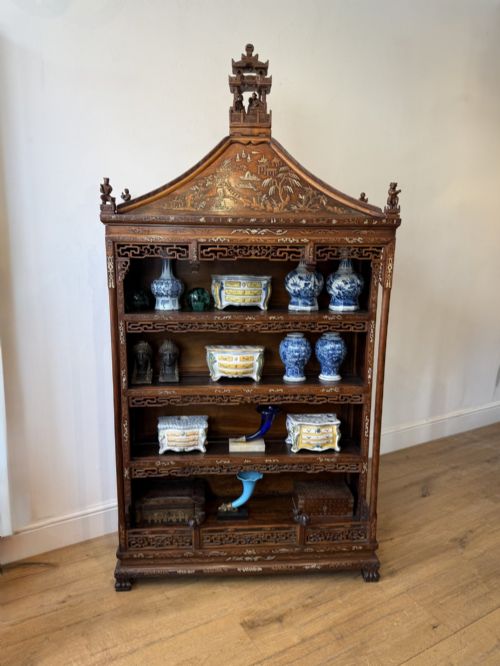


Hardwood Display Cabinet
A hardwood display cabinet brings structure and rich dark timber grain to a room, framing collections behind glass with quiet authority.
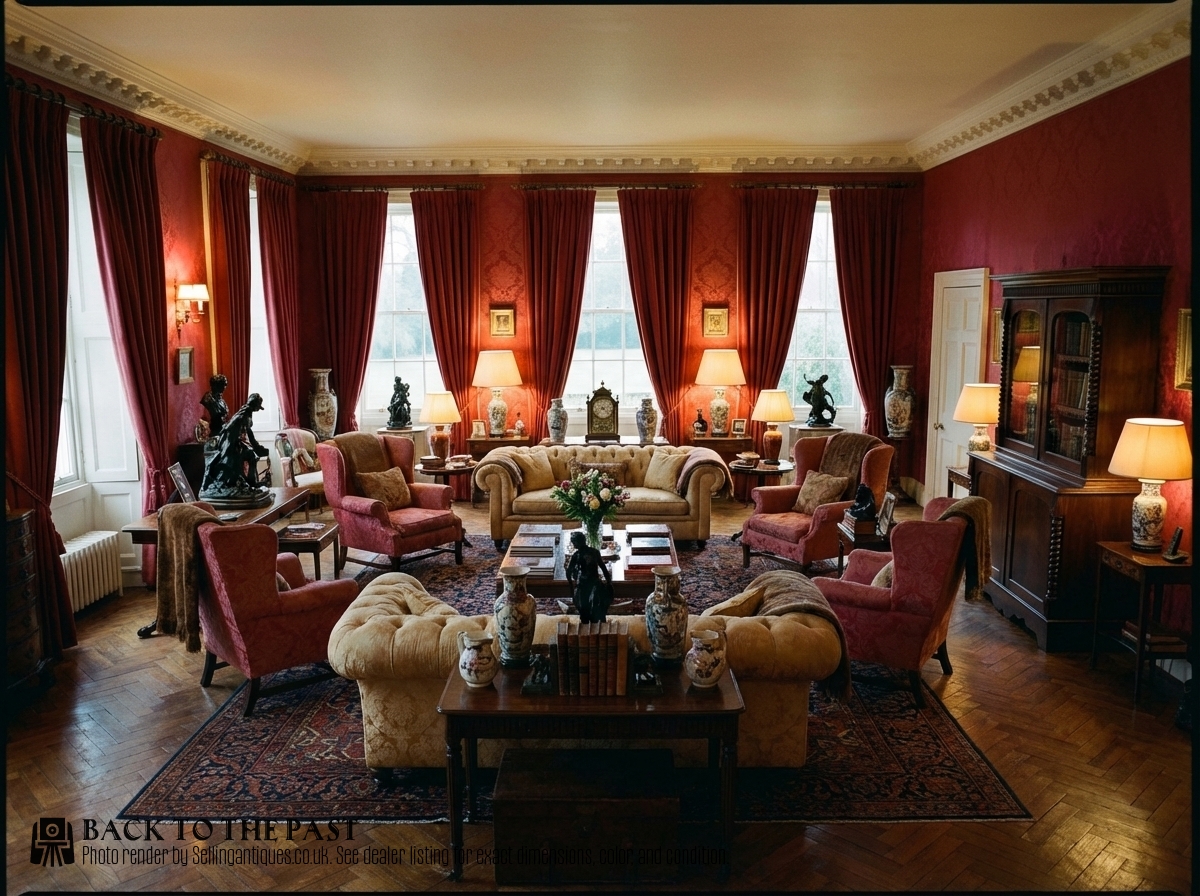
Hardwood Display Cabinet
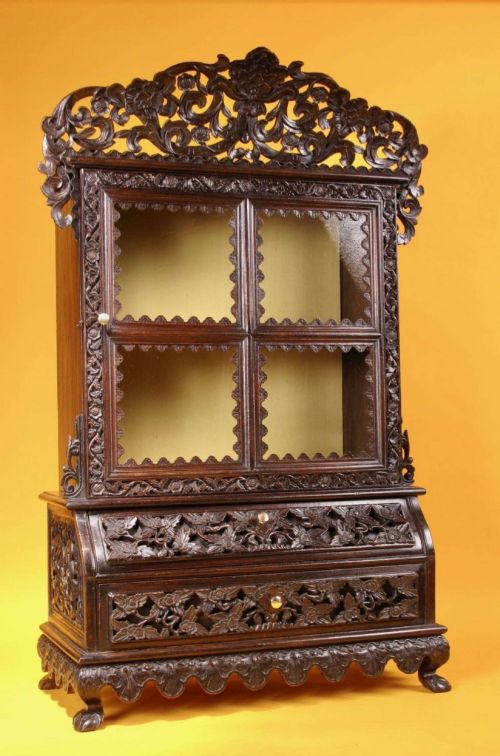
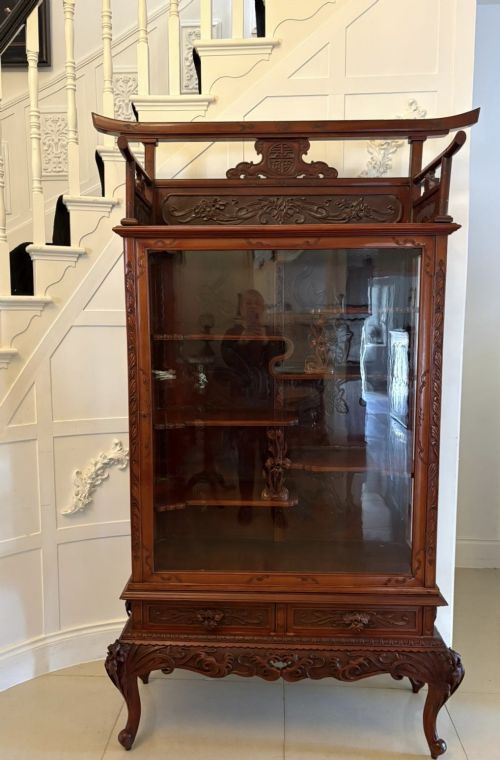
A hardwood display cabinet is a specialised storage and presentation piece designed to showcase small objects, ceramics, and curiosities behind glazed panels. When exploring this phrase, buyers encounter examples originating primarily from nineteenth and early twentieth century Chinese and Japanese workshops, alongside occasional British commercial counter variants.
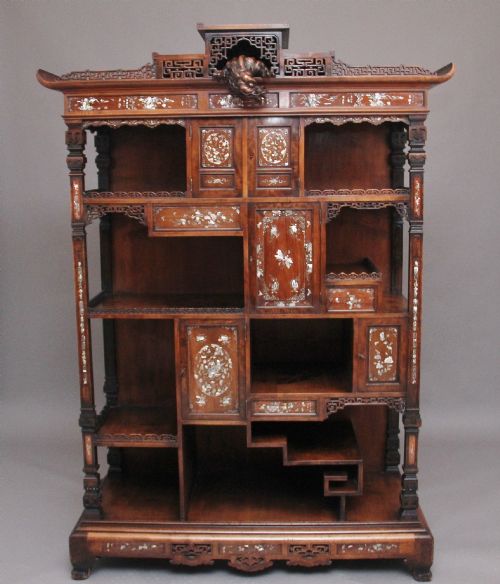
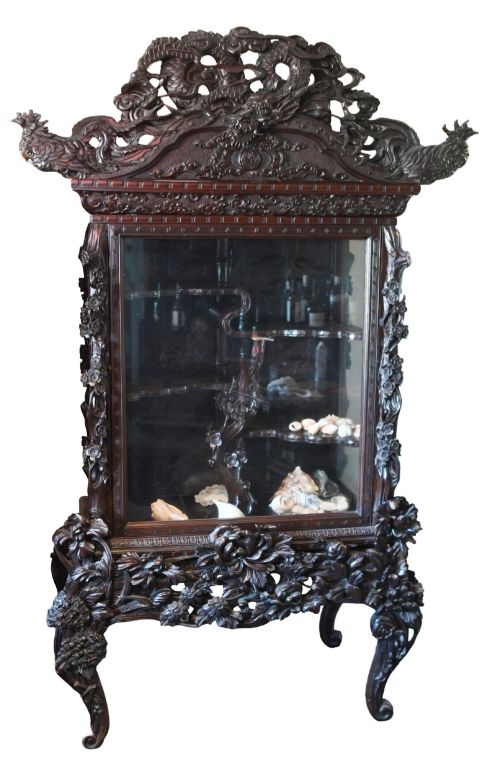
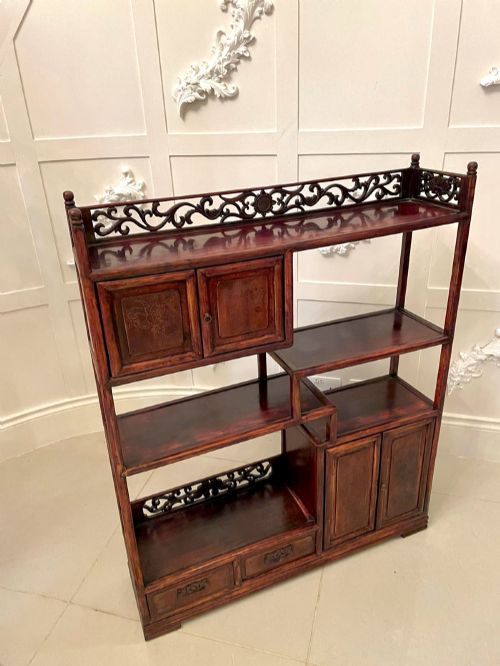
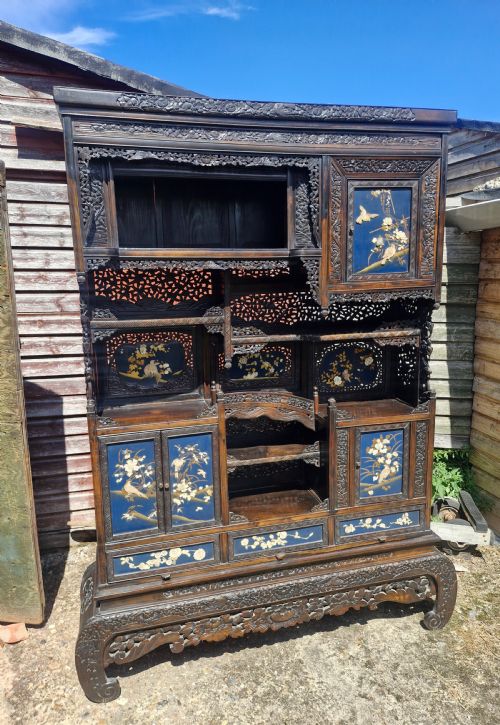
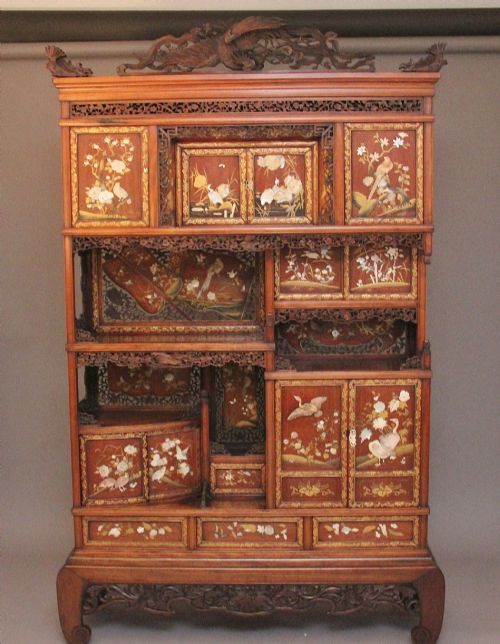
The Chinese and Japanese pieces dominate the selection, appearing as intricately carved Qing Dynasty cupboards, tiered Meiji period shodanas, and export cabinets. These forms emphasise asymmetrical shelving, glazed doors, and dense timber framing suited to displaying porcelain or scent bottles.
Alongside the Asian export pieces, the category includes British shop counter cabinets framed in hardwood and glazed for commercial confectionery display. These offer a distinct utilitarian character that contrasts with the heavily carved ornamental timber furniture.
How They Were Made
Construction relies heavily upon dense tropical hardwoods such as hongmu, padauk, and zitan, selected for their stability and capacity to hold intricate carved detail. Makers combined traditional joinery with surface enrichments like mother of pearl inlay, bone accents, and red lacquer.
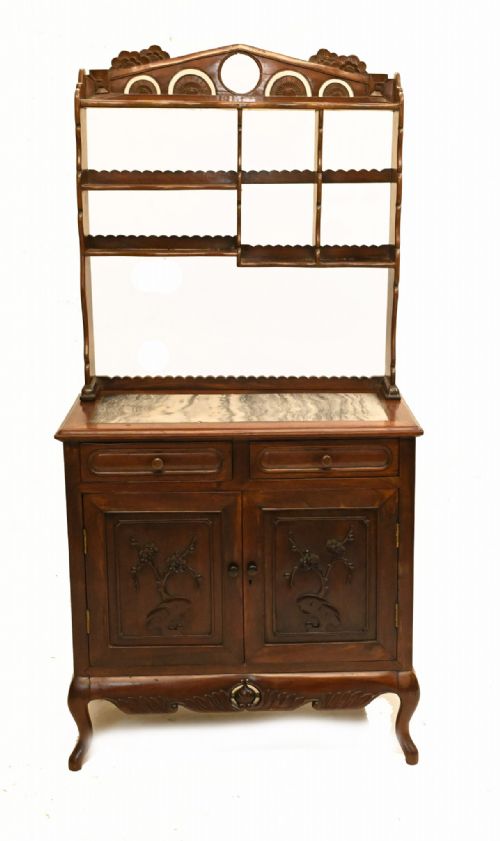
Glazing forms a central component of the construction, protecting contents while allowing light to pass across tiered interior shelving. Brass hardware and occasional marble or mirror inserts provide structural contrast and functional support within the denser framework.
Hardwood Display Cabinet Retail Price Guide 2026
Typical asking prices for hardwood display cabinet among the pieces listed under this phrase on Sellingantiques today, from the lower quarter to the upper quarter. They describe what is for sale here now, not the wider market.
Cabinets occasionally emerge bearing vintage cocoa branding, having transitioned from sweetshop counters to domestic display.
What Varies in Quality
Quality rests upon the depth and crispness of the timber carving, distinguishing flat mechanical execution from spirited hand-chiseled motifs like dragons and foliage. The density and selection of the underlying hardwood, whether dense hongmu or lighter commercial stock, dictates the weight and structural integrity of the piece.
The integration of decorative elements such as mother of pearl inlay and lacquer finishes determines the refinement of the object. Superior examples display precise flush fitting of inlays and unbroken surfaces that survive centuries of environmental shift without major timber movement.
Gabriel Viardot
The Hardwood Display Cabinet Glossary
- Shodana
- A Japanese multi-tiered display cabinet featuring asymmetrical shelving and sliding doors. These cabinets were designed to hold small decorative objects and netsuke.
- Hongmu
- A traditional Chinese term denoting dense, heavy red-hardwoods used in fine furniture construction. It translates literally to red wood.
- Japonisme
- A late nineteenth-century Western artistic movement heavily influenced by Japanese art and design. Objects in this style often incorporate asymmetrical motifs and lacquer techniques.
- Qing Dynasty
- The final imperial dynasty of China, spanning from sixteen forty-four to nineteen twelve. Furniture from this period is noted for deep carving and formal symmetry.
- Zitan
- An exceptionally dense and dark Asian hardwood prized by imperial craftsmen. It sinks in water and takes a fine polished finish without requiring stain.
Hardwood Display Cabinet: Frequently Asked Questions
What were shodana cabinets used for?
Shodana cabinets were traditionally utilised in Japanese interiors to display small, prized possessions such as ceramics, lacquer boxes, and netsuke.
Their varied internal shelving and small compartments allowed collectors to arrange diverse curiosities within a single framed structure.
How do I identify Chinese export furniture?
Chinese export furniture is characterised by traditional Asian motifs produced specifically for Western markets during the nineteenth century. These pieces frequently combine dense hardwoods with intricate relief carving depicting dragons, foliage, or figures.
Are shop counter cabinets hardwood?
Certain commercial display cabinets from the early twentieth century feature hardwood framing built to withstand daily retail use. These pieces often bear sign-written branding for confectionery manufacturers such as Cadbury or Rowntree.
What is mother of pearl inlay?
Mother of pearl inlay involves setting iridescent nacre fragments into carved recesses within the hardwood surface. This technique creates contrasting pale geometric or floral patterns against the dark timber ground.