




Hanging Display Etagere
A hanging display etagere is a wall-mounted set of open shelves designed to elevate collections, and these pieces bring compact architectural interest to any room.
Hanging Display Etagere
A hanging display etagere is a wall-mounted structure of open tiers intended to hold small decorative objects or books. When you browse this selection, you encounter forms that range from compact timber shelves to glazed cabinets and mirrored units.
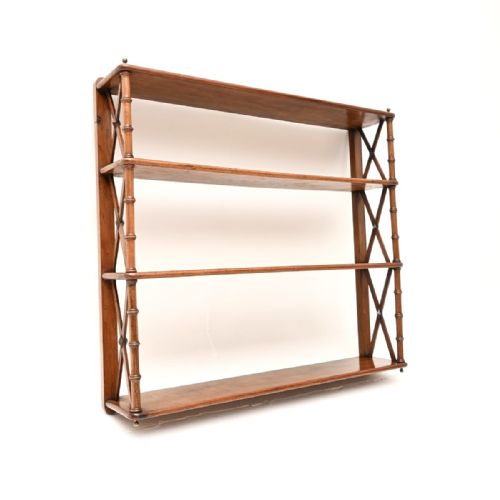
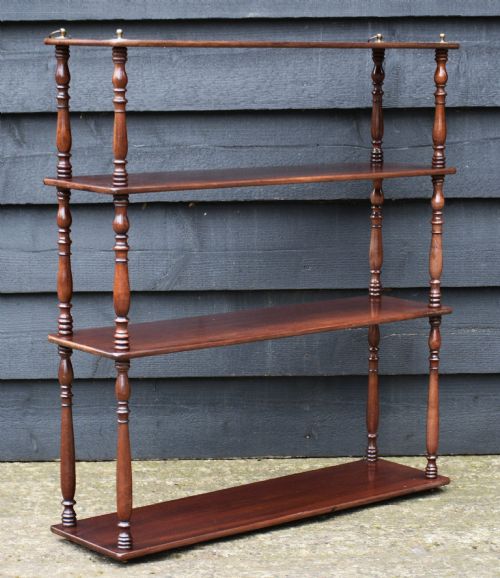
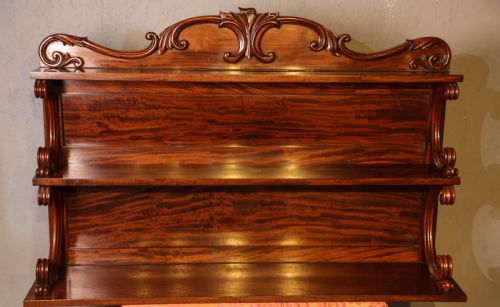
The pieces appearing here span the nineteenth century into the early twentieth century, showing influences from the Regency period through the Victorian era and French revival styles. Mahogany, walnut, and satin birch predominate, often taking the form of wall-mounted bookcases or tiered shelving.
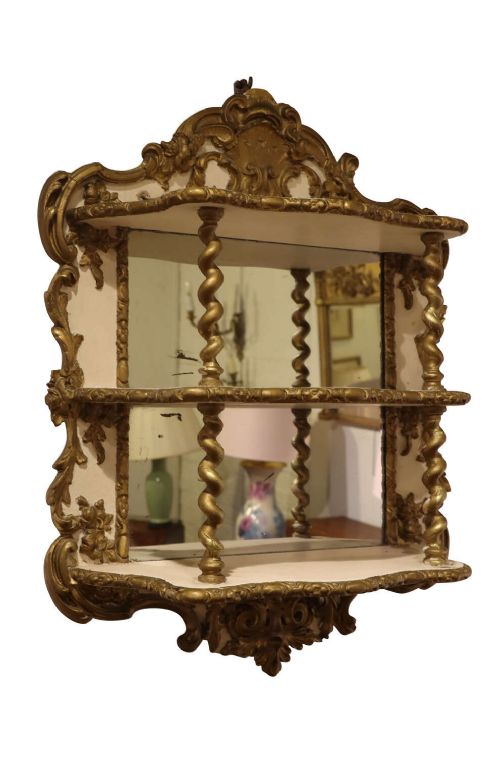
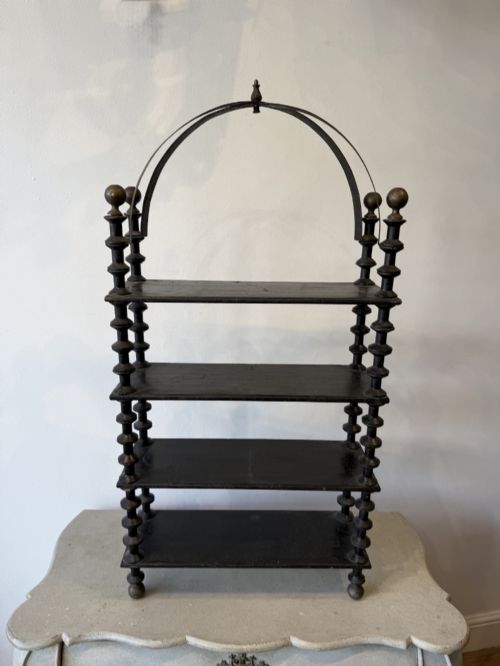
You are most likely to meet mahogany and walnut wall-hanging shelves from the Victorian period alongside French examples featuring decorative paint and gilt or bobbin turnings. These wall fixtures provide vertical display space without claiming floor area in a room.
Materials and construction
Cabinet makers utilised dense hardwoods such as mahogany, walnut, and satin birch to build structures strong enough for wall suspension while supporting various objects. Ebonised wood and cherry wood also appear in the evidence, providing darker or warmer timber tones.
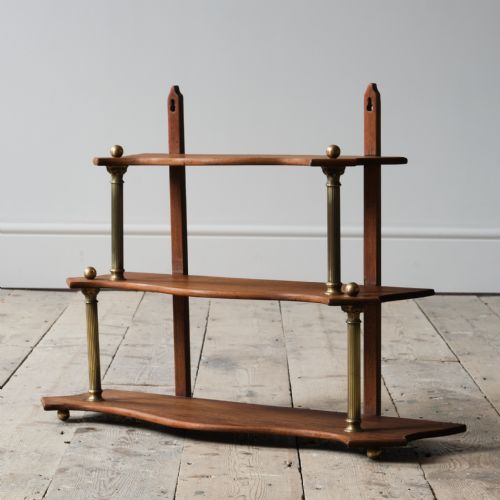
Details such as brass fittings, glass mirror plates, and giltwood embellishments enhance the visual weight of these wall fixtures. Construction methods rely on traditional joinery to secure shelves to backboards or vertical supports intended for secure wall hanging.
French bobbin shelves bring tactile turned wooden spheres to your walls, proving that someone long ago cared deeply about the silhouette of a spindle.
Judging the range
The refinement of the timber grain and the precision of decorative elements dictate the upper tier of these pieces. Select examples incorporate intricate inlays, fine turning such as bobbin work, or gilt finishes that elevate them from simple storage.
Simpler workshop output relies on straightforward mahogany or walnut boards assembled for utility rather than ornamentation. The presence of integrated mirrors or glazed doors shifts a piece from basic shelving toward a more formal display cabinet.
The Hanging Display Etagere Glossary
- Étagère
- A piece of furniture consisting of a set of open shelves for displaying small objects. These tiered units can stand on the floor or mount directly to a wall.
- Mahogany
- A durable, reddish-brown tropical hardwood favoured for fine cabinet making throughout the eighteenth and nineteenth centuries. Its stability made it ideal for slender shelving components.
- Satin birch
- A pale, lustrous timber with a fine grain used extensively for decorative furniture in the nineteenth century. It offers a bright contrast to darker woods.
- Giltwood
- Wood that has been treated with gold leaf or gold paint to simulate solid gold ornamentation. This finish frequently highlights carved details on French revival pieces.
- Ebonised
- Wood finished with a dark stain or paint to imitate the appearance of ebony. This technique was popular in Victorian aesthetic and revival furniture.
Hanging Display Etagere: Frequently Asked Questions
How do I hang a heavy wooden etagere securely?
Wall-mounted etageres require sturdy fixings suited to the weight of the timber and the objects placed upon them. Fixing directly into wall studs or using appropriate heavy-duty cavity anchors ensures stability.
Because these pieces project outward from the wall, checking the bracket attachments and the integrity of the backboard is essential before loading the shelves with heavy books or ceramics.
What is the difference between a wall shelf and an etagere?
A wall shelf typically consists of one or two flat boards fixed horizontally to a wall for simple storage or display. An etagere specifically denotes a tiered structure with multiple levels designed explicitly for arranged display.
In historical listings, these terms often overlap, but an etagere generally implies a more decorative, multi-layered architectural silhouette.
How can I tell a Victorian etagere from a Regency one?
Regency pieces tend to exhibit cleaner architectural lines, classical proportions, and restrained ornamentation reflecting early nineteenth-century neoclassical tastes. Victorian pieces often display heavier proportions, richer carving, or eclectic revival styles such as Gothic or Rococo.
Examining the secondary woods, screw types, and overall construction assists in identifying the specific manufacturing period.
Are these shelves suitable for heavy books?
Many wall-hanging units are designed primarily for decorative objects, small ornaments, or light volumes rather than heavy reference libraries. Portable bookshelves and sturdy mahogany brackets can support more weight, but checking the depth and board thickness is necessary.
Distributing weight evenly across the tiers prevents undue strain on the wall fixings and the historical joints.