
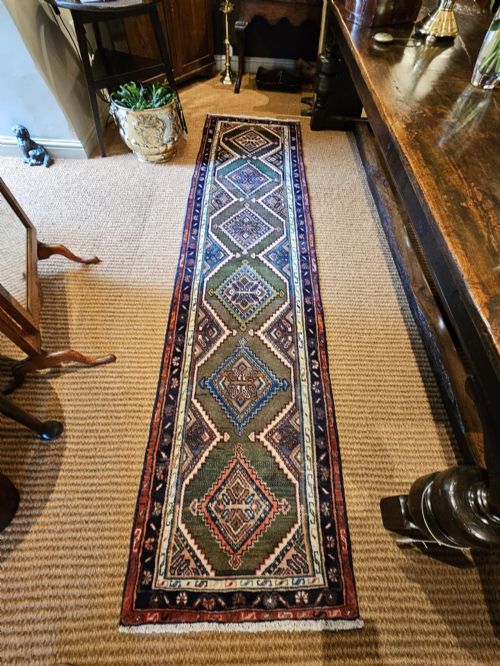
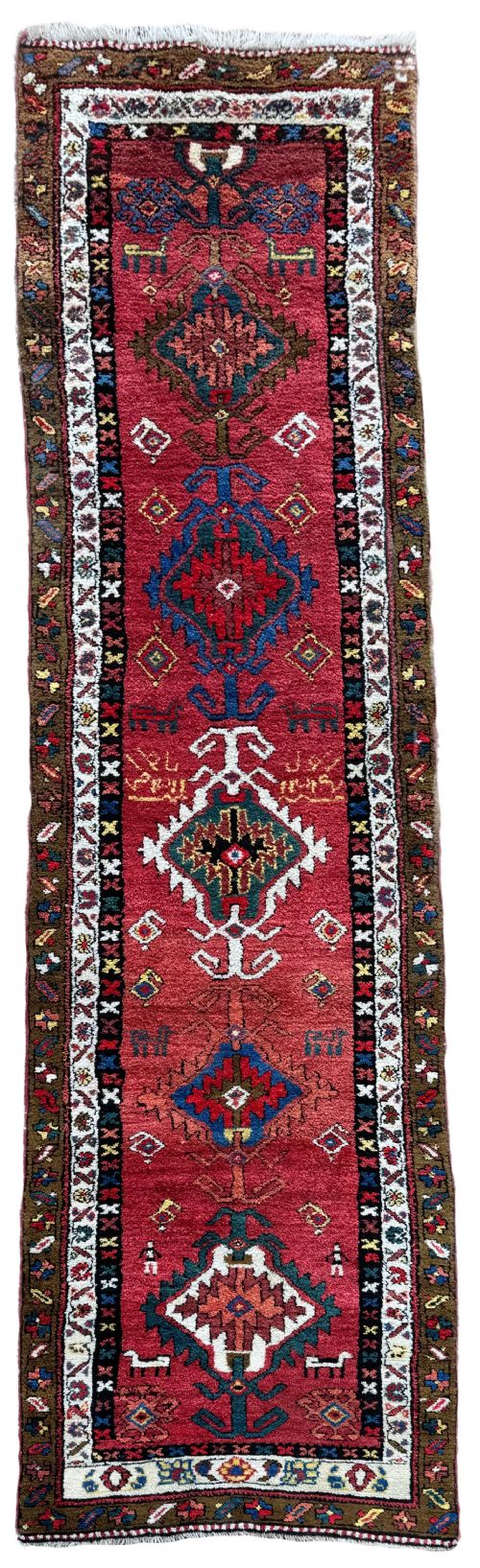
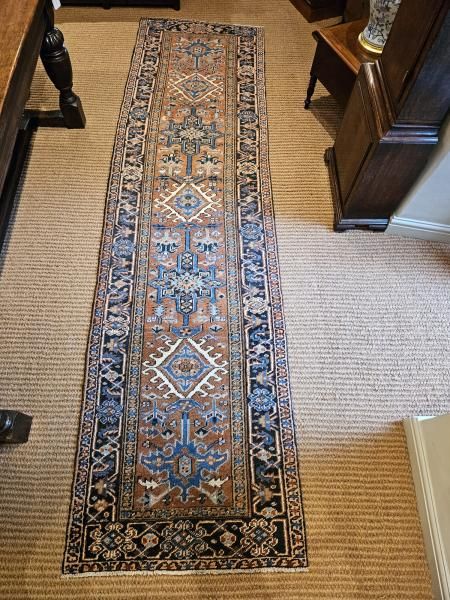
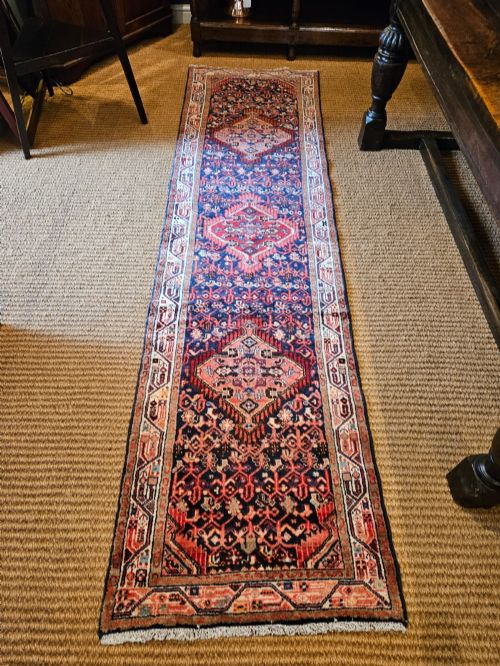
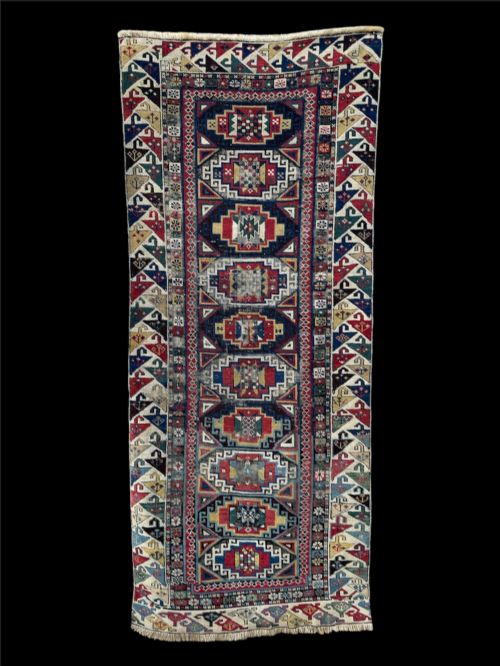
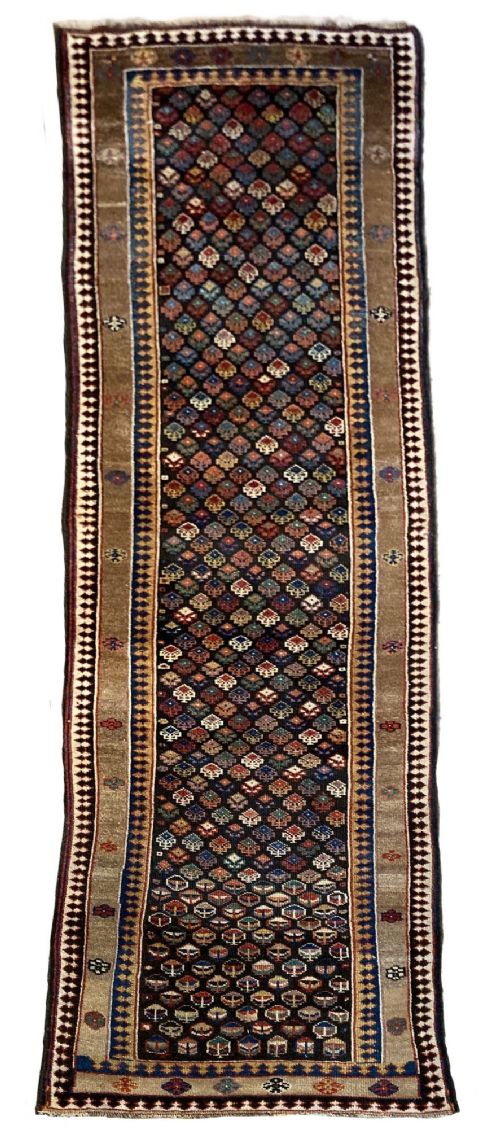
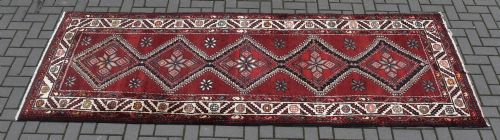


Handwoven Wool Long Runner
These handwoven wool long runner pieces bring enduring regional designs and tactile warmth to extended hallways and narrow spaces.
Handwoven Wool Long Runner
A handwoven wool long runner serves as a functional floor covering designed specifically for corridors, hallways, and narrow living spaces. Buyers searching for a handwoven wool long runner will discover examples originating from Persian, Caucasian, Turkish, and Afghan traditions, spanning from the late nineteenth century into the early twentieth century.
What varies in quality
The distinction between tiers rests upon the density of the knotting and the fineness of the spun wool utilised in the pile. Tightly packed knots allow intricate geometric and floral motifs to remain sharp and well-defined over decades of heavy foot traffic.
Proportion and dye consistency also dictate distinction, with superior examples exhibiting harmonious colour saturation and balanced, symmetrical border arrangements. The handling of the wool foundation dictates how flat the textile lies along a hallway.
Several nomadic runners incorporate tiny hidden animal motifs woven right into the borders by weavers working from memory.
The Handwoven Wool Long Runner Glossary
- Runner
- A long, narrow carpet format specifically proportioned for corridors, hallways, and stairs. This shape directs movement through domestic spaces.
- Pile
- The upright yarn loops or cut ends that form the soft surface of the carpet. Wool pile provides cushioning and insulation underfoot.
- Warp
- The stationary lengthwise threads stretched on the loom before weaving begins. These parallel strings form the structural skeleton of the textile.
- Kilim
- A flatweave textile structure produced without a pile by tightly interweaving warp and weft threads. These sections frequently appear at the ends of piled runners.
- Boteh
- An almond-shaped or paisley motif with a curved upper end, commonly found in traditional Persian and regional tribal weaving.
Handwoven Wool Long Runner: Frequently Asked Questions
Where should I place a long runner?
These narrow textiles suit hallways, corridors, and galleys where floor protection and visual warmth are required.
They also function effectively beside beds or within elongated entrance passages to direct movement.
How do I identify nineteenth-century pieces?
Nineteenth-century examples often display subtle natural dye variations and softer wool textures resulting from hand-spinning.
Structural clues such as wool or cotton foundations and traditional tribal motifs also point toward earlier manufacturing periods.
What is the difference between Heriz and Hamadan runners?
Heriz runners typically present bold, geometric medallion designs with robust structure and substantial proportions.
Hamadan runners frequently feature overall repeat patterns or smaller medallion layouts associated with village production in western Persia.
How should I care for a wool runner?
Regular gentle vacuuming without a rotating brush roll helps remove grit from the wool pile.
Professional cleaning suited for antique textiles preserves the integrity of the natural wool fibres and dyes.