


Handwoven Wool Afghan Carpet
When you search for a handwoven wool afghan carpet, you are looking at tribal and village floor coverings made across periods spanning the nineteenth and early twentieth centuries.
Handwoven Wool Afghan Carpet
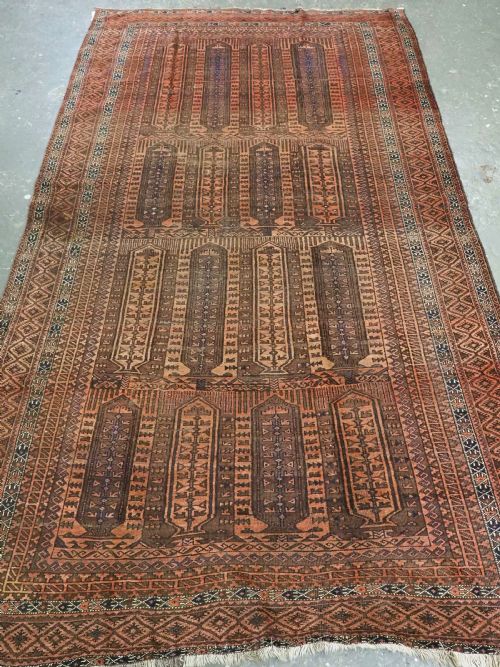
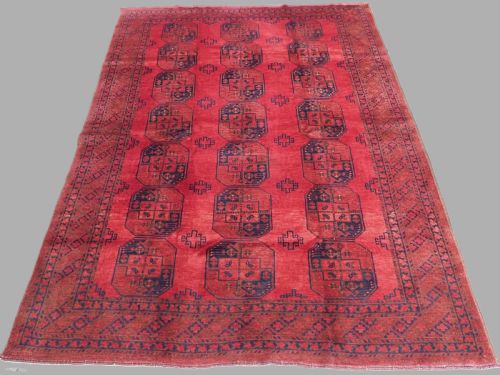
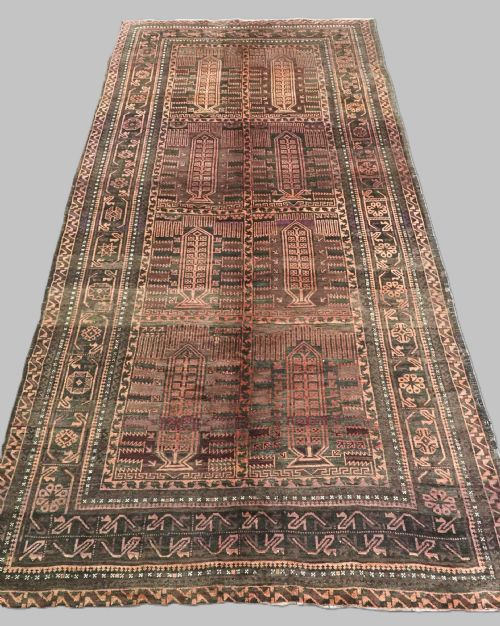
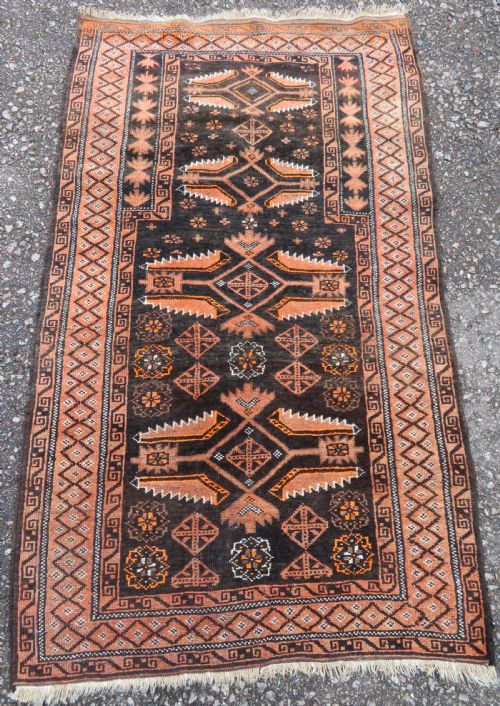
A handwoven wool afghan carpet encompasses tribal and village weaving traditions originating from Afghanistan and its borderlands. The selection centres on formats such as main carpets, runners, prayer rugs, and flatwoven kilims produced by groups including the Baluch, Timuri, Ersari, and Taimani tribes.
Most examples encountered here date from the late nineteenth century through to the early decades of the twentieth century, typically originating around 1900 to 1920. Pieces range from compact prayer rugs with mihrab niches to large area carpets and two-part kilims.
Village and tribal weavers created these floor coverings for practical domestic use, utility, and ceremonial purposes such as eating cloths or hearth rugs. The designs often incorporate geometric patterns, animal motifs, and traditional tribal layouts.
How they were made
The construction relies primarily on hand-spun wool, frequently complemented by camel hair, goat hair, and cotton foundations. Natural dyes provide the warm reds, deep rich tones, and old gold hues characteristic of these textiles.
Weavers utilised techniques including knotted pile work alongside flatweave construction, sometimes combining methods within mixed-technique pieces or joining separate panels together to form larger carpets.
Materials recorded on this page include hand-spun wool, camel hair, goat hair, cotton, and natural dyes.
What varies in quality
The handle and density of the wool foundation establish the initial grade of a handwoven wool afghan carpet, with softer, glossier fleeces yielding a finer tactile experience. The stability of the weave and the precision of the tribal motifs also distinguish standard village production from superior examples.
Depth and saturation of the natural dyes influence visual appeal, where rich, uniform tones across the field denote careful dye preparation. The integrity of structural edges, long kilim ends, and the preservation of the original format determine the overall preservation level.
The Handwoven Wool Afghan Carpet Glossary
- Baluch
- A designation for rugs and carpets woven by nomadic and semi-nomadic tribes inhabiting the border regions of Afghanistan and Persia. These pieces often feature deep indigo, brown, and warm red palettes.
- Mihrab
- An arch-shaped design motif used primarily on prayer rugs to represent the direction of prayer. Variations include single arches as well as multiple mihrab designs known as seh mihrab.
- Kilim
- A flatwoven textile produced without a pile by tightly interweaving warp and weft threads. They appear as standalone rugs or as decorative flatweave ends on piled carpets.
- Sofreh
- A traditional woven spread or cloth utilised for communal dining or food preparation within tribal households. These utilitarian textiles often display austere geometric compositions.
- Ersari
- A major Turkmen tribal grouping known for producing large carpets and prayer rugs characterised by deep red colouring and gushli goll or traditional gul motifs.
Handwoven Wool Afghan Carpet: Frequently Asked Questions
How do I identify a prayer rug?
Prayer rugs feature a distinct architectural niche or arch motif known as a mihrab at one or both ends. This design element directed the user towards Mecca during daily devotions.
Such rugs are generally smaller in format than main carpets to allow for portability and personal use within nomadic or village dwellings.
What is a seh mihrab design?
A seh mihrab design incorporates three distinct prayer arches grouped side by side across the field of the rug. This multi-niche arrangement appears frequently in Baluch and village prayer rugs.
It provides a balanced, repetitive geometric pattern while retaining the symbolic function of the single arch.
Where were these carpets woven?
Production took place across towns, villages, and nomadic encampments throughout Afghanistan and adjacent borderlands shared with Persia. Specific tribes such as the Timuri, Taimani, and Ersari worked within distinct regional territories.
Local access to materials like camel wool, sheep wool, and natural dye plants shaped the distinct regional aesthetics.
How should I care for an antique rug?
Protect the wool pile by placing a suitable breathable underlay beneath the carpet to prevent slipping and reduce abrasion. Vacuum gently without using a rotating brush bar to avoid pulling the hand-spun fibres.
Rotate the rug periodically to ensure even wear from foot traffic and exposure to natural light.