




Handwoven Tribal Saddlebag
A handwoven tribal saddlebag brings authentic nomadic textile artistry into a modern room, offering rich geometric patterns and tangible history.
Handwoven Tribal Saddlebag
When you search for a handwoven tribal saddlebag, you encounter utilitarian nomadic carriers and bag faces created by tribal groups across Persia, Anatolia, and Central Asia during the late nineteenth and early twentieth centuries. These textiles served practical transport functions for pastoral nomads, woven on portable ground looms to carry possessions on horseback or camelback.
You are most likely to meet individual bag faces, half saddle-bags, or complete double-pouch examples finished in kilim, sumak, or pile techniques. The inventory spans specific tribal identities such as Qashqai, Shahsavan, Baluch, Afshar, and Yuruk, reflecting the distinct regional weaving traditions of the era.
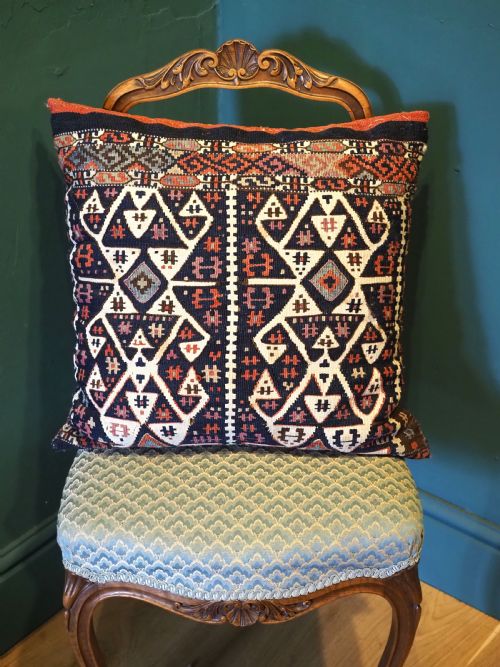
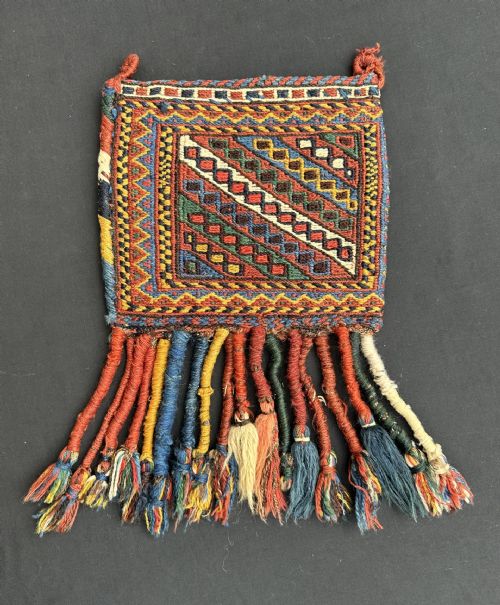
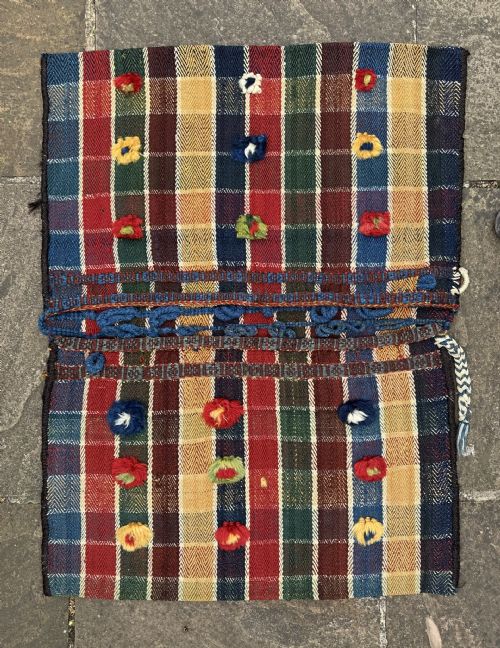
The objects take several forms on this page, including entire paired saddle-bags complete with their plain weave backs, isolated bag faces, conversion cushions, and long storage pouches. Each piece demonstrates the traditional utility of nomadic household furnishings adapted for contemporary display.
How they were made
Weavers relied primarily on hand-spun wool for both foundation warps and surface wefts, sometimes incorporating cotton or leather details for structural reinforcement. Natural dyes derived from local plants and minerals provided the deep reds, blues, and earth tones characteristic of these regional textiles.
The construction combined flatweave kilim structures, supplementary weft-wrapping, and knotted pile work to create durable storage containers. Metal elements occasionally appeared on specific nomadic pieces for fastenings or structural integrity.
Materials recorded across the inventory include hand-spun wool, cotton, leather, metal, and natural dyes utilised within traditional flatweave and pile techniques.
What varies in quality
The standard of a handwoven tribal saddlebag depends upon the tightness of the weave, the clarity of the tribal motifs, and the depth of the natural dye palette. Pieces that retain their original complete structure or paired format demand greater interest from collectors.
Execution of intricate geometric designs and the condition of the hand-spun wool foundation further separate standard domestic pieces from finer tribal examples produced by master weavers within specific nomadic confederations.
The Handwoven Tribal Saddlebag Glossary
- Khorjin
- The traditional Persian term for a double-sided saddlebag used by nomadic tribes for transport and storage. These bags typically feature a plain weave central slit connecting two decorated compartments.
- Bag face
- The decorative front panel of a saddlebag that survived after the plain back panel deteriorated or was cut away. Many surviving examples on the market consist solely of these ornamented sections.
- Kilim
- A flatweave textile created by tightly interweaving warp and weft strands without producing a pile surface. This technique allowed nomadic weavers to construct lightweight and durable utility bags.
- Heybe
- The Turkish term for a traditional saddlebag utilised by nomadic groups in Anatolia. These pieces frequently display regional colour palettes and distinctive border patterns.
- Sumak
- A supplementary weft-wrapping technique that creates a textured, ribbed surface on the face of the textile. It provides extra durability and structural strength to nomadic storage pouches.
Handwoven Tribal Saddlebag: Frequently Asked Questions
How were saddlebags used by nomads?
Nomadic tribes utilised these double-pouch bags draped across pack animals to transport household goods, grain, and personal belongings during seasonal migrations. When camp was established, the bags served as floor storage containers inside tents.
Their sturdy construction protected contents from weather and rough travel, combining practical daily utility with traditional tribal artistry.
How do I care for a textile bag face?
Protect the wool and natural dyes by keeping the textile out of direct sunlight to prevent fading. Gentle vacuuming through a mesh screen removes dust without disturbing the hand-spun fibres.
Avoid hanging heavy pieces by single points; instead, support the weight evenly across a flat backing or display them safely as cushions.
What is the difference between a complete bag and a bag face?
A complete saddlebag retains both of its original compartments and the connecting slit panel, sometimes including the plain weave back or metal hardware. These intact sets represent the original functional form.
A bag face is just the decorated front panel separated from the back over decades of use, often mounted or framed for wall display.
How can I tell different tribal styles apart?
Tribal attribution relies on specific combinations of knotting structures, wool characteristics, and distinct geometric or medallion motifs. Qashqai and Afshar pieces from southern Persia often use rich blues and reds with fine-grained detail.
Anatolian Yuruk and Northwest Persian Shahsavan examples tend to display bolder banded weft work, sharper latch-hook patterns, and distinct palette choices rooted in their specific geographic regions.