

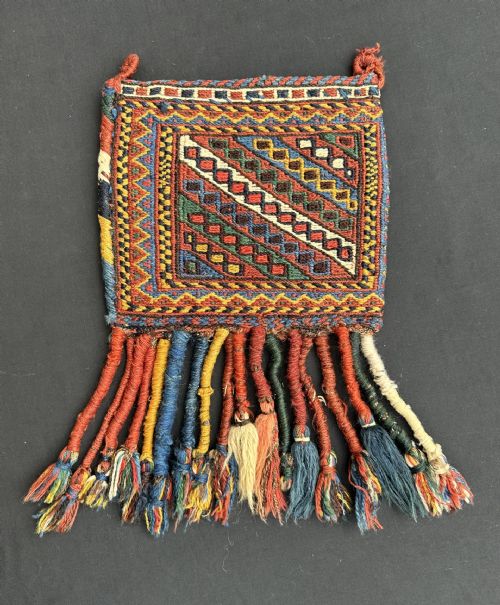

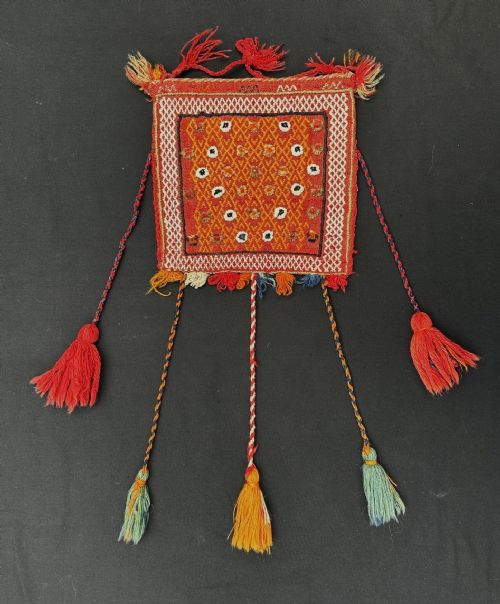


Handwoven Tribal Pouch
When you handle a handwoven tribal pouch, you hold domestic nomadic craft made to carry salt, tobacco, or personal items across Persia and Central Asia.
Handwoven Tribal Pouch
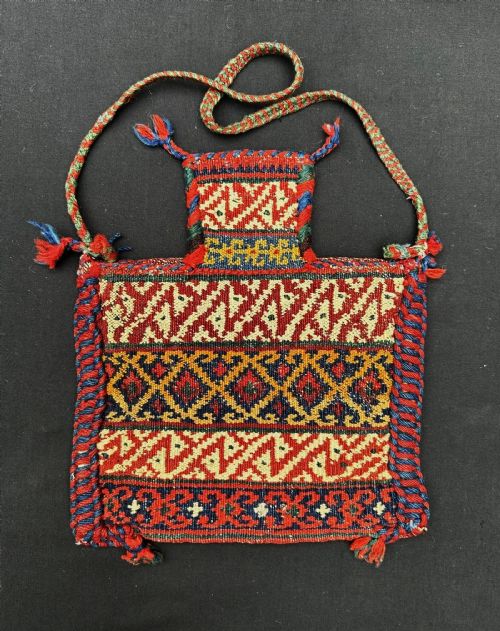
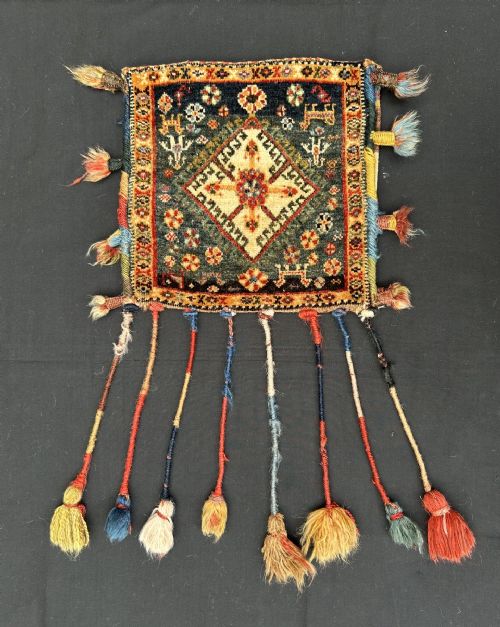
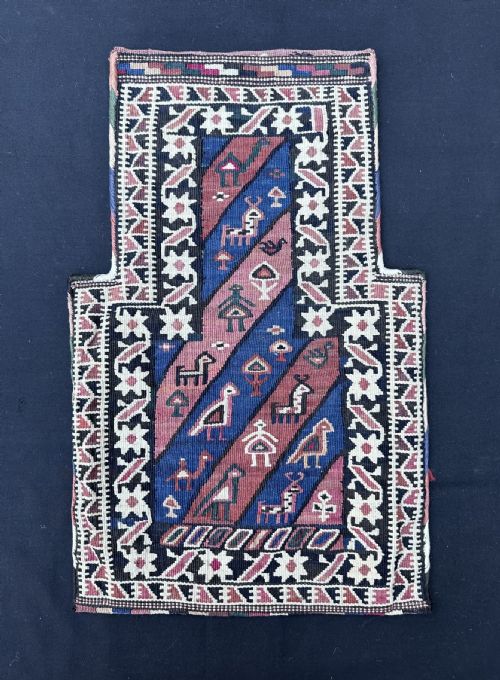
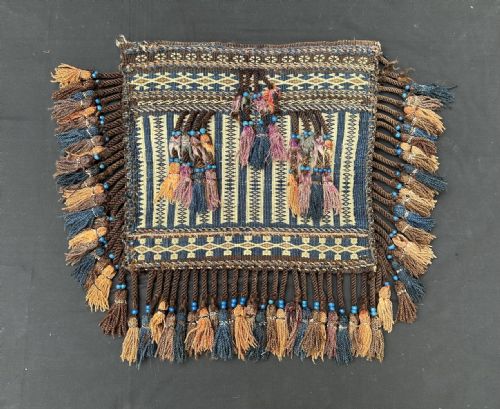
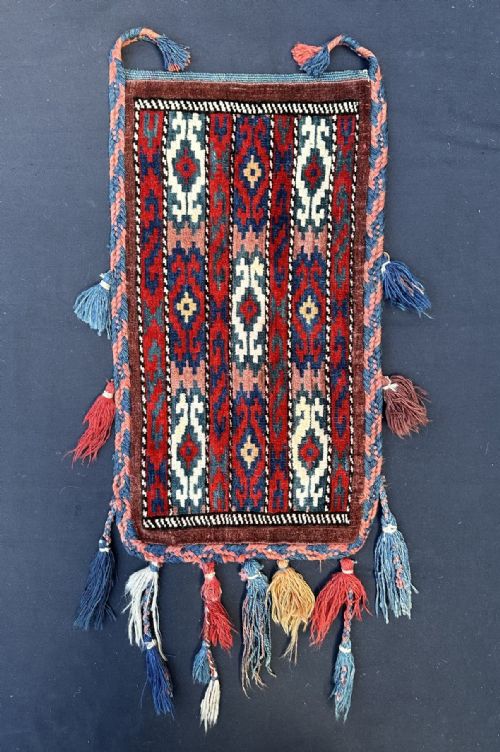
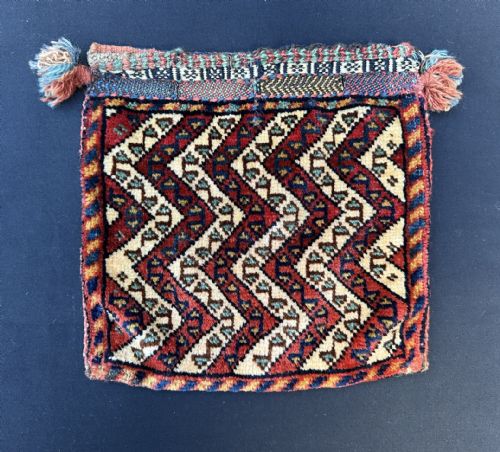
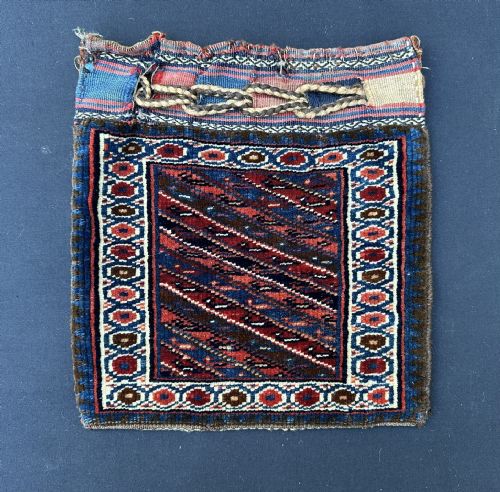
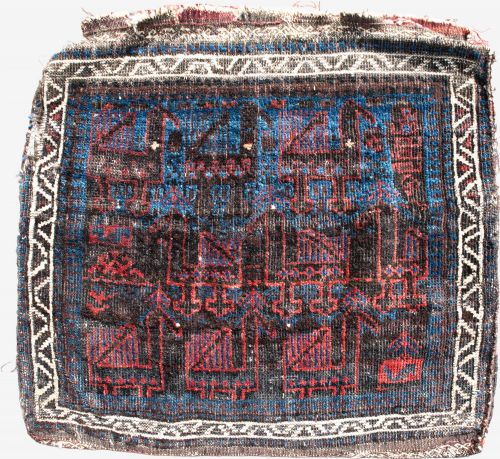
A handwoven tribal pouch encompasses small utilitarian bags produced by nomadic confederacies and tribal groups across Persia, Afghanistan, and Turkmenistan. These textile pieces include tobacco and pipe bags, salt bags, vanity bags, and spindle bags originating from periods between 1880 and 1920.
The most frequent examples encountered on this page are vanity bags and salt bags attributed to the Qashqa'i Confederacy and Afshar nomads of Persia. Buyers will also find Turkmen torbas, Baluch storage bags, and Shahsavan kilim bags from the late nineteenth and early twentieth centuries.
Nomadic weavers constructed these items for practical storage during seasonal migrations, utilising traditional patterns specific to their sub-tribe or region. Each pouch reflects the utilitarian demands and distinctive artistic vocabulary of its maker.
Evaluating quality and execution
Quality rests in the tightness of the weave, the handling of natural dyes, and the fineness of the knotting executed by the nomad. Superior pieces demonstrate exceptional precision in tribal geometric motifs and structural integrity across the plain weave backing.
The integrity of surface embellishments such as glass beads and cowrie shells contributes significantly to the distinction of an example. Complete sets, pairs, and pouches retaining their original structural components command attention for their preservation.
Listings feature wool, hand-spun wool, cotton, silk, glass beads, and cowrie shells across Persian, Afghan, and Turkmen origins.
The Handwoven Tribal Pouch Glossary
- Torba
- A small Turkmen storage bag often hung inside a tent. These pieces frequently feature characteristic gul motifs.
- Namakdan
- A traditional Persian salt bag woven by nomadic tribes with a narrow neck. Collectors prize these for their specific utilitarian form.
- Chanteh
- A small personal bag or vanity pouch produced by Persian nomads. They served to carry personal belongings during migrations.
- Igsalyk
- A Turkmen spindle bag utilised for storing spinning equipment. These textiles display specialised narrow formats.
- Gul
- An octagonal medallion pattern repeated across Turkmen tribal weavings. Each tribal group utilised distinct variations of this motif.
Handwoven Tribal Pouch: Frequently Asked Questions
What were tribal pouches used for?
Nomadic groups utilised these small textiles to transport and store personal belongings, salt, tobacco, pipes, or spindle equipment during seasonal migrations. They functioned as durable, portable containers suited to life on the move.
Many designs served specific domestic purposes within the tent or encampment, hung from lattice walls or kept packed with daily necessities.
How do I care for a textile pouch?
Protect the wool and natural dyes by keeping the piece away from direct, strong sunlight to prevent fading. Gentle surface cleaning with a soft brush removes dust without disturbing the fibres.
Avoid hanging heavy items inside antique pouches, as the historical fabric sustains stress best when displayed flat or supported evenly.
How do I tell different tribal styles apart?
Tribal attribution relies on specific structural formats, regional colour palettes, and characteristic geometric motifs unique to groups like the Afshar, Baluch, or Yomut. Examining the weave structure and material combinations often reveals the originating region.
Reference literature detailing Persian and Central Asian nomadic confederacies helps connect particular design layouts to specific sub-tribes.