

Handled Serving Platter
These handled serving platter designs bring practical elegance to table service through enduring metal and timber forms.
Handled Serving Platter
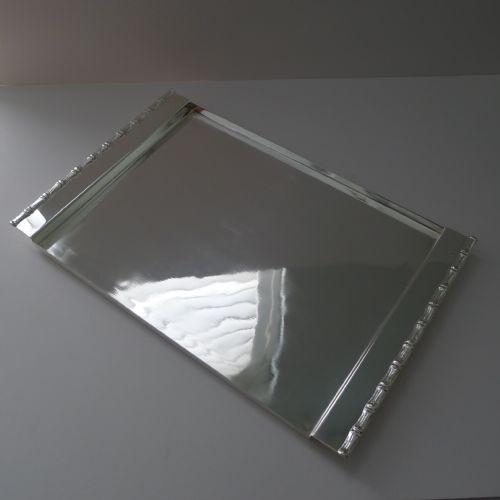
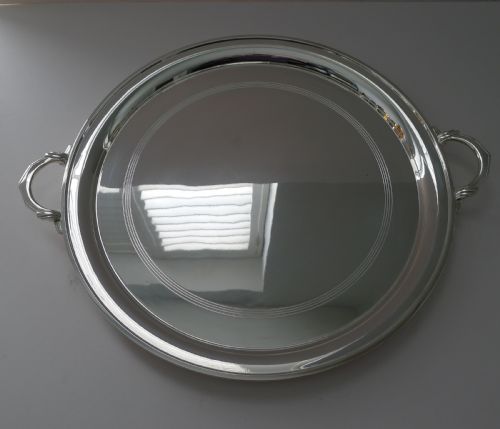
A handled serving platter provides a stable surface for carrying drinks, afternoon tea, or large dishes during formal and casual gatherings. These pieces appear across Victorian, Edwardian, and Art Deco periods, shifting from heavy silver plate to lighter timber and pewter forms.
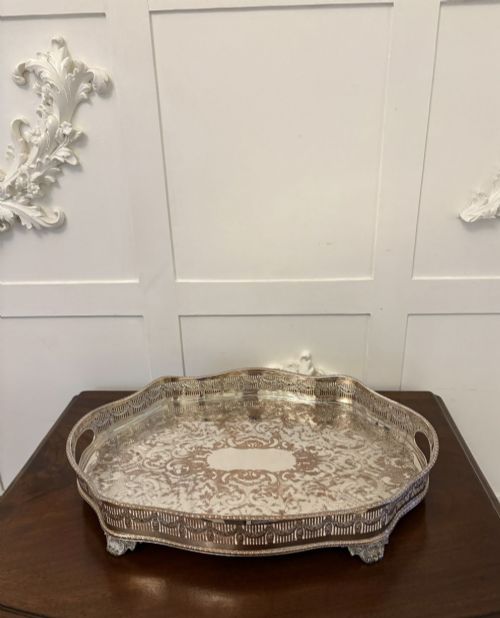
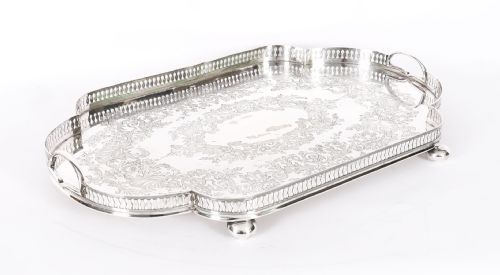
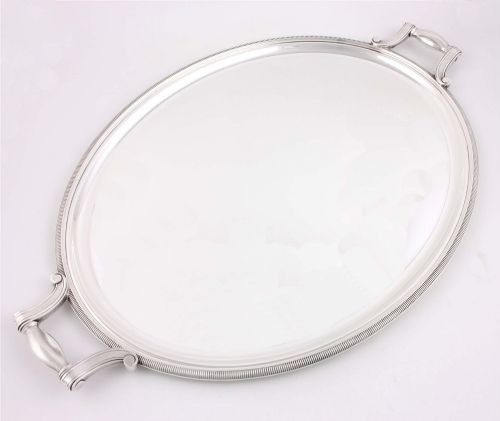
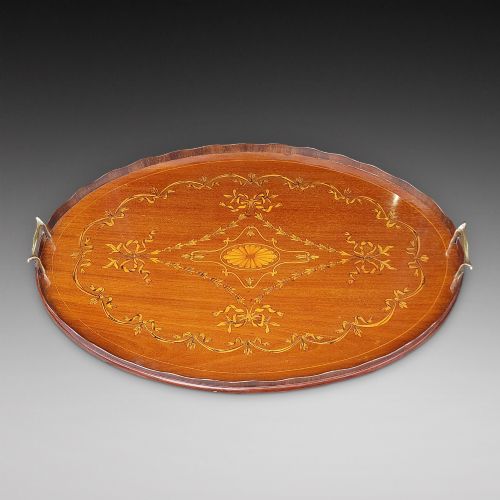
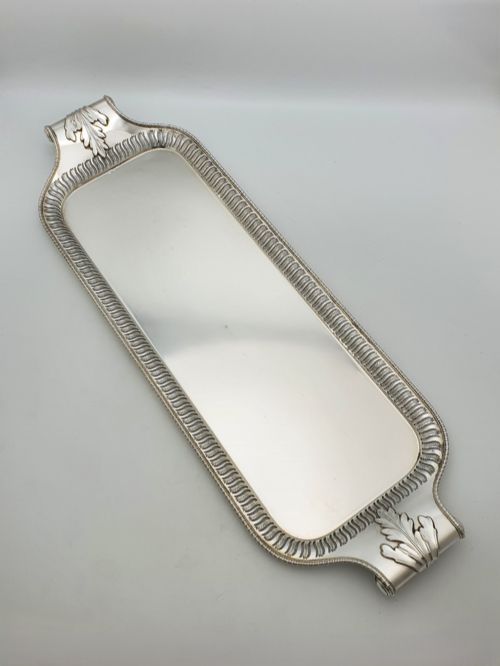
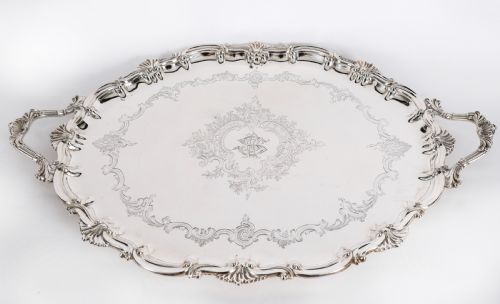
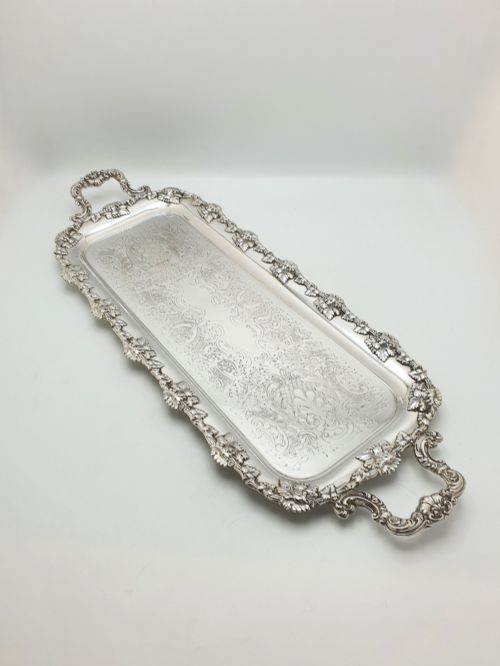
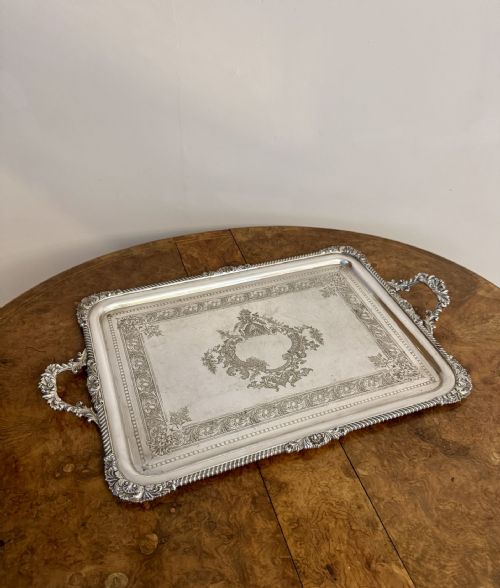
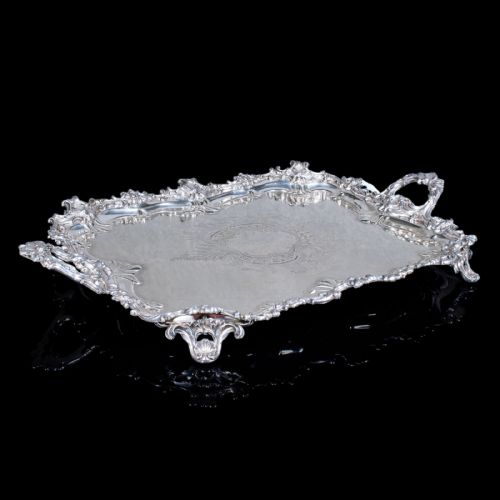
The version most commonly met on this page is the Edwardian or Victorian silver-plated tray featuring cast handles, an engraved surface, and a pierced or gallery border. Alongside metal designs, walnut, mahogany, and inlaid woods offer traditional alternatives with integrated brass handles.
Originating largely from English workshops and European makers, these trays span utility and display. Whether utilised for cocktails, decanters, or meat service, each item reflects the domestic routines of the nineteenth and twentieth centuries.
How they were made
Silver plate and nickel silver dominate the metal pieces on this page, often applied over a base metal foundation through electroplating techniques developed in the nineteenth century. Makers incorporated cast handles and applied borders, soldering or riveting them securely to the tray body.
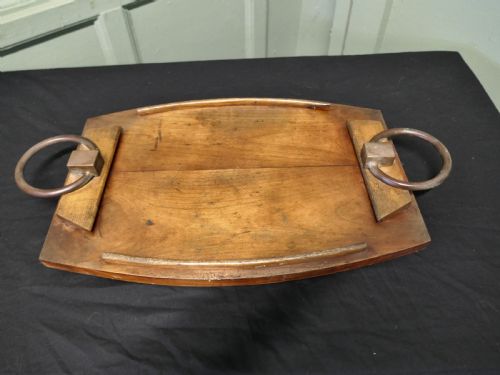
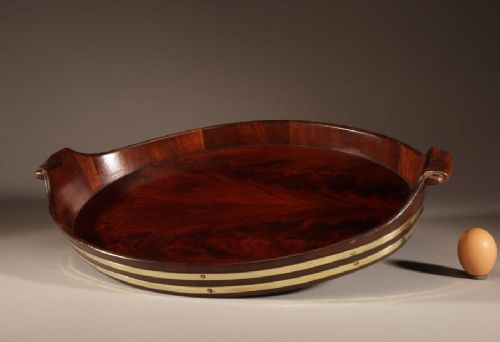
Timber examples utilise mahogany, oak, and satinwood, frequently enhanced with marquetry inlay or brass coopered banding. Craftsmen shaped solid woods or applied veneers, integrating wooden or brass handles directly into the structural frame.
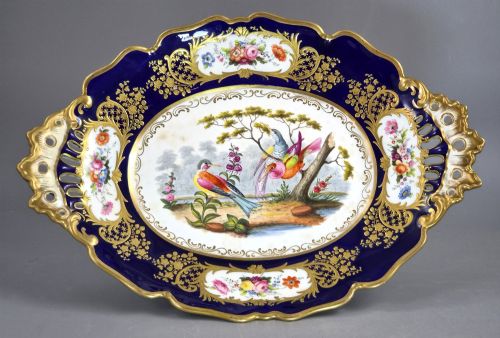
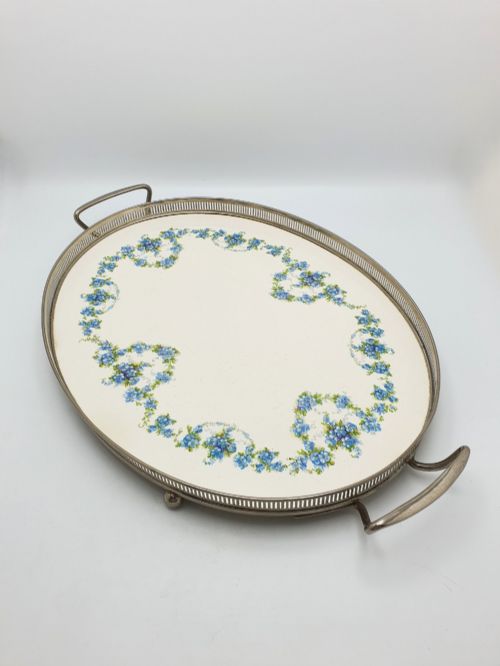
Ceramic and porcelain variations, such as ironstone and porcelain dishes, involve traditional glazing and firing methods sometimes paired with metal mounts. Etched mirror glass and pewter also appear, demonstrating the diverse fabrication methods employed by Arts and Crafts and modernist designers.
Materials range from silver plate and copper to mahogany, satinwood, and pewter.
What varies in quality
The weight and thickness of the metal plate determine the durability and substance of silver-plated examples. Substantial gauge silver plate resists denting and maintains its integrity through decades of handling, whereas thinner plating wears down to the base metal over time.
The precision of the joinery and inlay distinguishes finer wooden and marquetry pieces from standard production. Crisp hand-engraving on silver surfaces and solid, securely fitted handles indicate superior workshop standards compared to mass-stamped alternatives.
Keith Murray For Mappin & Webb·James Deakin·Thomas Bradbury & Sons·Harrison Bros Sheffield·Mappin & Webb·Liberty & Co·Christofle·Elkington & Co·Ralph Lauren
The Handled Serving Platter Glossary
- Sheffield Plated
- An early method of fusing a thin sheet of silver to a copper core before electroplating became standard. This technique produces a distinctive warm tone as the underlying copper occasionally shows through.
- Gallery Tray
- A serving tray featuring an openwork metal or wooden railing around the perimeter. This raised border prevents decanters and glasses from sliding off during transport.
- Coopered
- A construction method utilising vertical wooden staves bound by metal bands, similar to barrel-making. This technique provides structural strength for heavy wooden trays.
- Electroplated Nickel Silver
- A durable alloy base coated with a layer of pure silver through an electrical process. It serves as the foundation for much nineteenth and twentieth-century tableware.
- Marquetry
- The art of applying decorative veneer pieces to a wooden structure to form geometric or pictorial designs. It appears frequently on Edwardian butler trays.
- Pierced Border
- An ornamental gallery cut through with decorative openwork patterns using a piercing saw. This detail lightens the visual weight of heavy metal trays.
Handled Serving Platter: Frequently Asked Questions
What were handled serving platters used for?
These trays served multiple domestic functions, from transporting afternoon tea services and decanters to presenting roast meats at the dining table. Larger examples acted as butler trays for clearing courses or managing cocktail hospitality.
Over time, their roles expanded from purely utilitarian kitchen implements to decorative display pieces in drawing rooms and parlours. The addition of sturdy handles ensured safe transit across busy households.
How do I care for silver-plated trays?
Silver plate requires regular, gentle cleaning with specialised non-abrasive polish to maintain the finish without wearing away the metallic layer. Storing them in dry environments prevents tarnishing and protects the base metal.
Avoid using harsh chemical dips that strip the character from engraved patterns. Soft cloths and mild soapy water suffice for routine maintenance of timber and metal combinations.
How do I identify an Edwardian tray?
Edwardian pieces often feature neoclassical revival motifs, delicate pierced borders, and light mahogany framing with subtle inlay work. Maker marks stamped into the metal surface frequently point to specific silversmiths active in the early twentieth century.
Stylistic shifts towards cleaner lines differentiate them from heavier, more ornate Victorian designs. The combination of silver plate and Edwardian hallmarks provides clear dating evidence.
Can these trays be used daily?
Sturdy metal and wooden examples suit everyday use for serving drinks or carrying items around the home. Solid construction and durable silver plate or timber tolerate regular handling when treated with care.
Fragile ceramic dishes or delicate antique mirror trays function better as static displays or infrequent table accents. Checking the security of the handles ensures safe daily operation.