
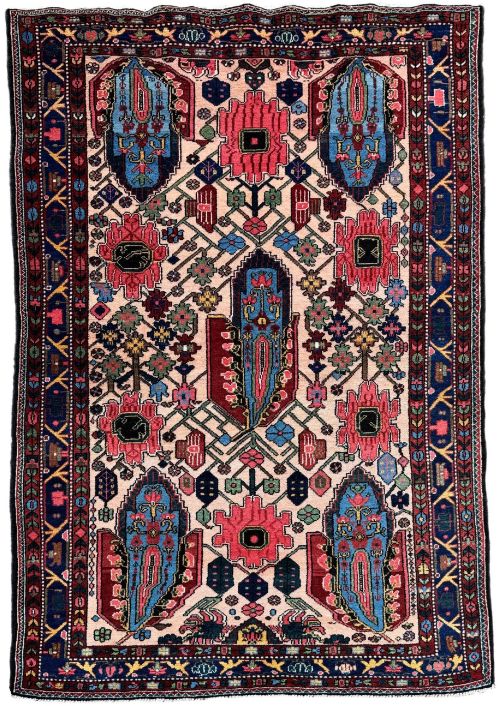
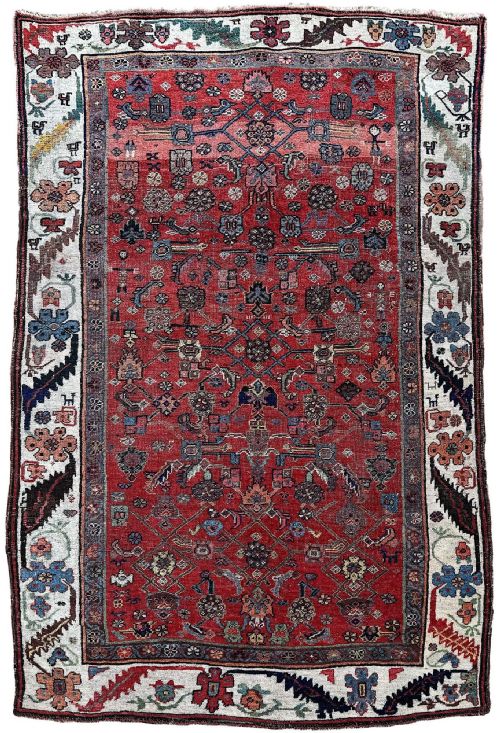
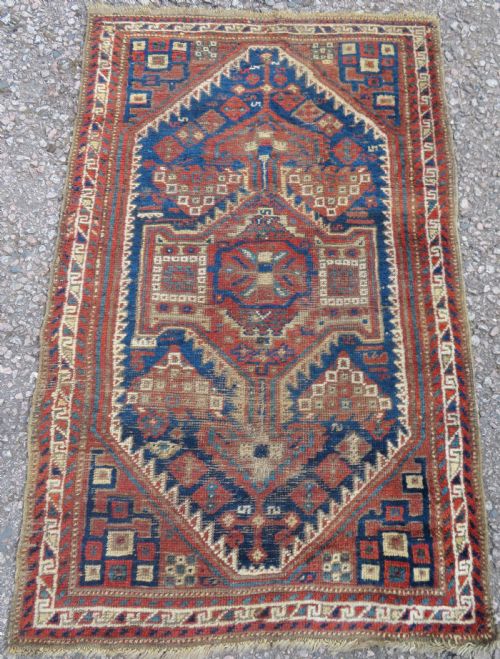
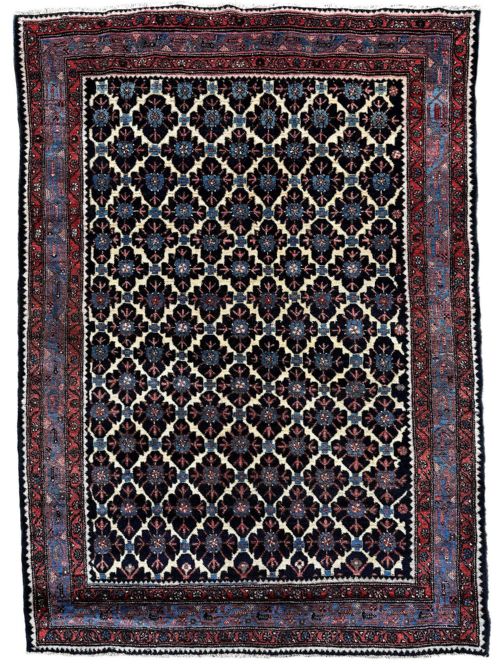
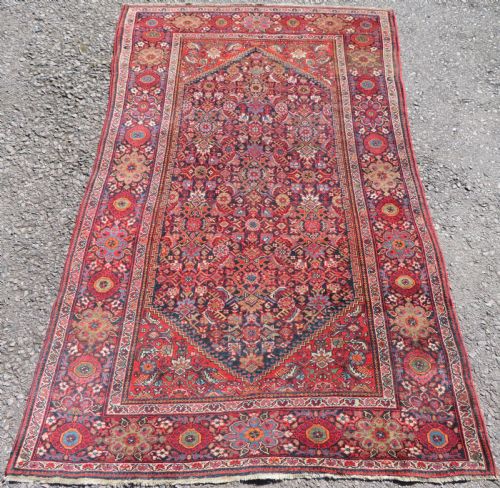


Handcrafted Oriental Rug
These handcrafted oriental rugs are woven floor coverings that bring depth and historical texture to a room.
Handcrafted Oriental Rug
When you search for a handcrafted oriental rug, you enter a field defined by regional weaving traditions spanning from the late nineteenth century into the early twentieth century. The pieces available include area rugs, runners, carpets, and storage bagfaces originating from centres such as Persia, Turkey, Central Asia, and the Caucasus.
You are most likely to meet traditional Persian room-sized rugs and village runners carrying classic motifs like the Herati pattern. These floor coverings reflect the specific local knotting methods and design idioms of weavers working across distinct tribal and urban districts.
The selection ranges from finely knotted city pieces from places like Tabriz and Kashan to bolder tribal works produced by Turkmen, Qashqai, and Bakhtiar communities. Each object carries the structural markers of its particular origin, constructed with local materials and regional dyes.
How they were made
The foundation of these textiles relies primarily on wool and cotton, with wool typically utilised for the tactile pile and cotton serving for warp and weft threads in many urban workshop pieces. Nomadic and tribal weaving often incorporated wool throughout the entire structure, resulting in a heavier handle and distinct flexibility.
Weavers knotted the pile by hand onto stretched warps, employing techniques that varied from symmetrical and asymmetrical knots to flatweave constructions such as soumak and kilim methods. These manual procedures demanded immense precision to secure the dense wool pile and form the intricate geometric or floral designs.
Current listings feature pieces dated across the nineteenth and early twentieth centuries, spanning from eighteen-sixty to nineteen-thirty.
What varies in quality
Quality in these textiles rests upon the density of the knotting and the crispness of the design execution, which together determine how sharply the motifs read across the field. Tighter knotting supports finer detail and greater structural resilience under foot traffic.
The integrity and depth of the wool pile also separate finer examples from simpler work, alongside the harmonious balance of the natural colour palette. A superior piece displays subtle variations in tone that give the surface visual movement.
The Handcrafted Oriental Rug Glossary
- Pile
- The raised surface of a rug formed by the cut ends of knotted yarn. This upper layer provides the soft texture and absorbs the wear of daily use.
- Warp
- The vertical threads stretched tightly on the loom that form the skeletal grid of the rug. Weft threads pass across these warps to lock the knots in place.
- Weft
- The horizontal strands inserted between rows of knots to bind the structure together. In many traditional rugs, these threads are beaten down firmly to compact the weave.
- Kilim
- A flatwoven textile produced without a pile by tightly interlacing warp and weft threads. These pieces often serve as rugs, covers, or utilitarian hanging bags.
- Soumak
- A flatweaving technique where decorative coloured threads are wrapped over and under the warp threads in a herringbone effect. This method creates a thicker, more durable surface than standard kilim weaving.
Handcrafted Oriental Rug: Frequently Asked Questions
How do I clean an antique rug?
Gentle surface vacuuming without a beater bar removes loose dirt without pulling the wool pile. Professional specialist cleaning remains essential for deep washing.
Water and harsh chemical detergents damage natural dyes and weaken cotton foundations. Specialists use controlled washing methods suited to antique textiles.
Where were these rugs made?
Production centres span traditional weaving regions including Persia, Turkey, the Caucasus, and Central Asia. Village and tribal groups each developed distinct regional styles.
City workshops in places like Tabriz produced fine floral carpets, while nomadic tribes in regions like Khamseh and Yomut wove geometric designs.
Are these rugs suitable for high traffic?
Densely knotted wool pile provides natural resilience against everyday friction and foot movement. Sturdy village and tribal pieces withstand regular room use.
Finer city carpets and fragile flatweaves require placement in lower traffic zones to preserve their structure. Underlays prevent slipping and reduce fibre wear.
How do I date an oriental rug?
Structural analysis of the materials, knot types, and edge finishes helps determine the likely period of manufacture. Natural dye palettes also offer chronological clues.
Comparison with documented examples from nineteenth and early twentieth century regions narrows the timeline. Wear patterns alone do not indicate age.