

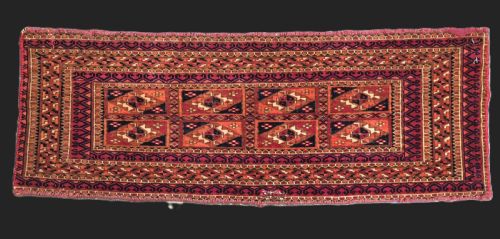
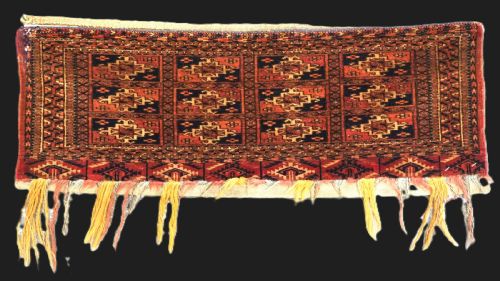

Hand Woven Turkmen Rug
When you examine a hand woven turkmen rug, you encounter centuries of tribal tradition expressed through enduring wool and saturated geometry.
Hand Woven Turkmen Rug
A hand woven turkmen rug encompasses floor carpets, wall hangings, and functional nomadic items produced across Central Asia. These textiles range from large room-size main carpets down to smaller utility pieces intended for tribal dwellings.
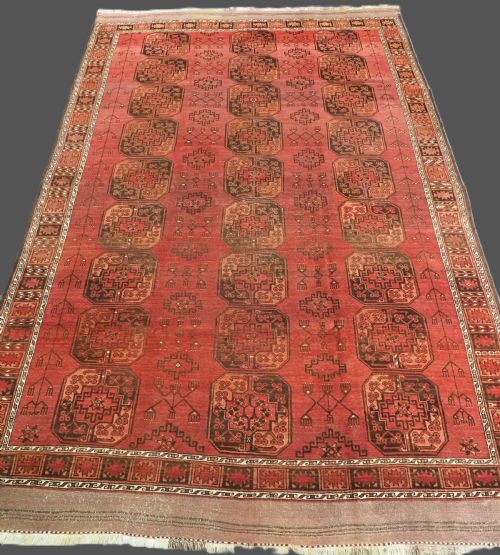
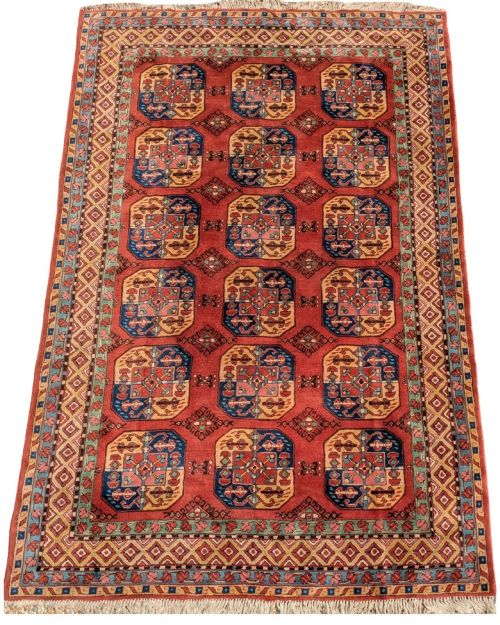
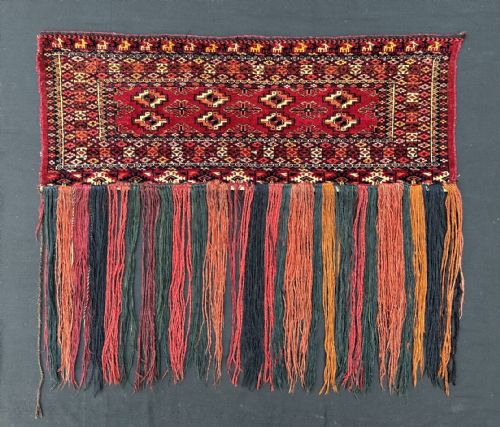
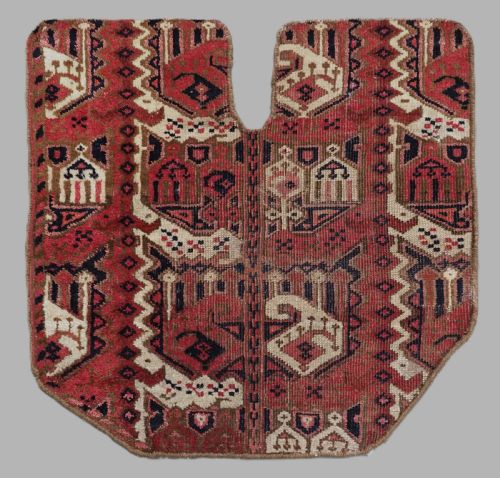
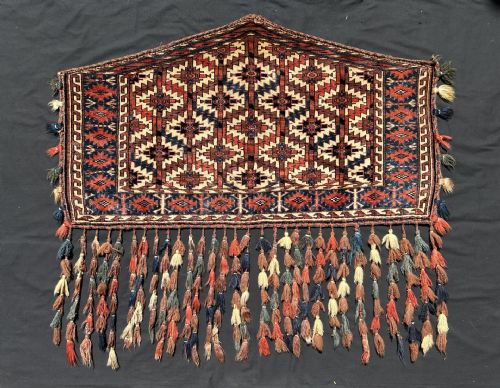
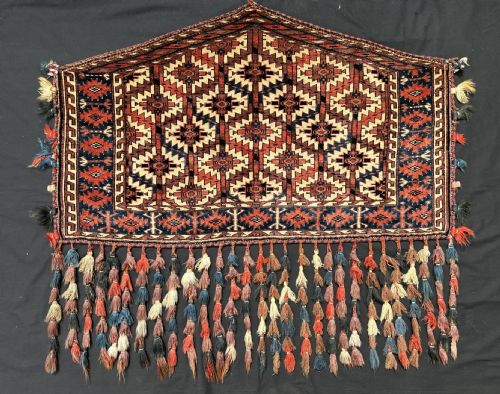
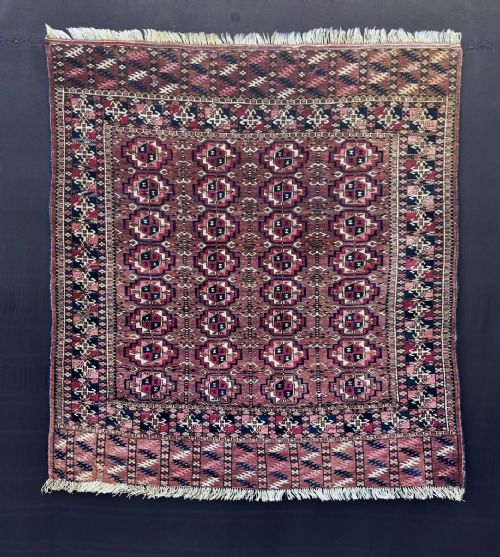
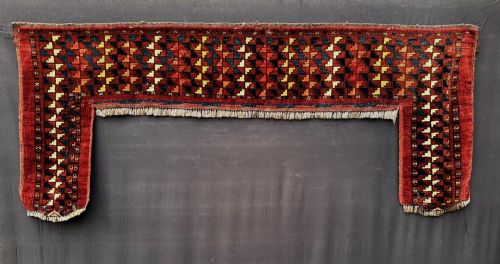
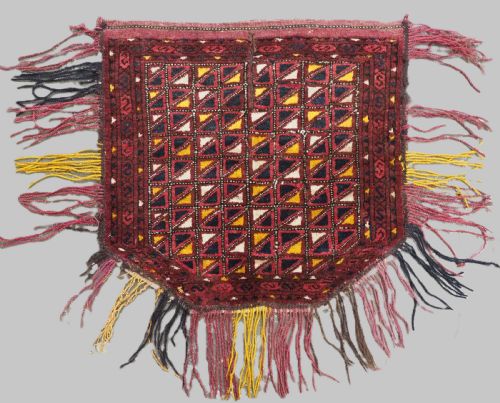
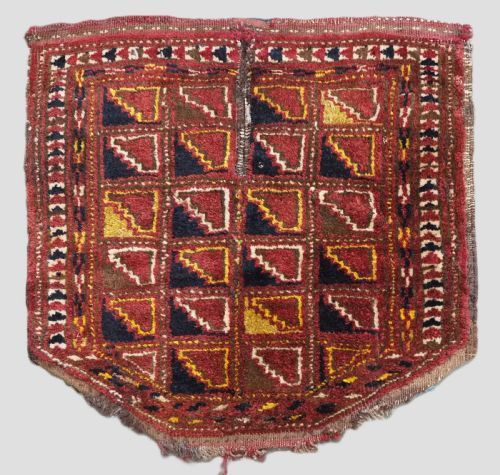
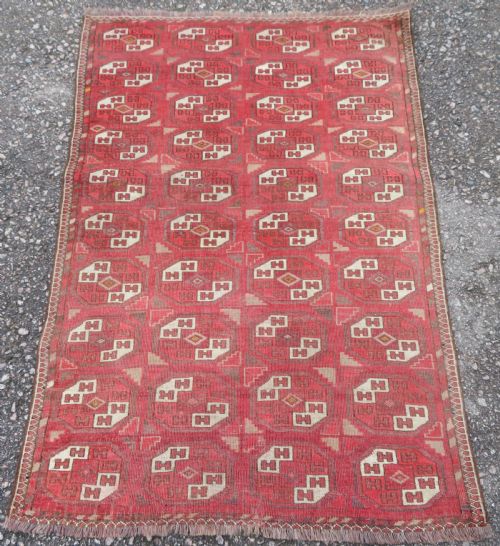
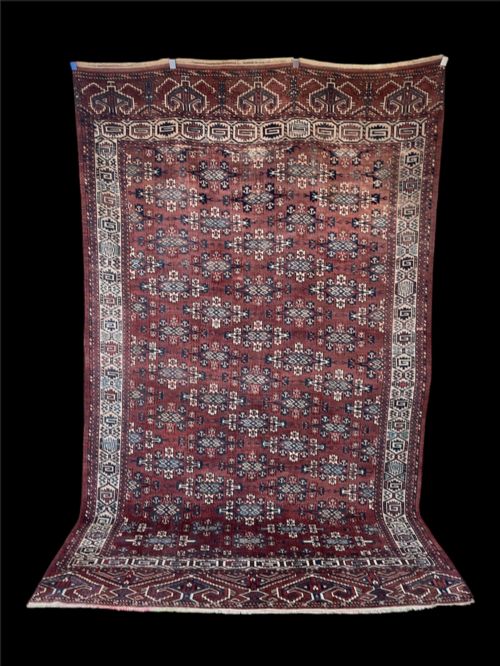
The objects on this page span the nineteenth and early twentieth centuries, featuring distinct tribal attributions such as Ersari, Tekke, Yomut, and Beshir. Buyers frequently encounter smaller formats like torbas, chuvals, and asmalyks alongside larger floor coverings.
Tribal weavers utilised traditional forms to create items suited for daily nomadic life, dowries, and tent furnishings. Each piece reflects the specific design vocabulary of its regional group, rooted in centuries of settled and semi-nomadic production.
How They Were Made
Weavers relied primarily on hand-spun wool for the pile, often combined with cotton foundations and occasional silk highlights. Supplementary materials such as goat hair and horsehair appear in select structural elements and edge finishes.
Natural dyes provided the rich palette characteristic of these textiles, anchoring the deep reds, browns, and ivories seen across the weave. Artisans constructed the pieces using dense knotting techniques designed to withstand generations of practical use.
Listings span the nineteenth and early twentieth centuries, incorporating wool, cotton, silk, and natural dyes across multiple tribal styles.
What Varies in Quality
The refinement of the weave heavily influences the character of a piece, with finer knots allowing for sharper definition in complex geometric motifs. Density in the pile construction contributes directly to the handle and longevity of the textile.
Purity of colour and consistency in the natural dye palette separate standard items from superior examples. The crispness of execution in traditional guls and border patterns demonstrates the skill of the individual weaver.
The Hand Woven Turkmen Rug Glossary
- Gul
- A primary medallion motif repeated across Turkmen carpets, often identifying the specific tribe that made the piece. These octagonal or polygonal designs anchor the field composition.
- Torba
- A small hanging storage bag used within the yurt, typically featuring a decorated face and a plain weave back. Collectors prize these for their concentrated tribal designs.
- Chuval
- A large tent bag utilised for domestic storage by nomadic families. They display structured rows of guls similar to those found on main carpets.
- Asmalyk
- A pentagonal trapping traditionally hung inside the yurt or mounted during wedding processions. Pairs of these decorative covers remain sought after by textile historians.
- Ensi
- A rug designed to hang over the doorway of a yurt, distinguished by a cross-shaped division of the field. This layout separates the textile from standard floor coverings.
Hand Woven Turkmen Rug: Frequently Asked Questions
What is a Turkmen rug?
A Turkmen rug is a hand-knotted textile produced by nomadic and settled tribes across Central Asia, traditionally characterised by deep red fields and repeated geometric guls.
These pieces served functional roles in daily tribal life, ranging from large floor carpets to small storage bags and tent furnishings.
How do I identify different Turkmen tribes?
Tribal attributions rely on the specific shape and arrangement of the guls, alongside the choice of secondary motifs and border designs. Groups such as the Tekke, Yomut, and Ersari each maintained distinct visual traditions.
Structural details like foundation materials and side-cord finishes also offer clues to the regional origin of the piece.
Were these rugs used on the floor?
Main carpets and larger room-size pieces were laid on the floor of the yurt or dwelling for everyday use. Smaller formats functioned primarily as wall hangings, animal caparisons, or storage containers.
Utility items like torbas and chuvals hung against the interior lattice walls to keep domestic goods organised.
How should I care for an antique Turkmen textile?
Protect the rug from direct sunlight to prevent fading of the natural dyes, and use a breathable underlay to keep the foundation stable. Regular gentle vacuuming without a beater bar removes trapped dust without straining the wool pile.
Professional cleaning should only be undertaken by specialists experienced in antique tribal rugs.