


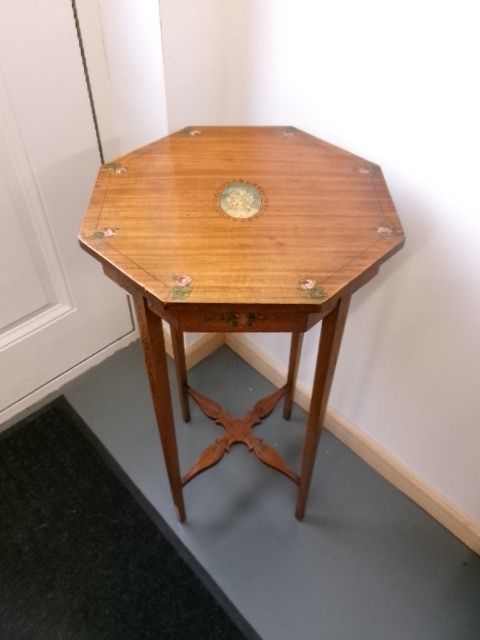


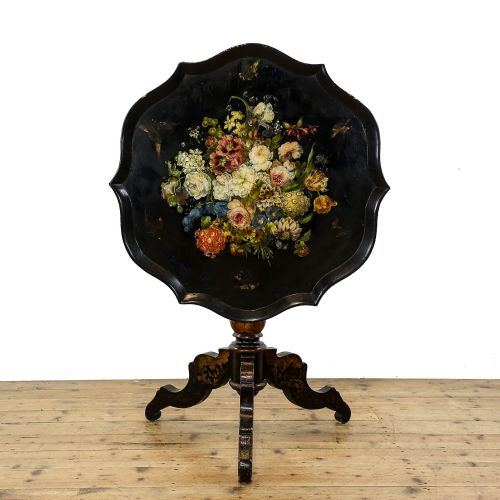

Hand Painted Wine Table
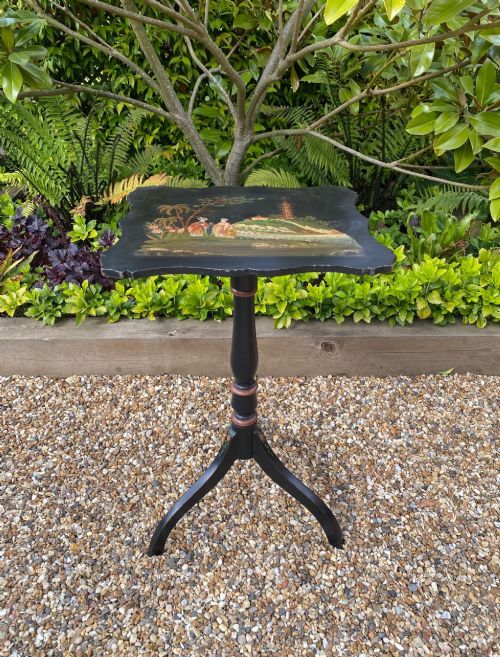
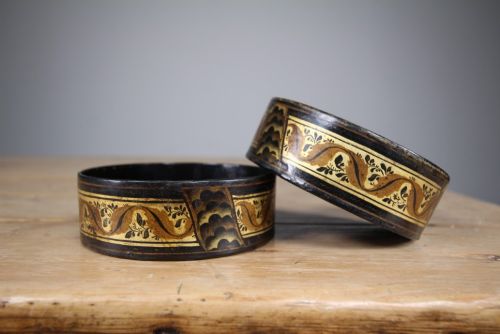
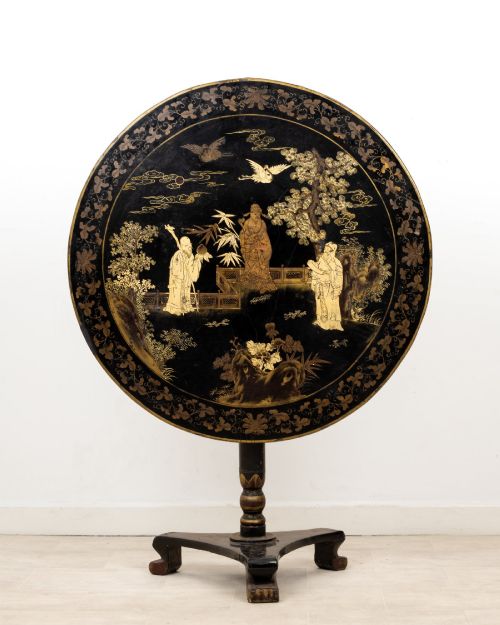
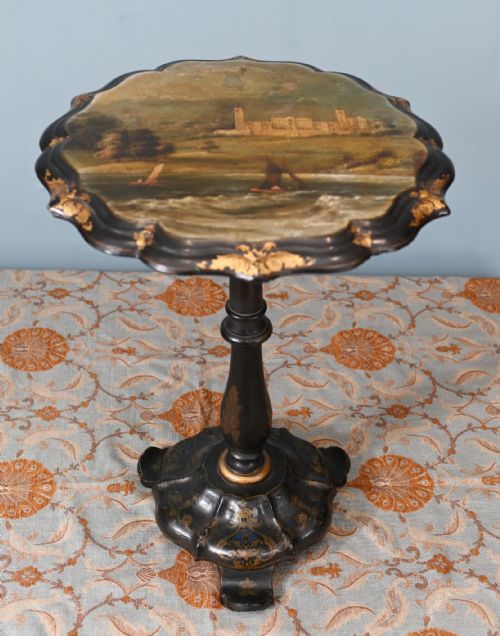
These hand painted wine table examples combine functional smaller surfaces with decorative painted finishes across several centuries.
Hand Painted Wine Table
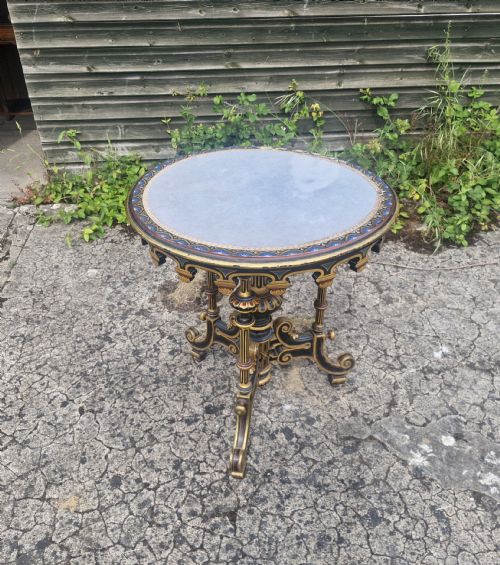
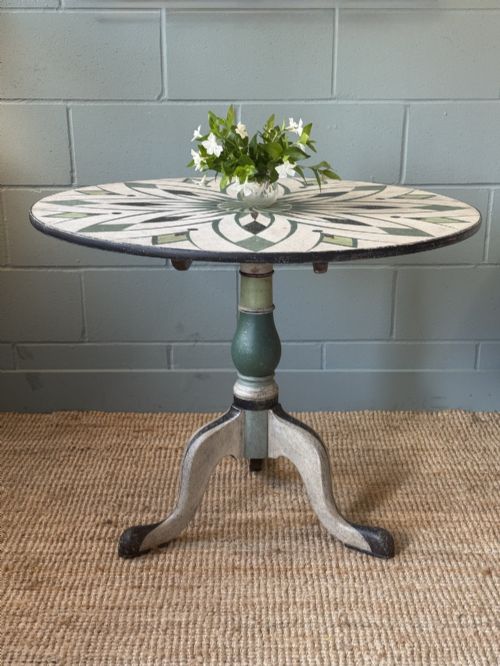
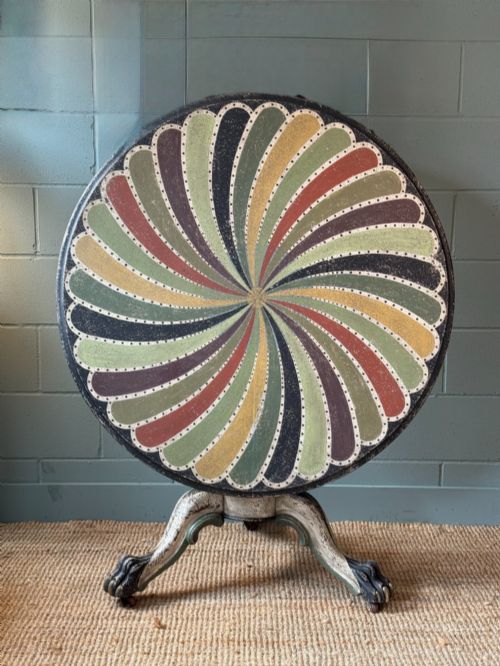
A hand painted wine table typically appears as a compact side, occasional, or tilt-top table designed to hold glasses or small objects near seating. The forms span Victorian, Regency, and 19th-century periods, often adopting tripod bases or nest configurations.
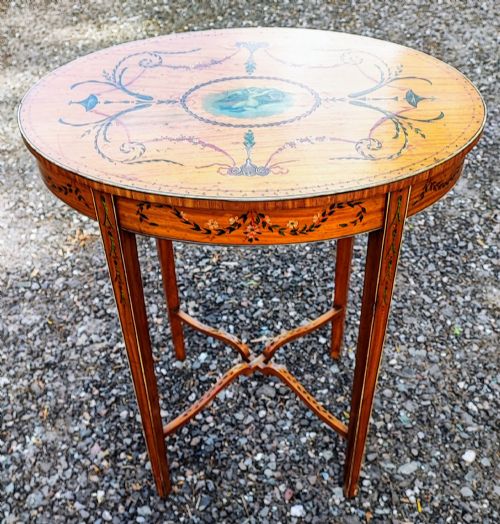
Buyers encounter variations ranging from Chinoiserie lacquer and satinwood to papier-mâché and mahogany. Many pieces feature later floral, petal, or pictorial painted designs applied over timber surfaces.
Origins include English workshops, continental European examples, and imported eastern traditions such as Kashmir lacquerwork. The primary function remains a portable, decorative surface for domestic rooms.
Materials and Construction Methods
Carpenters utilised solid woods such as mahogany and satinwood alongside papier-mâché for lightweight table tops and folding tripod structures. Lacquer and japanning techniques provided smooth dark grounds for subsequent brushwork.
Artisans applied paint, gold leaf, and gilt directly to prepared wood or papier-mâché foundations, sealing the decoration with protective varnishes. Detail work required fine brushes to render floral motifs, Chinoiserie scenes, and geometric borders.
Periods represented span from the Regency era through the Victorian period and into the early 20th century.
Assessing Quality in Painted Tables
Quality rests in the crispness of the original paintwork and the structural stability of the timber frame or tilt mechanism. Tables retaining their crisp, unblemished surface decoration distinguish themselves from pieces with heavy overpainting or later surface interventions.
The choice of primary wood, whether fine-grained satinwood or sturdy mahogany, dictates the baseline craftsmanship of the piece. Integrated gilt details and signed components elevate certain examples above standard workshop production.
E.Daligny
The Hand Painted Wine Table Glossary
- Tilt top
- A table construction allowing the top surface to pivot vertically on its base for convenient storage when not in use. This mechanism is frequently found on tripod occasional tables.
- Japanning
- A European imitation of East Asian lacquerwork using resinous varnishes and metallic powders. Artisans baked these layers to create a hard, glossy dark finish.
- Papier-mache
- A composite material made from paper pulp or reinforced sheets mixed with glue, then moulded and dried. It offers a smooth surface ideal for detailed painting and gilding.
- Satinwood
- A durable tropical timber valued for its pale, golden lustre and fine grain. It serves as an ideal smooth ground for painted floral decoration.
Hand Painted Wine Table: Frequently Asked Questions
What was a wine table used for?
These tables served as portable surfaces for holding wine bottles, glasses, or cups during evening gatherings in the parlour or drawing room.
Their compact size allowed servants to move them easily beside seating areas as needed.
How do I care for a painted surface?
Keep these tables out of direct sunlight to prevent fading of the delicate pigments and gold leaf.
Dust gently with a soft dry cloth and avoid liquid cleaners or harsh polishes.
Are tilt top mechanisms original?
Many Victorian and 19th-century examples retain their original brass or iron catches and pivoting blocks beneath the top.
Inspect the pivot area for consistent wear and matching wood movement that aligns with the rest of the frame.
How do I distinguish Regency from Victorian pieces?
Regency tables typically display leaner classical proportions, ebony stringing, or precise painted borders reflecting earlier neoclassical tastes.
Victorian pieces often lean towards heavier turned columns, satinwood panels, or more exuberant floral and Chinoiserie decoration.