
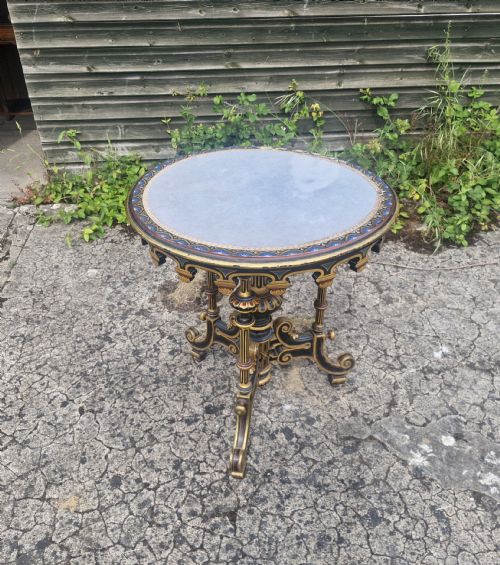

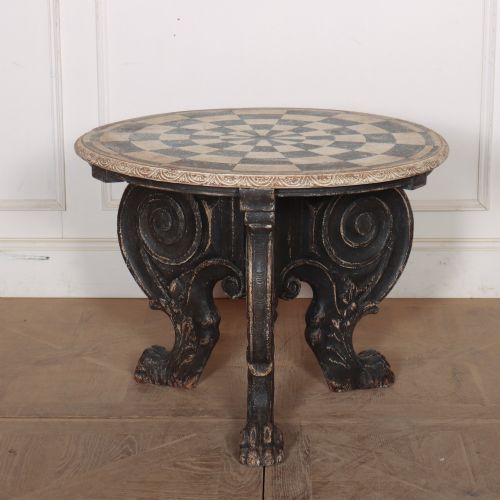



Black Painted Accent Table
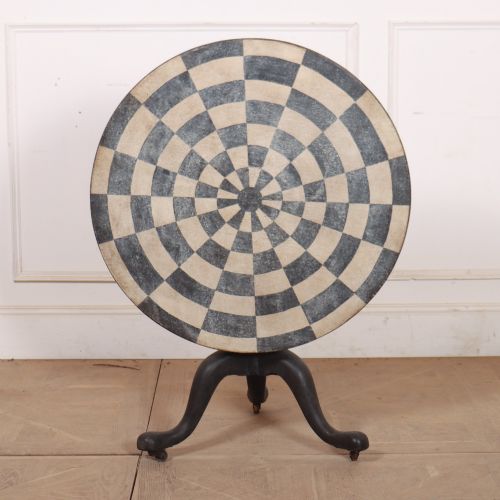
A black painted accent table brings dark surface and pattern to a room, offering a practical spot for lamps and small objects.
Black Painted Accent Table
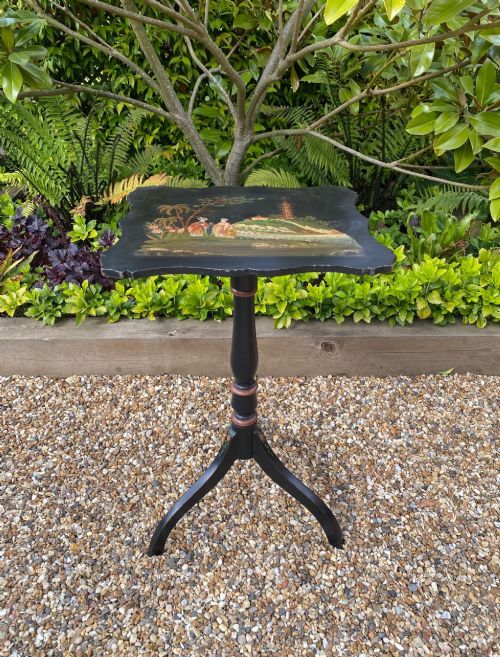
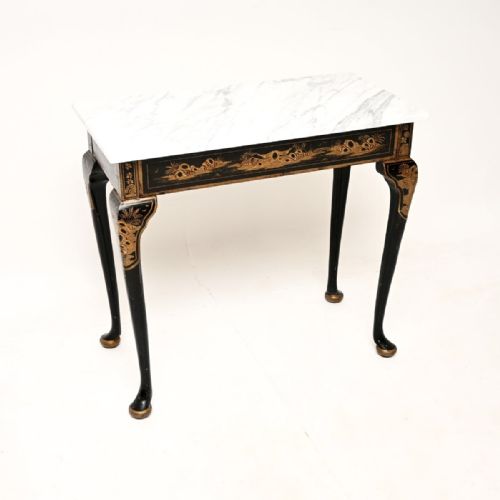
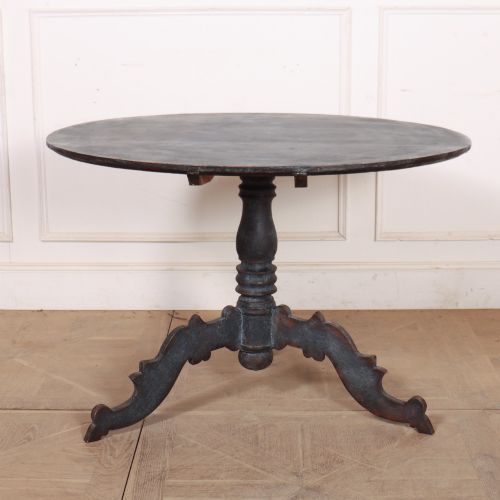
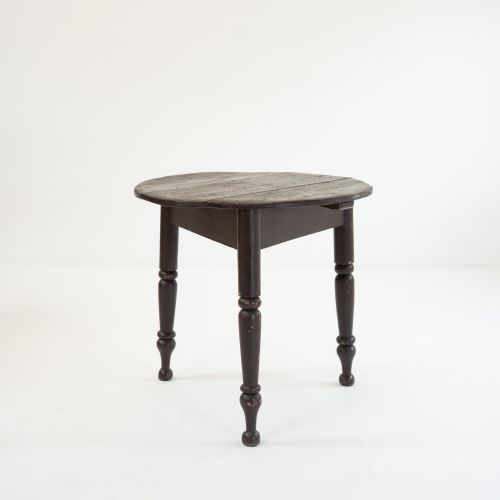
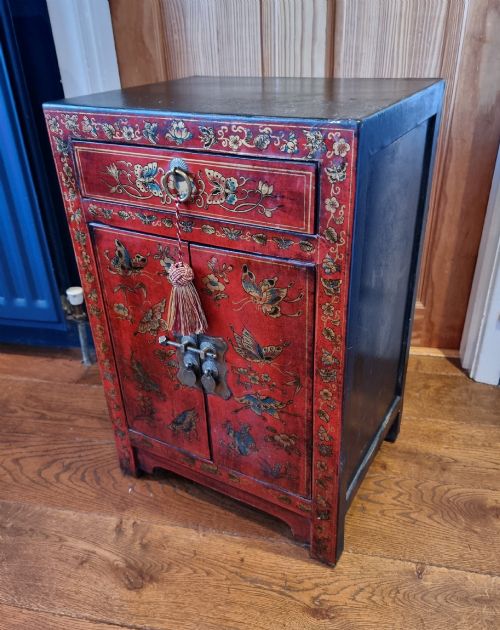
A black painted accent table encompasses forms such as side tables, occasional tables, coffee tables, and nests of tables designed for domestic use. These pieces surface across the eighteenth, nineteenth, and early twentieth centuries in styles ranging from Victorian and Edwardian Chinoiserie to Scandinavian and English country traditions.
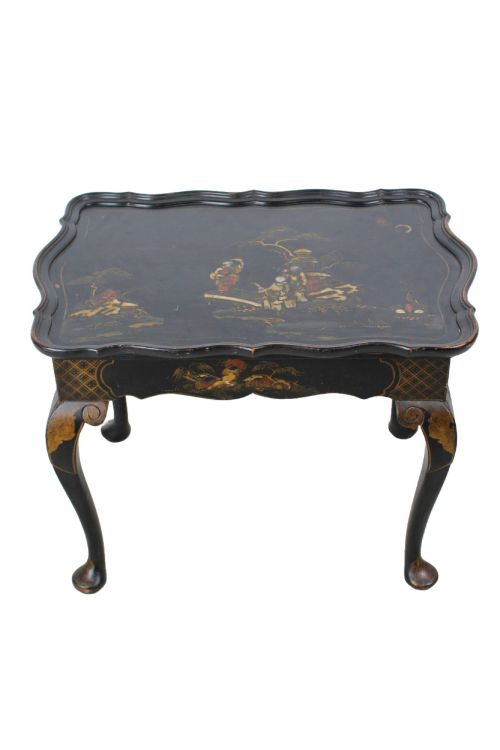
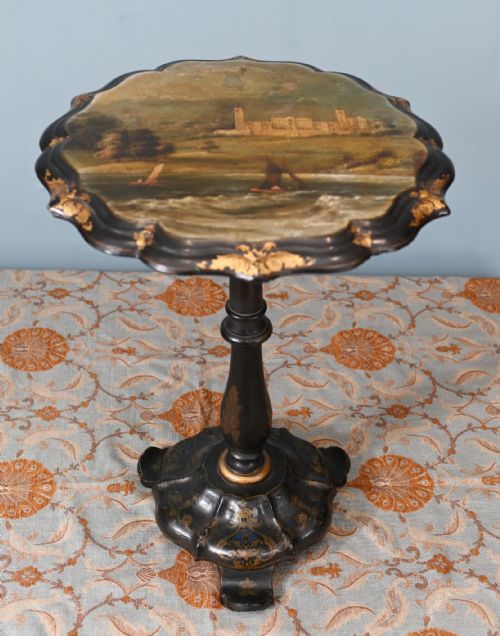
The version most frequently met on this page is the nineteenth-century side table or occasional table finished in dark lacquer or paint. Many examples incorporate Chinoiserie decoration, tray tops, or tripod bases, reflecting both formal reception rooms and simpler country interiors.
Materials and construction methods
Makers built these tables from wood, pine, and oak, applying surface treatments of paint, lacquer, and ebonisation to create deep dark finishes. Finer pieces incorporate brass mounts, gilt detailing, marble tops, papier-mâché, and mother-of-pearl inlay.
Surface decoration relies heavily on hand painting, particularly in Chinoiserie and country ragwork styles. Artisans built up layers of lacquer or pigment, sometimes adding metallic highlights and polished stone inserts to withstand daily use.
Periods represented span from the 18th century through the Victorian era and into the 1930s.
Assessing quality and craftsmanship
The distinction between ordinary and superior tables rests in the execution of the surface finish and the integrity of the underlying woodwork. Hand-painted Chinoiserie details and intact lacquer show a level of artistry that elevates a simple occasional table into a notable decorative object.
Structural stability and the survival of original decorative elements dictate the standing of a piece. Tables retaining their early marble tops, brass fittings, or undisturbed painted decoration demonstrate greater care over time.
Thomas Hope·Hagenauer·Osbourne House
The Black Painted Accent Table Glossary
- Chinoiserie
- European artistic style reflecting Chinese motifs and techniques. It appears frequently on lacquered furniture and screens.
- Ebonisation
- Wood finished to resemble ebony through staining and polishing. This technique creates a dense dark surface common on nineteenth-century pieces.
- Tripod table
- A small table supported by a single central pillar resting on three feet. This form allows the top to tilt on many historical examples.
- Gueridon
- A small decorative French table supported by a column or figures. These often feature marble tops and painted bases.
- Cricket table
- A small rustic wooden table with three legs and a circular top. It takes its name from traditional utility furniture.
Black Painted Accent Table: Frequently Asked Questions
What is a black painted accent table used for?
These tables provide a compact surface for lamps, books, and decorative objects in living spaces and bedrooms.
Their modest proportions allow them to fit easily beside seating or in hallways without dominating the room.
How do I identify a Chinoiserie table?
Chinoiserie pieces feature painted or lacquered Asian-inspired motifs, often in gold or bright colours against a dark background.
They frequently include figures, landscapes, and floral patterns executed on nineteenth-century side and coffee tables.
Are these tables suitable for everyday use?
Historical painted and lacquered surfaces require some care to prevent scratching and moisture damage.
Using coasters and placing them away from direct heat sources helps preserve the decorative finish during daily living.
How can I tell the period of an accent table?
Dating relies on examining the underlying construction timber, fixings, and the style of the painted decoration.
Victorian and Edwardian examples often display specific decorative conventions, such as tray tops and floral Chinoiserie schemes.