

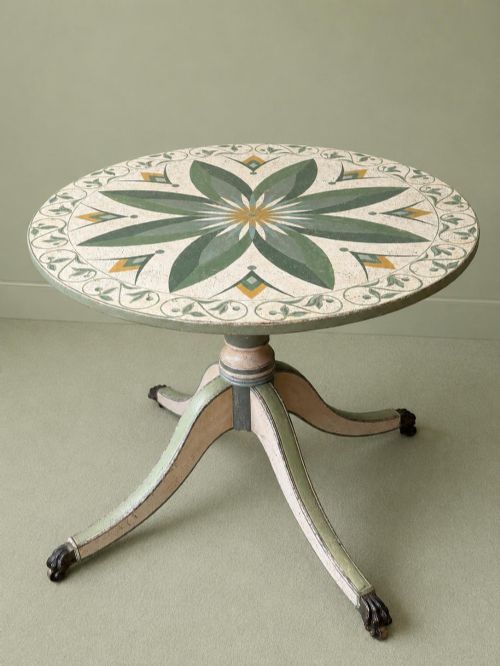
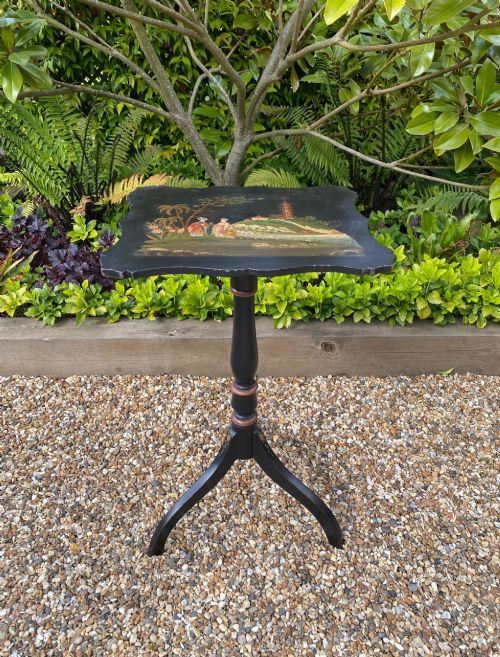
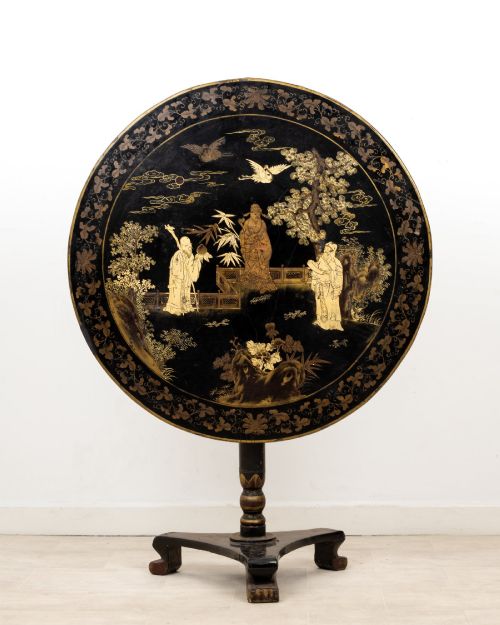
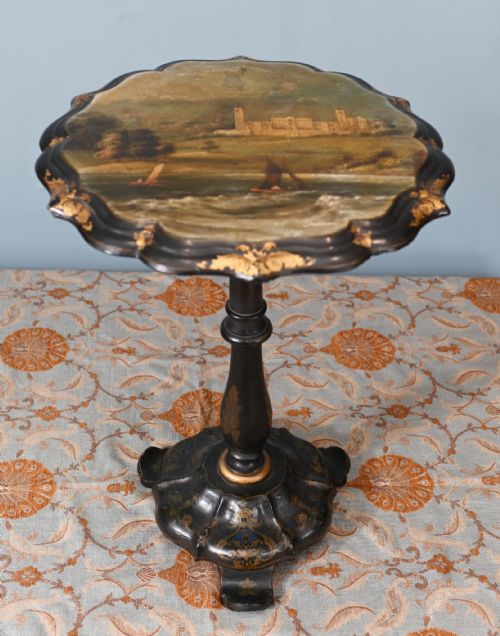
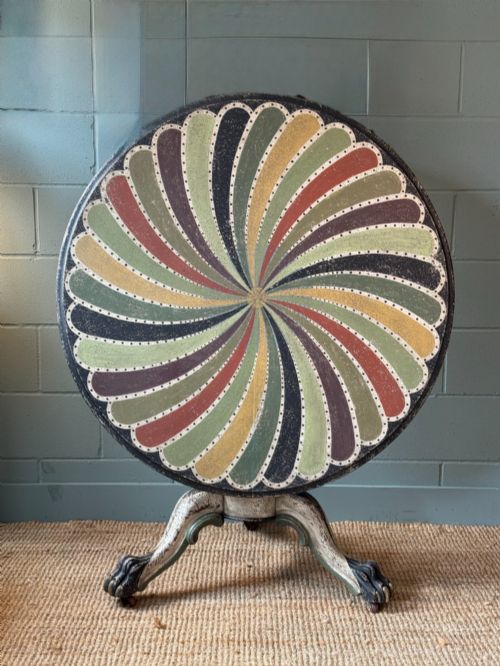
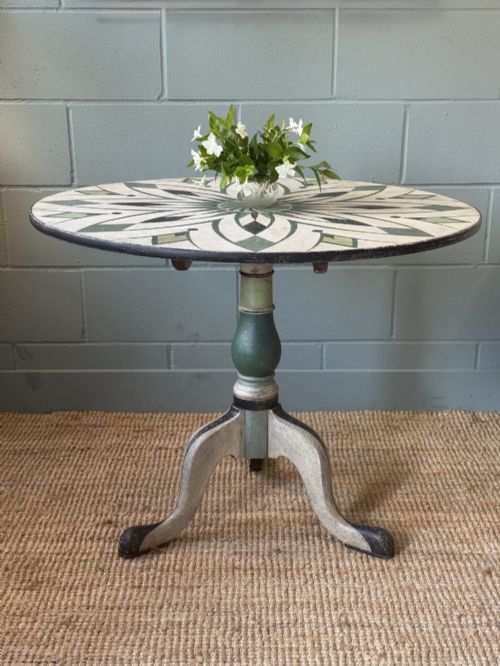


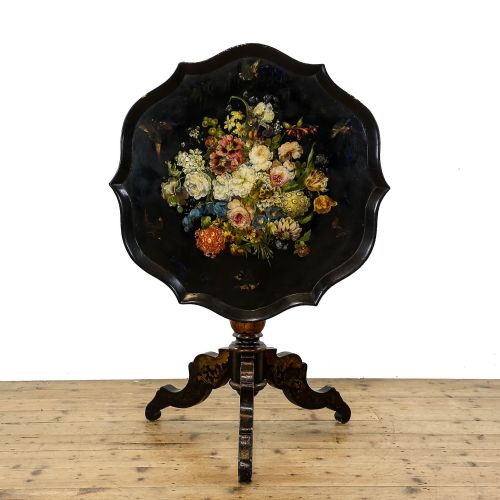

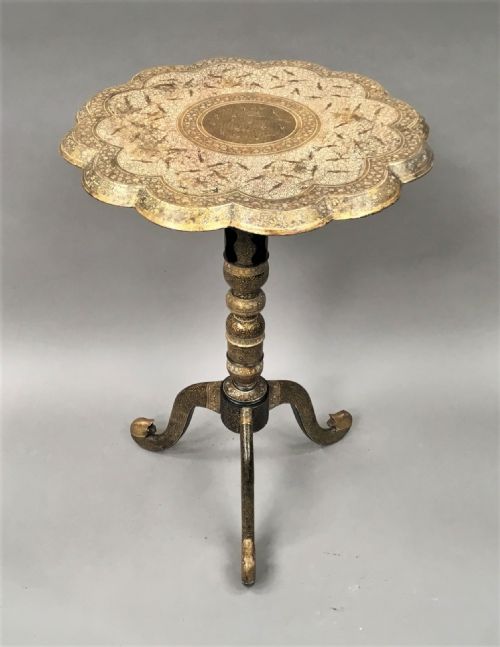

Hand Painted Tilt Top Table
A hand painted tilt top table brings centuries of decorative woodwork and portable surface utility straight into your sitting room.
Hand Painted Tilt Top Table
A hand painted tilt top table combines a pivoting top surface with a folding or pillar base designed for easy storage when not in use. When you search for a hand painted tilt top table, you will encounter diverse forms ranging from compact occasional pieces to larger dining surfaces.
The selections span distinct periods including the Regency era, the 1800s, and the Victorian period, alongside specific dates around 1850, 1860, 1880, and 1900. These tables frequently appear in styles such as Chinoiserie, Victorian Folk Art, Italian Rococo Revival, and Regency designs.
Object types on offer include occasional tables, side tables, tilt top tables, tray tables, and dining or hall tables. Many examples feature circular or oval tops supported by tripod bases or pillar columns.
How they were made
Construction relies on traditional timber frames, papier-mâché, and lacquer work shaped into tripod side tables and occasional furniture. Makers utilised wood, brass fittings, and structural timber as the foundational support for delicate surface decoration.
Surface ornament involves hand painting, lacquer finishes, gold leaf, and gilt detailing applied directly to wood or papier-mâché bases. Some examples exhibit later painted floral or petal designs added to earlier Victorian table structures.
Hand Painted Tilt Top Table Retail Price Guide 2026
Typical asking prices for hand painted tilt top table among the pieces listed under this phrase on Sellingantiques today, from the lower quarter to the upper quarter. They describe what is for sale here now, not the wider market.
Current listings demonstrate a broad material palette spanning traditional timber, papier-mâché, lacquer, and gold leaf across Victorian and Regency forms.
What varies in quality
The distinction between standard examples and superior specimens rests on the precision of the hand-painted or lacquered surface work. Pieces showcasing fine detailed paintwork or original decorative schemes command greater appreciation than those with later surface additions.
Structural integrity of the pivoting tilt mechanism and the stability of the tripod base dictate the functional longevity of each table. The quality of the underlying material, whether solid timber, papier-mâché, or Japanned construction, directly influences the piece's preservation.
The Hand Painted Tilt Top Table Glossary
- Tilt top
- A tabletop mechanism that pivots on its central pillar to rest vertically when not in use. This clever design allows the table to be stored flat against a wall.
- Tripod base
- A three-legged support structure commonly found beneath pillar tables. It ensures stability on uneven floor surfaces by maintaining three points of contact.
- Papier-mache
- A composite material made from paper pulp or layers of paper glued and pressed together. It provides a lightweight yet durable base for detailed lacquering and painting.
- Japanned
- European imitation of traditional Japanese and East Asian lacquerwork. The technique involves applying multiple layers of dark varnish finished with metallic decoration.
Hand Painted Tilt Top Table: Frequently Asked Questions
How do I use a tilt top table?
A tilt top table functions as a standard surface for lamps, books, or dining when locked into its horizontal position. Release the catch beneath the top to pivot the surface vertically for compact storage against a wall.
This space-saving feature made these tables popular in nineteenth-century drawing rooms and parlours where floor space was at a premium.
What is the difference between papier-mache and wood tables?
Papier-mâché tables utilise compressed paper pulp reinforced to create a smooth, rigid surface ideal for intricate lacquer and painted decoration. Wooden tables rely on solid timber foundations providing heavier structural support.
Both materials accommodate hand-painted floral, figurative, or geometric designs depending on the period and regional style.
How do I identify a Regency tilt top table?
Regency tables date from the early nineteenth century and typically display classical proportions, crisp architectural lines, and refined painted decoration. They often feature balanced oval or circular tops supported by elegant pillar and tripod bases.
Examine the construction methods and decorative motifs to distinguish Regency examples from later Victorian revivals.