


Hand Painted Pottery Pitcher
A hand painted pottery pitcher brings tactile colour to a table, offering centuries of regional earthenware skill.

Hand Painted Pottery Pitcher
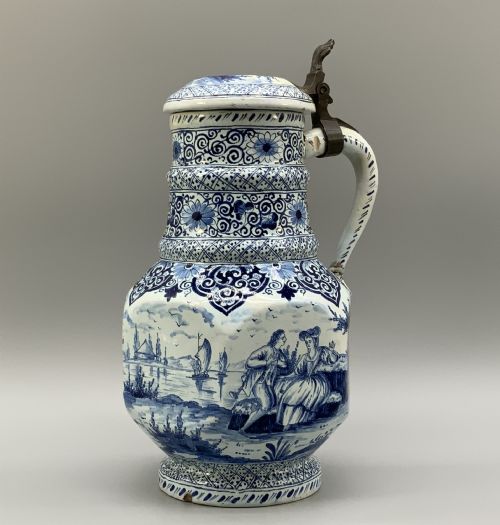
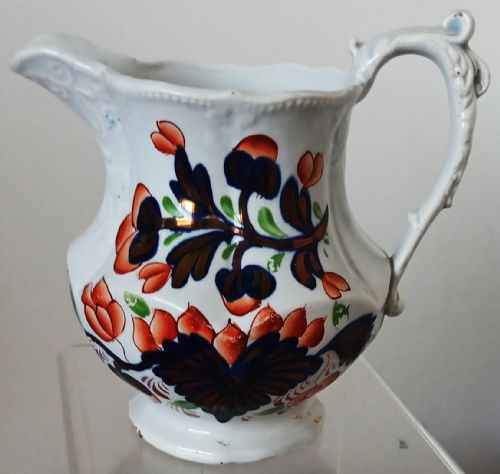
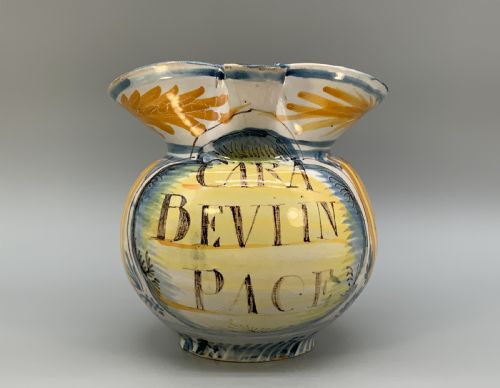
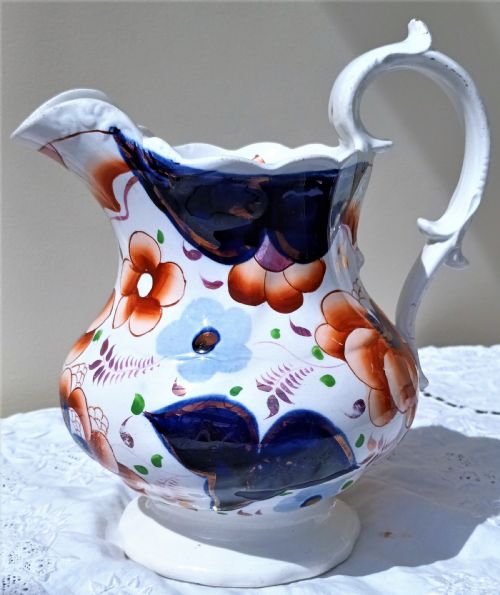
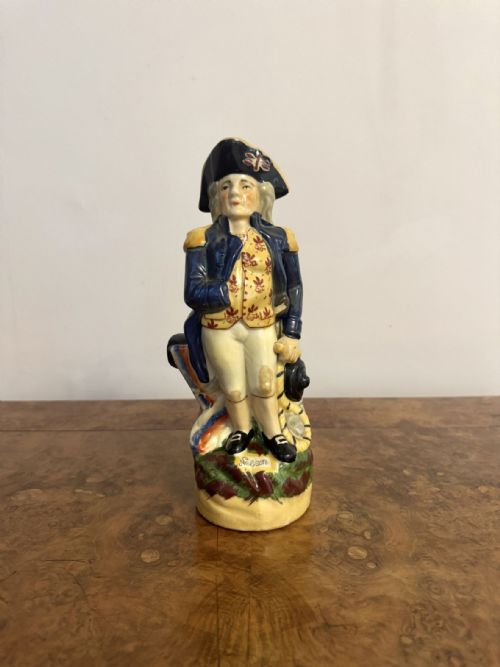
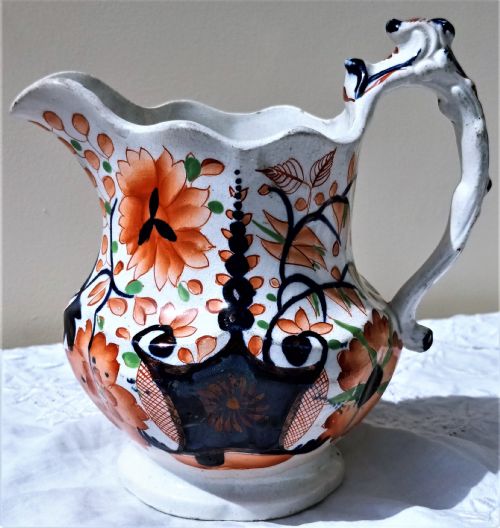
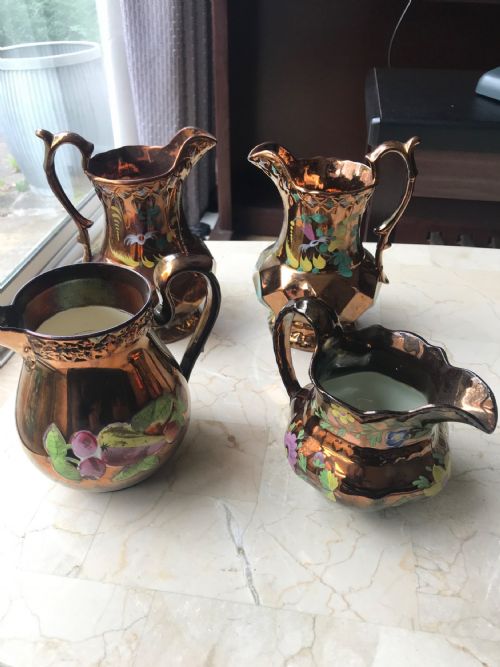
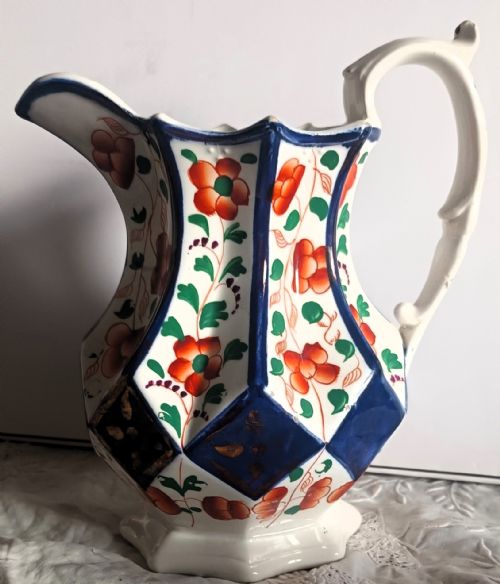
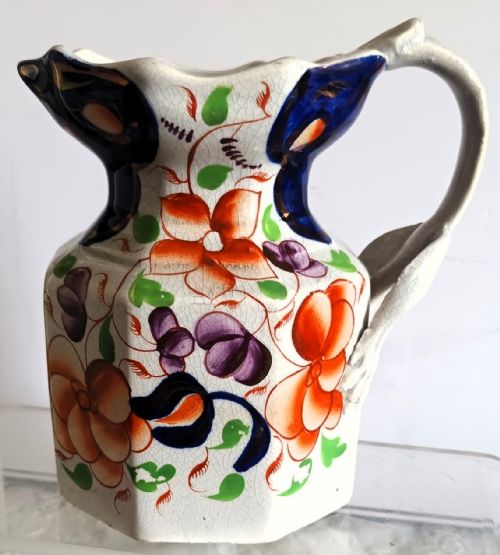
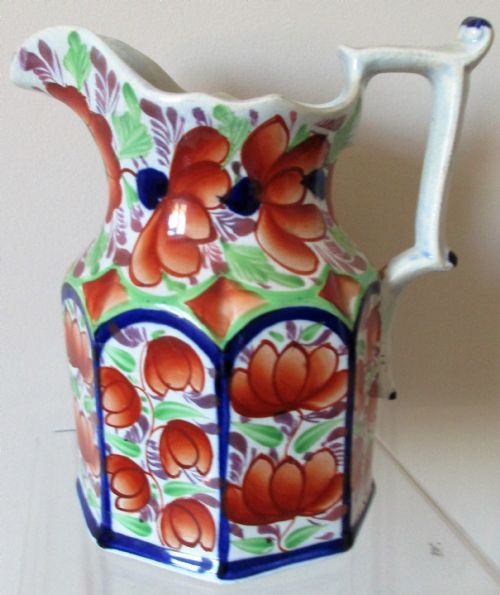
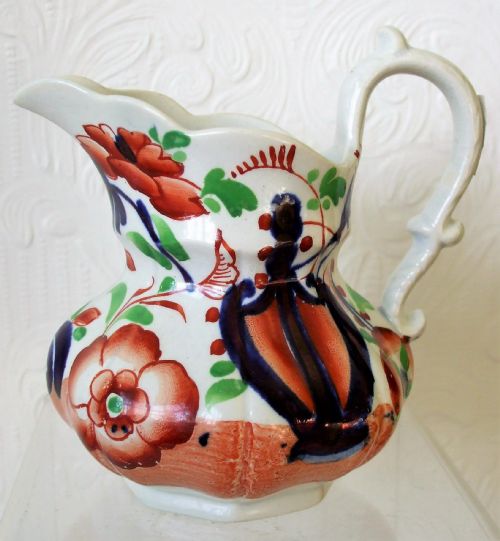
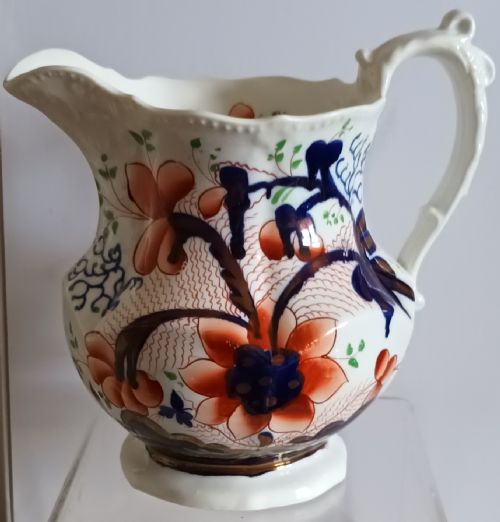
A hand painted pottery pitcher encompasses a diverse range of forms, from eighteenth-century Dutch delftware vessels to nineteenth-century Staffordshire figures and Gaudy Welsh ironstone. Buyers frequently encounter Victorian earthenware pieces decorated with bright patterns or metallic copper lustre finishes.
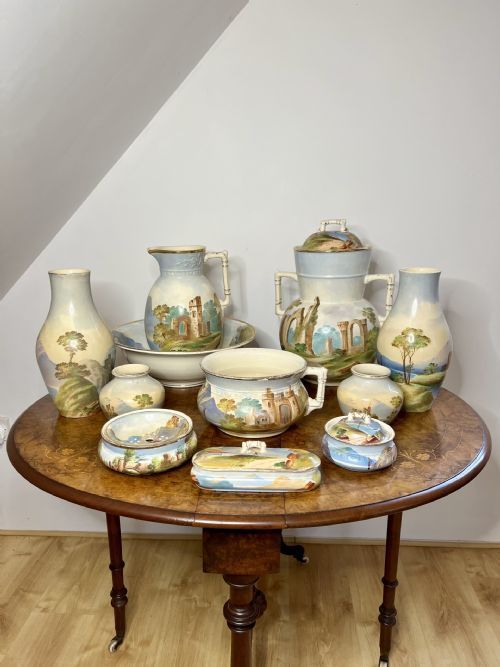
The selection spans utilitarian milk jugs, apothecary vessels, and decorative wash set pitchers. Examples from Dutch workshops often feature blue and white motifs, while English potteries produced figural toby jugs and geometric ironstone pitchers.
Materials and methods
Potters shaped these vessels using earthenware, ironstone, and ceramic bodies, often applying tin glaze or enamel coatings before hand painting the surface decoration. Copper lustre techniques added metallic sheens through specialised kiln firings.
Moulded details such as cabbage leaf textures and faceted surfaces provided structured reliefs beneath the hand applied pigments. Pewter lids occasionally completed Dutch delftware jugs to preserve liquids.
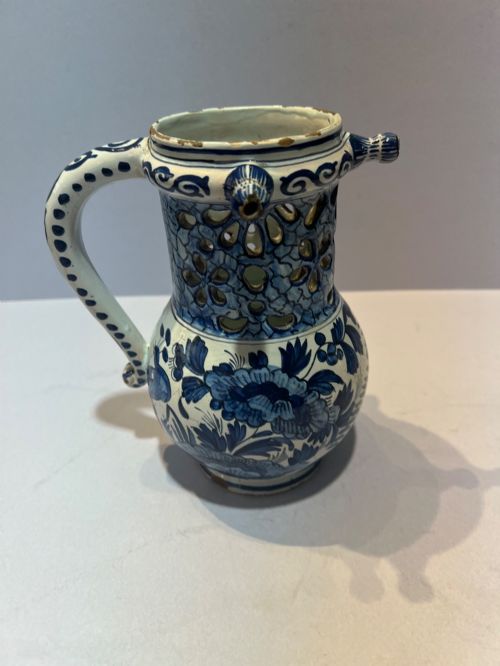
Seventeenth-century potters built puzzle jugs with secret hollow rims, daring drinkers to solve the puzzle without spilling.
Assessing quality
Quality rests in the precision of the hand painted brushwork and the clarity of the glaze. Finer vessels display crisp polychrome details or well-balanced cobalt blue pigments without distracting smudges.
Doulton Burslem·Charlotte Rhead·Herculaneum
The Hand Painted Pottery Pitcher Glossary
- Tin Glaze
- An opaque white glaze containing tin oxide, providing a smooth canvas for hand painted pigments. This technique defines traditional delftware and faience production.
- Copper Lustre
- A metallic pottery finish producing a coppery sheen. It was widely used on nineteenth-century Staffordshire jugs.
- Puzzle Jug
- A vessel with a perforated neck and multiple spouts designed to trick drinkers. Fluid must be drawn through a hidden tubular rim.
- Ironstone
- A durable ceramic body patented in the nineteenth century. It combined earthenware qualities with the strength of china.
- Pearlware
- A refined earthenware developed during the Georgian period. It featured a slightly bluish glaze that pooled in recesses to mimic Chinese porcelain.
Hand Painted Pottery Pitcher: Frequently Asked Questions
How do I date an old pottery pitcher?
Dating relies on examining the ceramic body, glaze composition, and stylistic patterns. Georgian pieces often display pearlware bodies, while Victorian examples frequently utilise ironstone or copper lustre.
Maker marks, where present, help pinpoint specific potteries, though many eighteenth-century delftware vessels remain unmarked.
Can I use these pitchers for serving liquids?
While these vessels were originally made for water, milk, or pharmaceutical use, older earthenware and tin-glazed pieces require careful handling. Hairline cracks or porous historical bodies mean many collectors prefer using them exclusively for display.
Gentle hand washing preserves fragile enamels and metallic copper lustre finishes.
What is Gaudy Welsh pottery?
Gaudy Welsh refers to a distinct style of brightly coloured ironstone and earthenware produced in the nineteenth century. These pieces utilise rich cobalt blue, copper lustre, and pink enamel accents.
Common patterns include named motifs like Pagoda, Grape, and Harlech.