
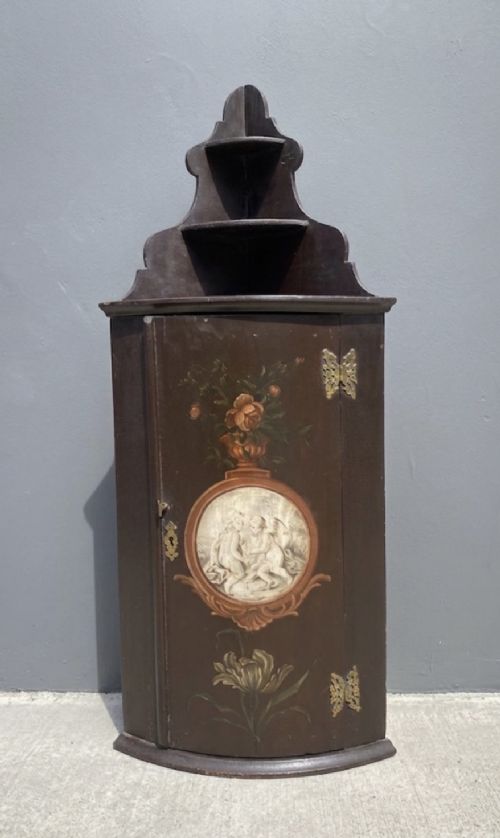


Hand Painted Pine Cabinet
These hand painted pine cabinet examples bring regional colour and utility into a room, offering practical storage finished with folk art or traditional decoration.
Hand Painted Pine Cabinet
When you search for a hand painted pine cabinet, you encounter sturdy timber storage pieces decorated with applied colour rather than left in the bare wood. These range from corner cupboards and kitchen units to large wardrobes and chests originating across Europe.
The version most commonly met on this page is the 19th century Scandinavian or continental cupboard, often showing regional folk art motifs or Gustavian styling. Such pieces served domestic storage needs in farmhouses and town houses alike before finding a place in modern interiors.
How they were made
Makers constructed these items using solid pine timbers joined for everyday utility, fitting them with iron, brass or metal hardware such as hinges and locks. Secondary materials include ceramic elements or mineral paints used to finish the exterior surfaces.
Decoration relied on hand applied paint schemes, ranging from polychrome floral patterns to flat colour washes and folk art designs. Surfaces often accumulated layers of paint over decades of domestic use.
Marriage armoires from Bohemia were built to celebrate weddings, carrying painted dates and symbols meant to ensure lifelong domestic harmony.
What varies in quality
Quality rests in the survival of original decorative schemes and the integrity of the pine construction. Pieces retaining their early or primary painted surfaces hold greater visual strength than those stripped or heavily recoated.
Proportion and regional detail distinguish the work. Finer examples display balanced hardware, such as brass or forged iron fixtures, alongside accomplished brushwork that reflects the folk traditions of their origin.
Melissa White
The Hand Painted Pine Cabinet Glossary
- Gustavian
- The Swedish interpretation of French neoclassical style, characterised by restrained carving and pale painted finishes. It developed during the late 18th century and remains influential in Scandinavian furniture design.
- Polychrome
- Decorated in multiple colours. This technique appears frequently on continental folk art pieces and marriage armoires.
- Folk art
- Artistic work created within a traditional culture by self-taught or local makers. In these listings, it describes regional painted decoration on pine furniture.
- Dresser base
- A lower kitchen or dining room sideboard fitted with cupboards and drawers. These items provided foundational workspace and storage in traditional homes.
Hand Painted Pine Cabinet: Frequently Asked Questions
How do I date a painted pine cupboard?
Dating relies on construction methods, timber thickness, and the characteristics of the paint layers. Earlier items often feature hand-wrought iron hardware and pegged joints rather than modern screws.
Paint analysis can also reveal whether the surface decoration belongs to the period of manufacture or represents a later vernacular refresh.
Where were these painted cabinets made?
The pieces originate from various European regions, with strong representation from Sweden, Hungary, Austria, and Britain. Each area developed distinct painting traditions, from Gustavian greys to vibrant Austro-Hungarian floral motifs.
Regional joinery techniques help pinpoint the exact geographical source of a cupboard.
How do I care for a painted pine surface?
Protect the painted finish by keeping the cabinet away from direct sunlight and fluctuating heat sources, which can cause the pine timber to move. Dust gently with a dry, soft cloth rather than using chemical polishes.
Wax or oil treatments should be avoided unless specified for the exact type of historic mineral or oil paint present.
Can these cabinets be used in a modern kitchen?
These cupboards integrate well into modern spaces by providing practical enclosed shelving for crockery, glassware, or dry goods. Their depth and internal shelf configuration suit current storage requirements.
Placing them in a kitchen introduces texture and traditional colour alongside contemporary fittings.