


Hand Painted Lustres
Hand painted lustres bring dramatic nineteenth-century mantelpiece decoration and vibrant colour to a room through their striking glass and ceramic bodies.
Hand Painted Lustres
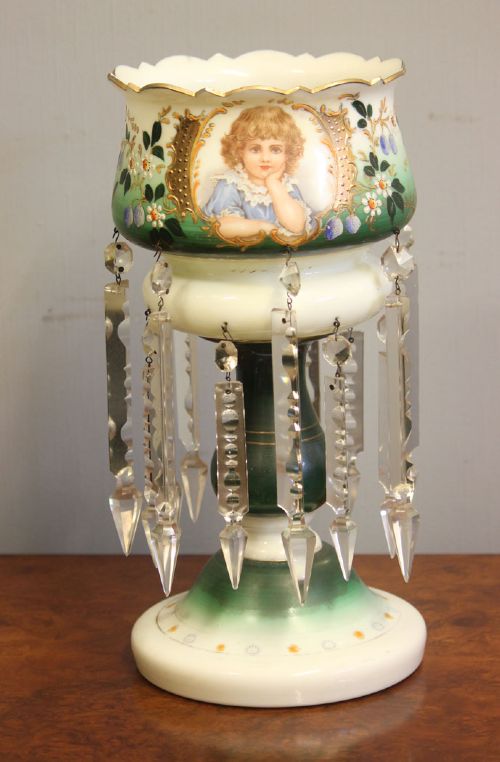
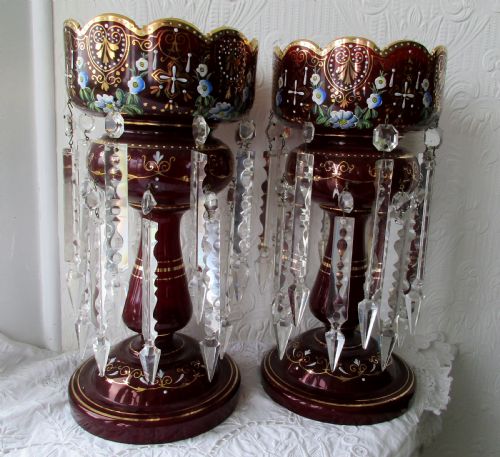
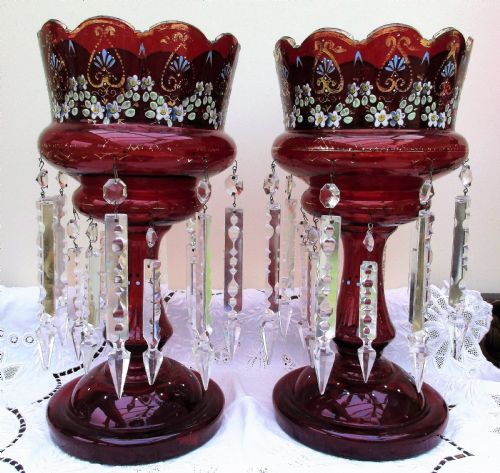
When you search for hand painted lustres, you encounter decorative mantel garnitures and table ornaments designed primarily during the nineteenth century. These objects function as ornate candle holders adorned with dangling glass prisms that catch and refract ambient light.
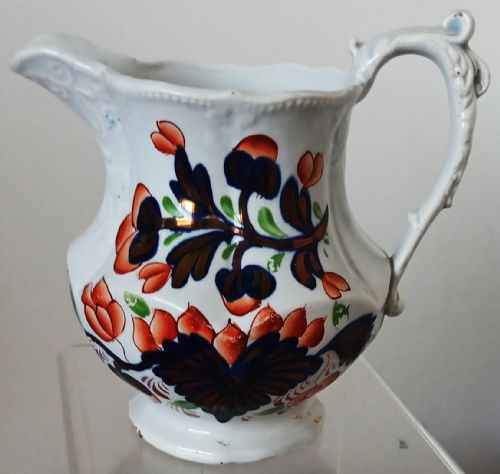
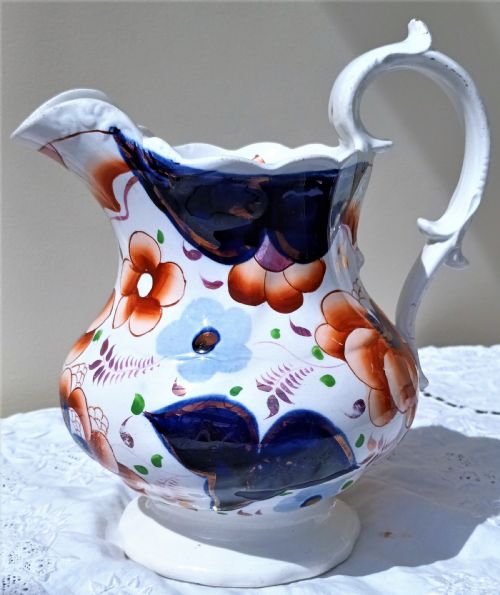
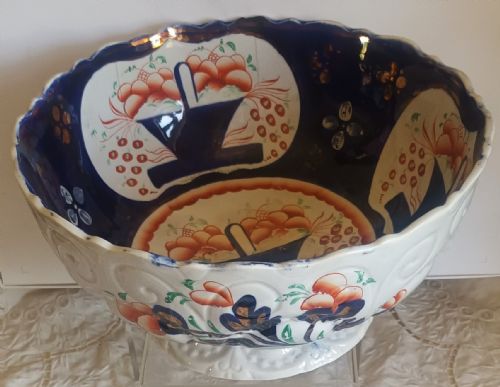
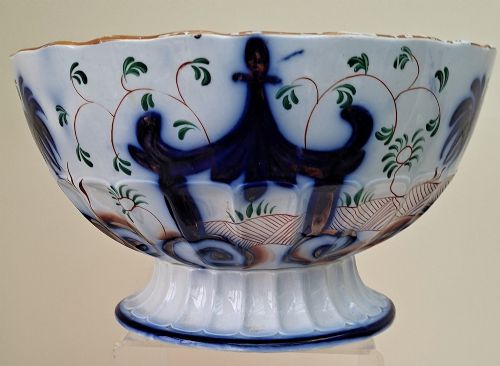
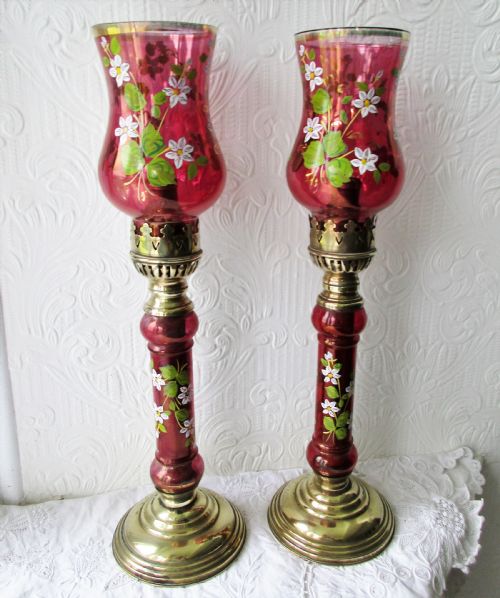
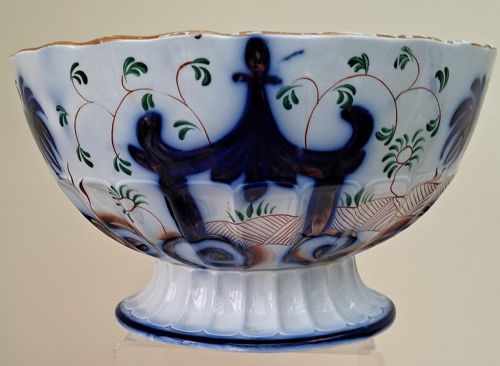
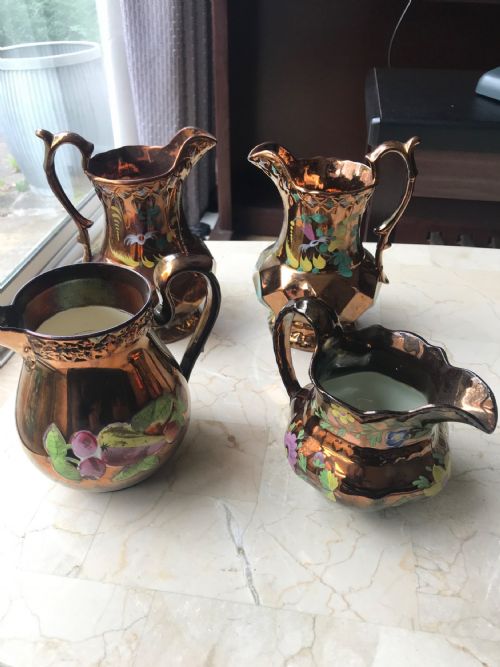
The pieces appearing on this page span the Victorian era alongside twentieth-century iterations, featuring prominent examples in ruby, green, pink, and yellow glass. Alongside traditional glass mantel lustres, related ceramic forms such as copper lustre jugs and earthenware bowls appear frequently.
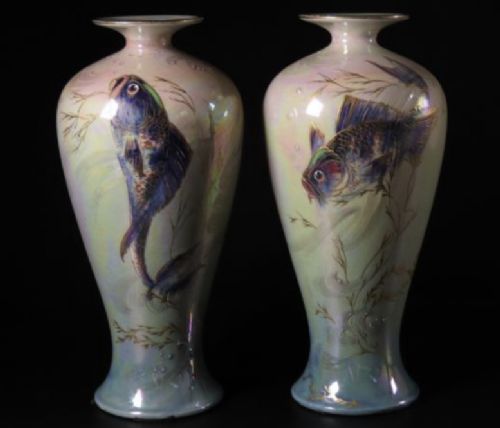
Origins range across English glasshouses, Staffordshire potteries, and continental workshops including Bohemian manufacturers. Pairs dominate the selections, intended originally to balance symmetrically upon a fireplace mantel or sideboard.
What varies in quality
Quality rests significantly upon the crispness of the hand-painted detailing and the richness of the enamel or metallic glaze application. Superior examples display precise brushwork and vibrant, stable colour palettes that resist fading or wear.
The presence of matching original crystal or glass prisms greatly influences the desirability of a pair. Pieces featuring complex flash-cutting, overlay glass layers, or unusual coloration stand apart from standard production items.
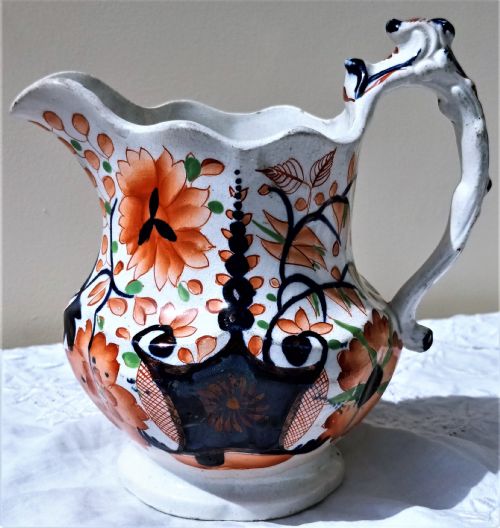
The inventory records diverse forms, including mantel lustres, table lustres, pitchers, and footed decorative bowls.
Walter Slater·Minton·Maling
The Hand Painted Lustres Glossary
- Lustre
- A decorative ceramic or glass vessel featuring a metallic or iridescent glaze finish designed to catch the light. These objects often incorporate hanging crystal prisms.
- Overlay glass
- A glass-making technique where a layer of coloured glass is fused over a contrasting base layer and selectively cut away. This process creates deep geometric or floral patterns.
- Flash-cut
- A method where a thin outer skin of coloured glass is cut through to expose clear or white glass underneath. This technique heightens visual contrast on mantel ornaments.
- Gaudy Welsh
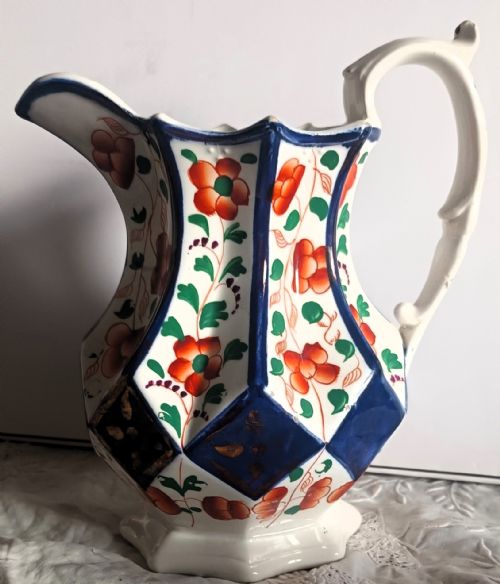
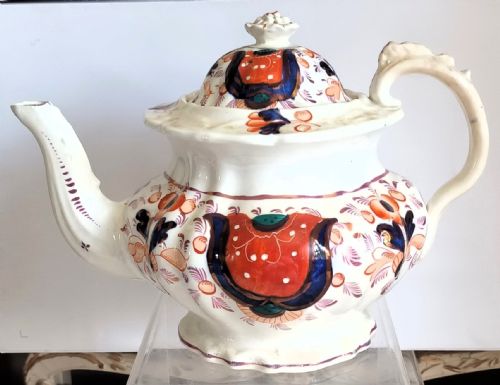
- A style of colourful pottery decorated with cobalt blue, copper lustre, and iron-red enamel patterns. It was produced largely in nineteenth-century Staffordshire and Welsh potteries.
- Prism
- A cut glass or crystal pendant suspended from the rim of a lustre. Prisms disperse light around the room when candles are lit.
Hand Painted Lustres: Frequently Asked Questions
How were glass lustres used originally?
These pieces served as decorative mantelpiece ornaments that held candles during evening hours. The suspended glass prisms amplified the flickering candlelight to brighten Victorian parlours.
Over time, they evolved into purely decorative centrepieces for dining tables and sideboards, valued for their striking colours.
How do I identify Victorian glass lustres?
Victorian examples typically exhibit heavy, hand-blown glass bodies with polished pontil marks on the base. They frequently incorporate rich ruby, green, or opaline glass colours paired with gilt highlights.
Another defining trait is the presence of hand-cut crystal prisms hung from metal or glass lugs around the rim.
Are replacement prisms acceptable?
Replacement prisms appear frequently on older pieces due to breakage over the decades. Collectors generally accept accurate period-style replacements provided they match the hanging length and glass colour of the originals.
Original matching prisms across an entire pair naturally enhance the overall integrity of the piece.