


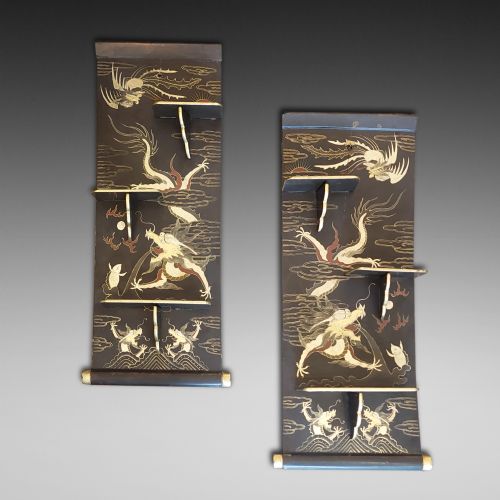
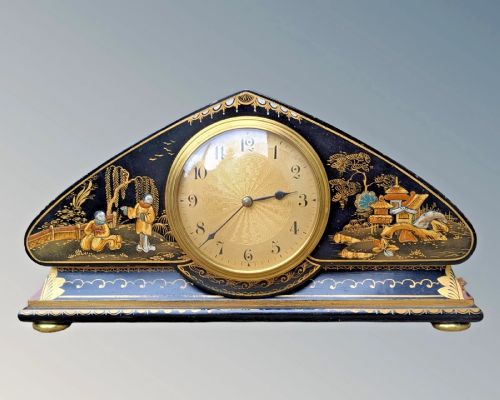
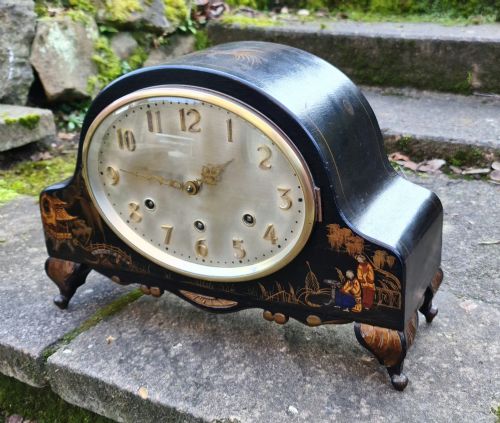


Hand Painted Lacquer Shelves
Hand painted lacquer shelves bring the rich visual depth of Chinoiserie and Victorian Aesthetic Movement design into modern rooms.
Hand Painted Lacquer Shelves
Hand painted lacquer shelves combine utility with decorative motifs, appearing in forms such as wall shelves, etageres, display shelves, and tabletop desk accessories. These pieces span the nineteenth century, Edwardian era, and the early decades of the twentieth century.
The aesthetic leans heavily into Chinoiserie styles, alongside Victorian Aesthetic Movement and Italian Rococo influences. Buyers will frequently encounter hanging wall configurations, bamboo-framed etageres, and compact desk storage units.
Origins stretch from Chinese workshops to European makers adopting eastern motifs during the nineteenth and early twentieth centuries. Each piece utilises lacquered wood surfaces adorned with painted scenes to create striking focal points.
How they were made
Construction relies upon wooden or bamboo foundations prepared to receive successive layers of lacquer. Artisans applied liquid resin finishes that hardened into durable, glossy coats capable of supporting detailed hand-painted artwork.
Decoration frequently incorporates paint and gold leaf applied directly onto the lacquered ground. Additional structural elements such as brass or glass fittings appear alongside the primary wood and bamboo frames.
Hand Painted Lacquer Shelves Retail Price Guide 2026
Typical asking prices for hand painted lacquer shelves among the pieces listed under this phrase on Sellingantiques today, from the lower quarter to the upper quarter. They describe what is for sale here now, not the wider market.
Listings feature periods spanning the nineteenth century, Edwardian era, 1920, 1930, and the Qing Dynasty.
What varies in quality
The refinement of the painted surface work dictates much of the distinction between simpler items and finer examples. Delicacy in the brushwork and the preservation of the underlying lacquer layer determine visual success.
Structural integrity also separates the output, particularly where bamboo framing or delicate hanging brackets meet daily utility demands. The integration of gold leaf detailing and secondary materials like brass hardware contributes to the overall presence of the piece.
The Hand Painted Lacquer Shelves Glossary
- Chinoiserie
- European artistic interpretation of Chinese and East Asian artistic traditions. This style dominates the decoration found on nineteenth and twentieth century lacquered furniture.
- Etagere
- A piece of furniture consisting of a set of open shelves for displaying small ornaments. These tall display stands often utilise bamboo or turned wood frames.
- Lacquer
- A clear or coloured synthetic or natural wood finish that dries to a hard, durable glossy sheen. It serves as the primary ground for painted orientalist scenes.
- Gold leaf
- Gold beaten into extremely thin sheets utilised for gilding surfaces. It highlights decorative motifs across the painted panels.
- Aesthetic Movement
- A late nineteenth century art movement that emphasised visual and aesthetic beauty over narrative or moral themes. Pieces from this period often incorporate Japanese and Chinese design elements.
Hand Painted Lacquer Shelves: Frequently Asked Questions
What are hand painted lacquer shelves?
These pieces are decorative storage items featuring lacquered wooden or bamboo surfaces adorned with painted motifs. They include hanging wall shelves, floor-standing etageres, and tabletop organizers.
Originating across the nineteenth and early twentieth centuries, they reflect popular global design movements like Chinoiserie and the Aesthetic Movement. Their primary purpose is displaying small objects while adding colour and texture to a room.
How do I date these shelves?
Dating relies on examining the construction materials, joinery techniques, and stylistic markers present in the piece. Nineteenth century examples often utilise bamboo frameworks or Victorian Aesthetic Movement details.
Later pieces from the Edwardian era or the 1920s and 1930s show shifts in manufacturing methods and decorative palettes. Comparing the style of the hand-painted motifs with documented periods helps narrow the timeline.
Where should I place wall shelves?
Hanging shelves suit spaces where they can function as decorative focal points without overcrowding the room. They work effectively in studies, living rooms, or hallways to display small collectables.
Ensure the wall fixings match the weight and construction of the wooden or bamboo frame. Keeping them away from direct sunlight preserves the painted lacquer finish over time.
How do I care for lacquer surfaces?
Maintain the finish by dusting gently with a soft, dry microfiber cloth. Avoid using harsh chemical cleaners, abrasives, or excessive water on the lacquered wood.
Position the furniture away from radiators and direct sunlight to prevent the wood and lacquer from drying out or cracking. Stable indoor humidity levels keep the painted decoration secure.