



Hand Painted Glass Vessel
A hand painted glass vessel brings vivid colour and intricate enamel work to a room, carrying the distinct artistry of nineteenth-century makers.
Hand Painted Glass Vessel
A hand painted glass vessel on this page typically appears as a Victorian or Bohemian piece, spanning styles from the mid-nineteenth century into the early twentieth century. Collectors encounter forms such as vases, ewers, tankards, jars, and decanters shaped in various colours of glass.
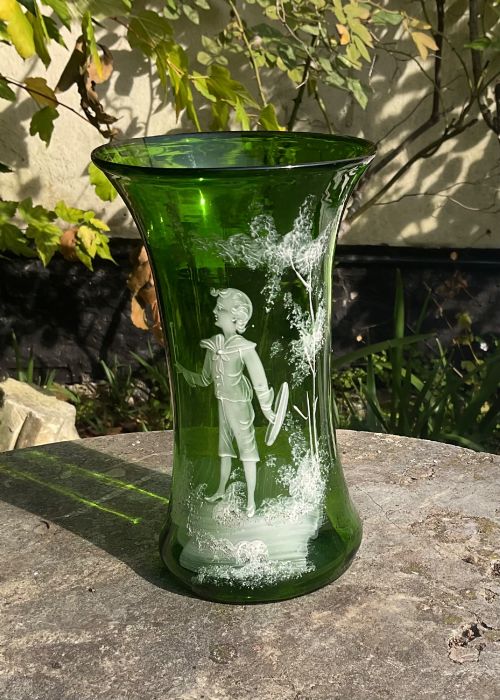
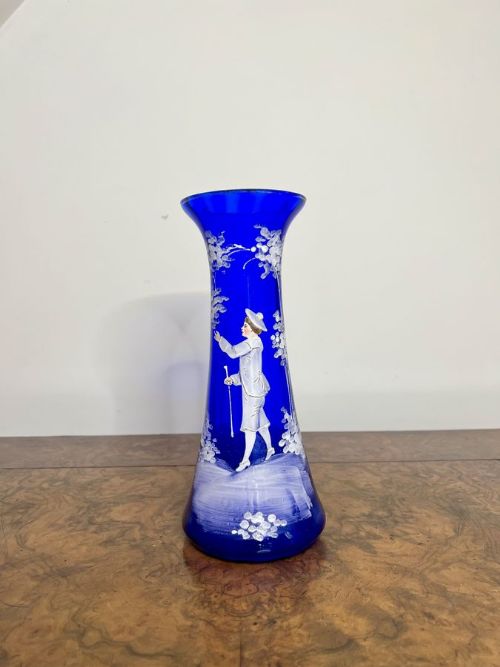
The selection ranges from cranberry, blue, green, and white opaline glass to triple cased and overlay pieces. Many examples display the characteristic white enamel figures associated with Mary Gregory, alongside botanical and animal scenes.
Originating largely from British and Bohemian workshops, these vessels reflect the prominent design movements of their time, including Art Nouveau, Japonisme, and the Aesthetic Movement. Each object serves as a decorative focal point shaped by traditional glassmaking methods.
How they were made
Makers formed these vessels using glassblowing techniques, sometimes layering different colours to create cased or overlay glass that was later cut or polished. The body served as a canvas for applied decoration executed in enamel paint and gold leaf.
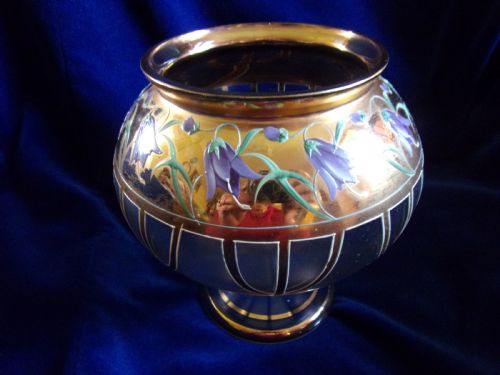
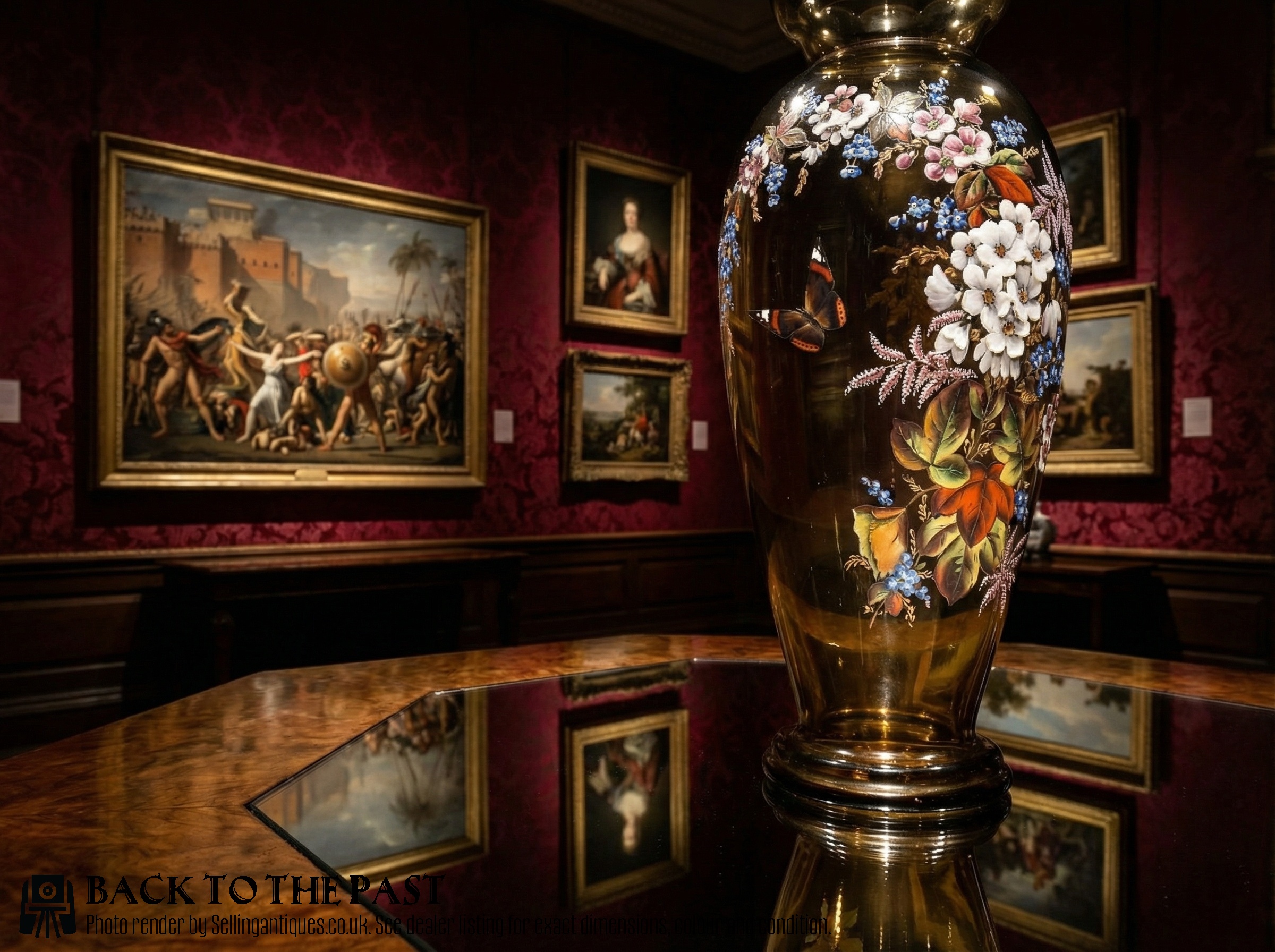
Artists painted detailed scenes and motifs directly onto the glass surface, utilising opaque white enamel for figures or polychromatic pigments for landscapes and wildlife. Gilding was frequently added by hand to accentuate rims, handles, and panel borders before firing.
Listings feature nineteenth-century Bohemian and Victorian vessels in cranberry, blue, green, and white opaline glass.
What varies in quality
Quality in a hand painted glass vessel rests on the precision of the enamel work and the depth of the glass medium itself. Finely executed pieces display crisp brushwork and well-defined pictorial detail rather than flat or hasty application.
The weight and clarity of the glass, whether cased, overlay, or opaline, distinguish standard production from superior examples. Intricate gilding and balanced proportions further elevate the standing of a piece within its period.
Moser·Harrach
The Hand Painted Glass Vessel Glossary
- Mary Gregory
- A term applied to glassware decorated with silhouette-like figures painted in white enamel, typically depicting children in outdoor settings. The style gained popularity during the Victorian era.
- Opaline glass
- An opaque or translucent pale glass developed in France and popular across Europe during the nineteenth century. It provides a smooth backdrop for enamel and gilt decoration.
- Cased glass
- Glass composed of two or more distinct layers of different colours fused together during blowing. Artisans often cut through the outer layer to reveal the contrasting colour beneath.
- Enamel paint
- A glossy, opaque pigment applied to the glass surface and fired to achieve a durable finish. It allows for raised decorative details and vibrant pictorial scenes.
Hand Painted Glass Vessel: Frequently Asked Questions
How do I clean a painted glass vessel?
Wash the vessel gently by hand using lukewarm water and a mild soap, avoiding harsh scrubbing or soaking that might damage the enamel.
Dry the piece immediately with a soft cloth to protect any gold leaf and delicate painted details.
How can I tell a Victorian piece from later ones?
Examine the weight of the glass, the style of the hand painting, and the colour palette characteristic of nineteenth-century production.
Victorian and Bohemian vessels often display specific motifs like white enamel figures or traditional hunting scenes tied to documented periods.
Where should I display these fragile vases?
Place the vessel on a stable surface away from direct sunlight to preserve the vibrant pigments of the enamel work.
Ensure it sits clear of high-traffic areas where accidental knocks might compromise the delicate glass body.
What defines Bohemian glass from this era?
Bohemian glass is noted for its technical skill in coloured layers, heavy gilding, and intricate enamelled landscapes or wildlife.
Regional workshops utilised traditional cutting and painting methods that produced robust yet highly decorative forms.