



Hand Painted Glass Lustres
Hand painted glass lustres bring rich colour and sparkling crystal drops to any mantelpiece or table.
What They Are
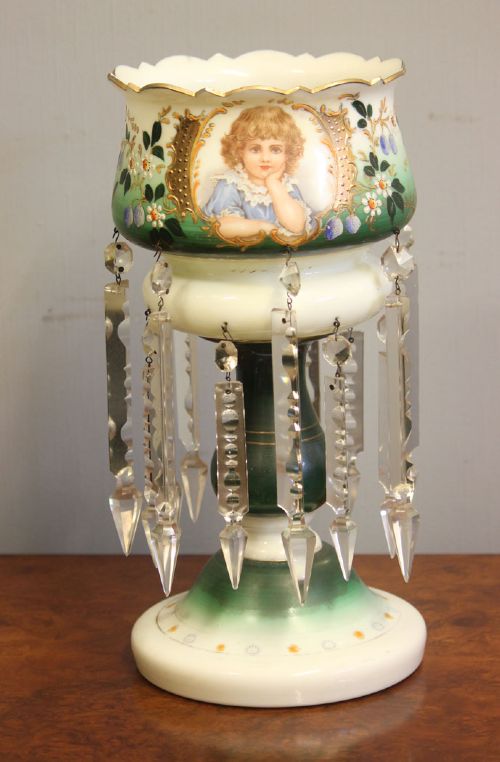
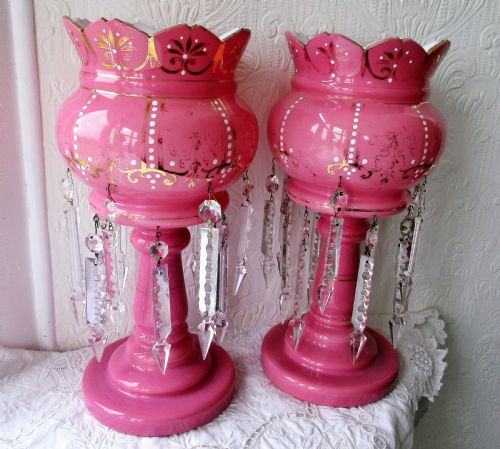
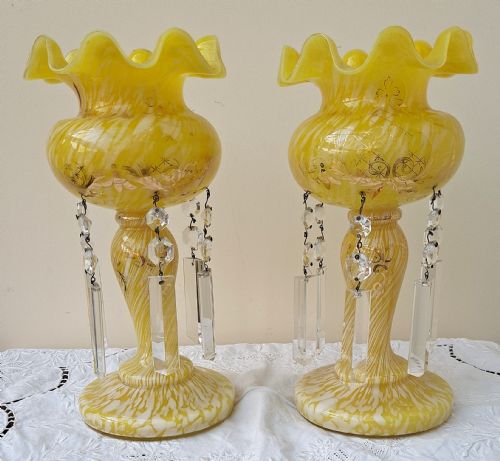
Hand painted glass lustres are decorative mantel or table objects designed to catch the light in a room. When you search for hand painted glass lustres, you encounter pairs originating from the nineteenth century, including Victorian, French, and Bohemian pieces.
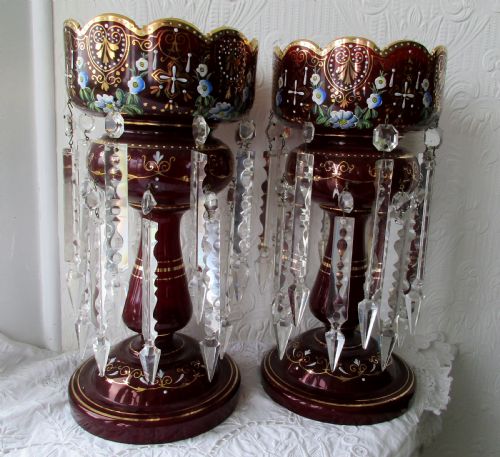
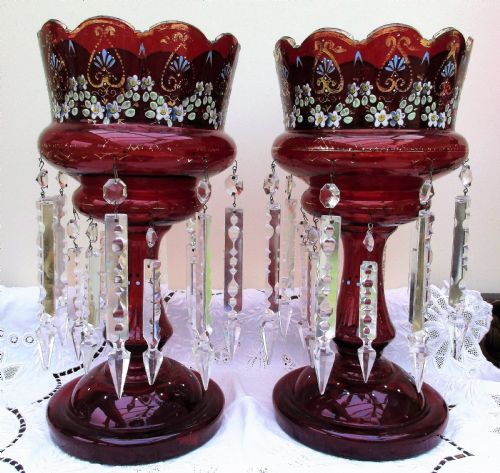
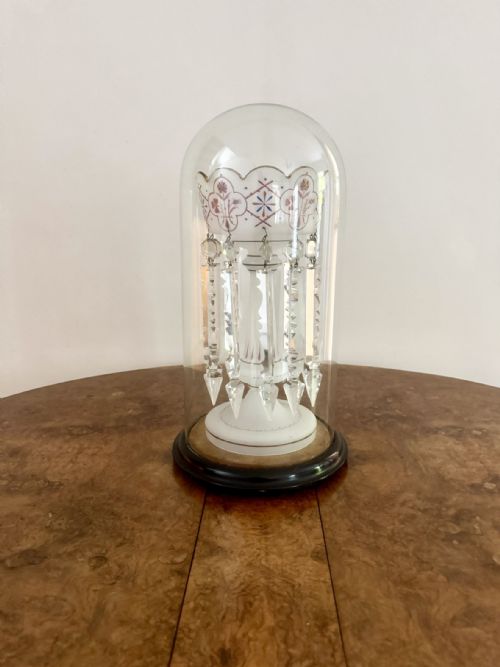
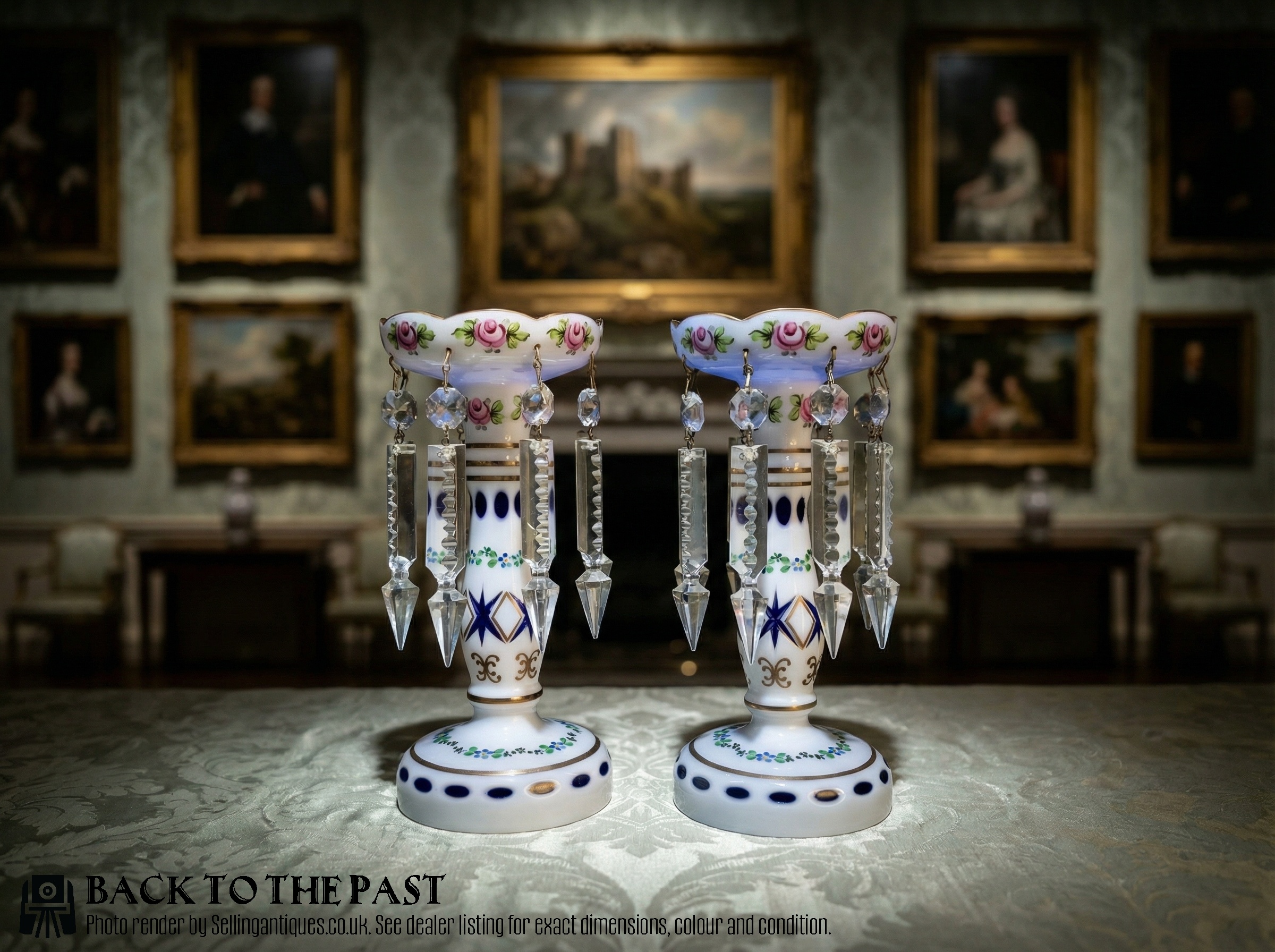
The form typically consists of a central glass stem supporting a wide bowl, from which long crystal prisms hang. These pieces appear in ruby glass, green glass, opaline glass, milk glass, and overlay glass.
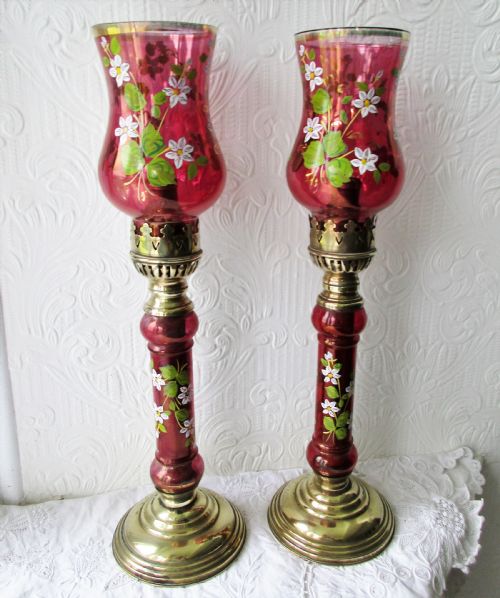
Most examples survive as balanced pairs intended for symmetrical placement on a mantelpiece or a side table. They combine functional candle illumination with ornate painted surface decoration.
How They Were Made
Makers formed these items using lead crystal and coloured glass such as ruby, emerald, and opaline. Molten glass was blown and shaped into stems and bowls, then fitted with cut crystal prisms suspended from the rim.
Workers decorated the glass bodies using enamel and gold leaf applied by hand. These pigments and metallic details were often fired onto the surface to ensure durability, creating layered motifs across the coloured glass ground.
Retail Price Guide 2026
Typical UK retail prices for hand painted glass lustres, calculated from the Sellingantiques database of over a million retail prices indexed since 2003. This retail price guide relies exclusively on Sellingantiques data; no external sources or auction records are used, so the figures do not describe the wider market.
A soft chime echoes whenever a draft catches the crystal prisms hanging from a Victorian mantelpiece.
What Varies in Quality
The refinement of the hand painting and the depth of the glass colour determine the distinction between ordinary and exceptional examples. Rich ruby and emerald grounds paired with intricate enamel work indicate superior production standards.
The quality of the hanging crystal prisms and the precision of their cutting dictate the sparkle and overall balance of the lustre. Heavier lead crystal bodies with substantial overlay work demonstrate higher craftsmanship than thinner, plain glass versions.
The Hand Painted Glass Lustres Glossary
- Lustre
- A decorative glass or porcelain object featuring hanging crystal prisms designed to reflect light. These pieces served as ornamental mantel furnishings in nineteenth-century interiors.
- Prism
- A cut glass pendant suspended from the rim of a lustre to refract candlelight and daylight. Prisms are attached by small metal wires or loops.
- Opaline glass
- A dense, translucent art glass that transmits a soft, opalescent glow when held to the light. This material appears frequently in French table lustres.
- Overlay glass
- A technique involving layers of different coloured glasses fused together and cut away to reveal the contrasting colour beneath. This method creates striking visual depth on the body of the lustre.
- Enamel
- Opaque glass paste applied as paint to the surface of the vessel before firing. It provides vibrant decorative colour highlights alongside gold leaf.
Frequently Asked Questions
What are hand painted glass lustres used for?
These pieces served primarily as decorative garniture for mantelpieces and large tables in nineteenth-century homes. They were placed in pairs to create symmetrical arrangements that reflected ambient daylight and candlelight.
Beyond ornament, some forms incorporated sockets for holding candles, though many survived simply as decorative display objects. Their hanging crystals were designed to add movement and sparkle to formal rooms.
How do I clean antique glass lustres?
Cleaning requires removing the hanging crystal prisms individually and washing them gently in lukewarm soapy water. The main glass body should be wiped carefully with a soft, damp cloth to protect delicate enamel and gold leaf details.
Harsh chemical cleaners and abrasive cloths must be avoided because they damage surface gilding and painted decoration. Ensure all parts are completely dry before reattaching the crystal prisms.
How can I tell Victorian lustres apart from French ones?
Victorian examples often feature deep saturated colours like ruby and emerald glass combined with heavy enamel and gilt decoration. English pieces tend to follow robust Victorian proportions suited for traditional mantel displays.
French pieces frequently utilise opaline or milk glass with lighter, more delicate floral painting styles. Examining the glass tint, weight, and painting technique helps distinguish the regional origins.
Are these glass lustres always sold in pairs?
Most surviving examples appear as balanced pairs because they were manufactured to flank clocks or candelabras on mantelpieces. Symmetrical placement was a defining feature of interior decoration during the nineteenth century.
Single pieces do occasionally survive due to accidental breakage over time, but matched pairs remain the standard format for collectors. Checking that both lustres share identical prisms and wear patterns ensures they started life together.