






Hand Painted Enamel Glassware
These hand painted enamel glassware pieces bring brilliant colour and intricate decoration to tables and cabinets.
Hand Painted Enamel Glassware
Hand painted enamel glassware encompasses decorative vessels and tableware produced across the nineteenth and early twentieth centuries. Collectors encounter Victorian Mary Gregory pieces alongside Bohemian, German, and French works.
The selection ranges from tall vases and decanters to wine glasses, cordials, and biscuit barrels. Vases and jugs dominate the forms, often decorated with floral motifs, heraldic designs, or figures.
Pieces frequently date from the Victorian and Edwardian eras, as well as the Art Nouveau and Jugendstil periods. Forms span simple bottles and jars to complex liquor stands, epergnes, and garniture sets.
How they were made
Makers utilised blown glass, clear glass, and coloured grounds such as cranberry, green, and blue glass as the base for their work. Artisans applied polychrome enamel and vitreous enamel directly to the surface.
Decoration often involved intricate hand painting combined with gold leaf gilding and enamel decoration. Specialised workshops shaped opaline glass and crystal before applying detailed pictorial and floral scenes.
Hand Painted Enamel Glassware Retail Price Guide 2026
Typical asking prices for hand painted enamel glassware among the pieces listed under this phrase on Sellingantiques today, from the lower quarter to the upper quarter. They describe what is for sale here now, not the wider market.
Materials recorded across the inventory include cranberry glass, blown glass, gold leaf, and vitreous enamel.
What varies in quality
Quality rests upon the fineness of the hand painting and the complexity of the enamel work. Crisply rendered figures, heraldic motifs, and botanical details distinguish finer examples from simpler production.
The weight and clarity of the base glass, whether cranberry, blue, or green, together with the skillful application of gold leaf, separate standard tableware from exceptional cabinet pieces.
Theresienthal·Fritz Heckert·Moser·Lobmeyer·Legras·Salviati
The Hand Painted Enamel Glassware Glossary
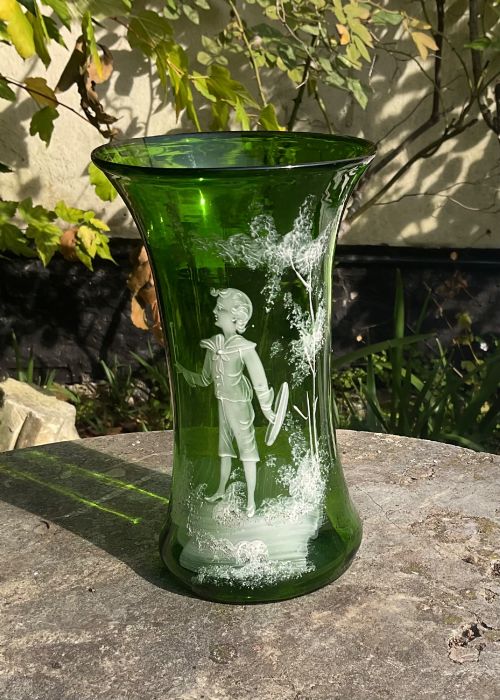
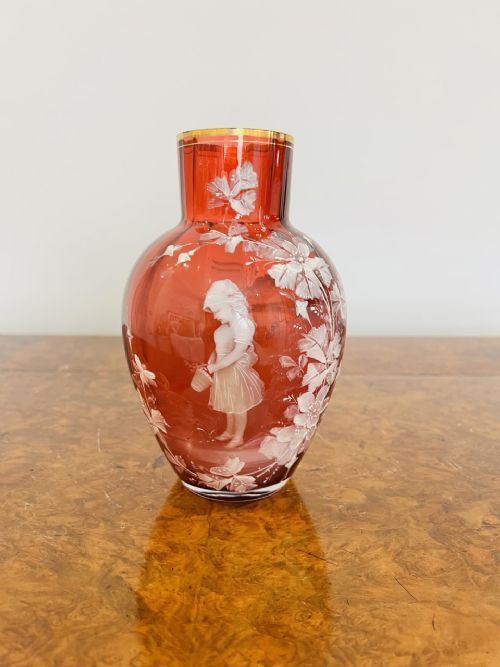
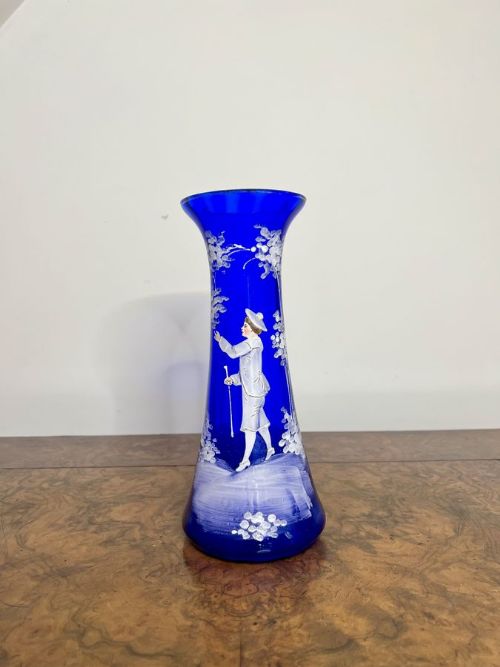
- Mary Gregory glass
- Victorian glassware decorated with white enamel silhouettes of children amidst foliage. This style typically appears on cranberry, blue, or green glass.
- Roemer
- A traditional Germanic large stemmed drinking glass with a wide bowl and raspberry prunts on the stem. These often feature polychrome enamel armorial or heraldic motifs.
- Hock glass
- A tall wine glass with a long stem, often coloured and heavily enamelled. They were designed for Germanic white wines.
- Garniture set
- A matching group of three or more vases meant to be displayed together on a mantelpiece or sideboard. They share coordinated enamel painting and glass colours.
- Vitreous enamel
- Glass powder fused to a surface through high heat firing. This technique creates durable, vibrant colours that adhere permanently to the glass vessel.
Hand Painted Enamel Glassware: Frequently Asked Questions
What is Mary Gregory glass?
Mary Gregory glass refers to Victorian pieces painted with white enamel figures, usually children outdoors. These designs appear on cranberry, blue, and green glass vessels.
Despite the name, the decorator Mary Gregory did not create the style, but the term remains widely used by collectors to describe this distinct silhouette work.
How do I date enamelled glassware?
Dating relies on stylistic clues, glass colours, and maker characteristics. Victorian pieces often feature rich cranberry or deep green tones with heavy gilding.
Later items from the nineteen-tens and twenties shift towards Art Nouveau lines, Jugendstil motifs, or simpler Czech designs.
Can I use these glasses for drinks?
Many items, such as roemers, hock glasses, and decanters, were made for functional dining use. Hand-washing in lukewarm water protects the delicate enamel and gold leaf.
Fine antique pieces with extensive gilding are often reserved for display to prevent wear on the painted surfaces.
What is a roemer?
A roemer is a traditional European wine goblet featuring a large rounded bowl atop a decorated stem. They frequently showcase bright green glass and detailed armorial enamel painting.
Originating in Germanic regions, these glasses became popular across Bohemia and central Europe during the nineteenth century.