




Hand Painted Enamel Bottle
A hand painted enamel bottle brings together the precision of miniature brushwork and the heft of glass, porcelain or metal.
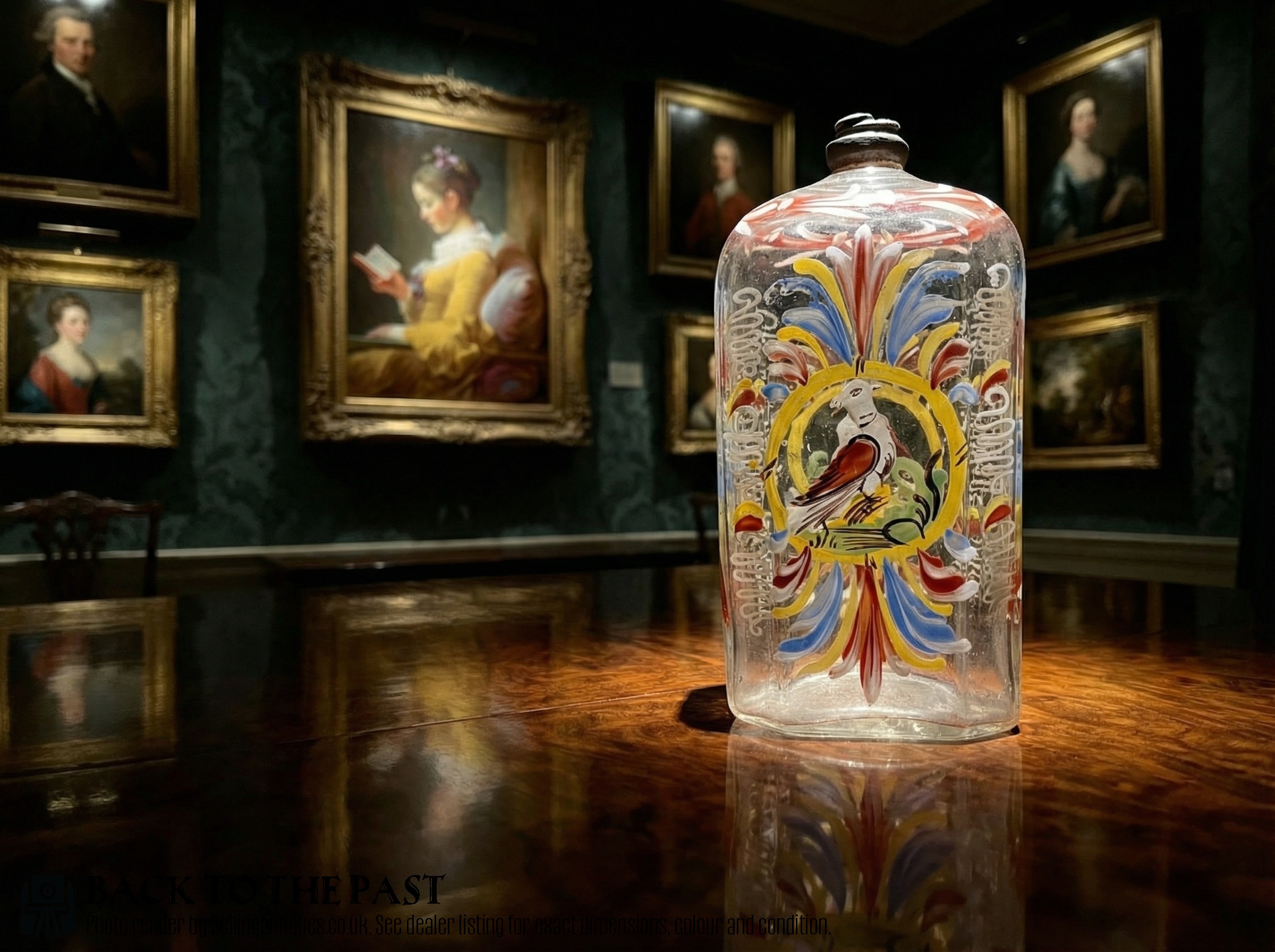
Hand Painted Enamel Bottle
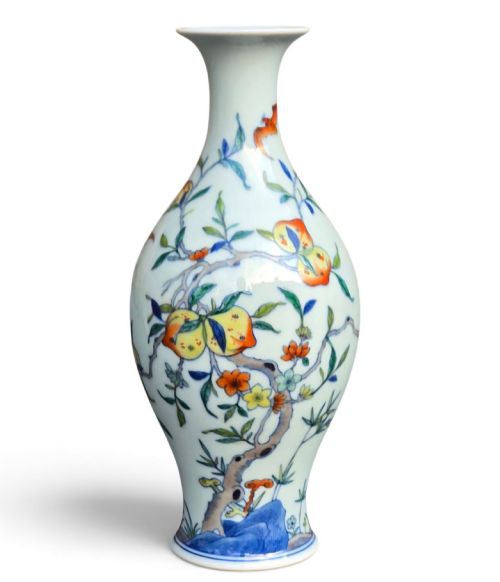
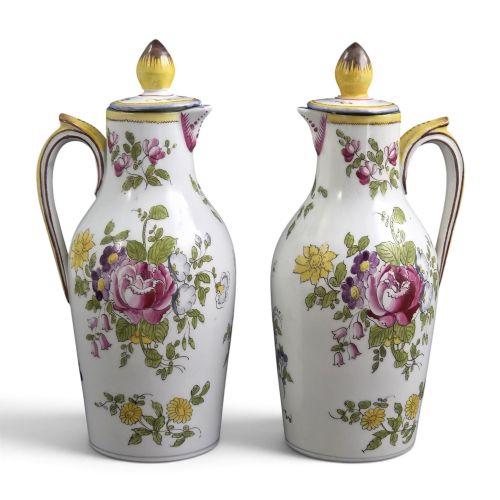
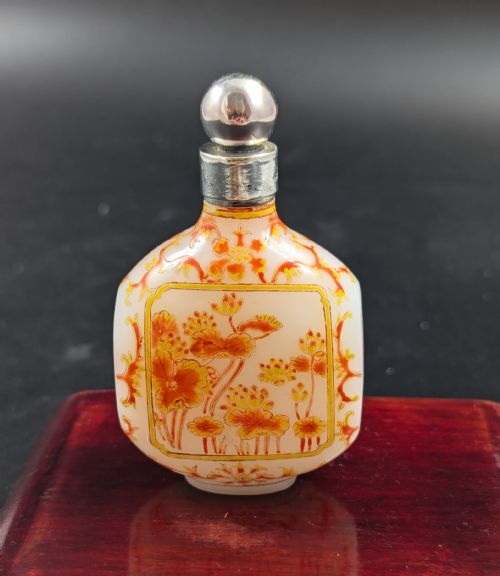
A hand painted enamel bottle is typically a small vessel intended for snuff, scent, spirits or display, produced across the eighteenth and nineteenth centuries. You will most frequently encounter pocket-sized snuff bottles from Qing Dynasty China alongside European glass decanters, ewers and flasks bearing polychrome enamel decoration.
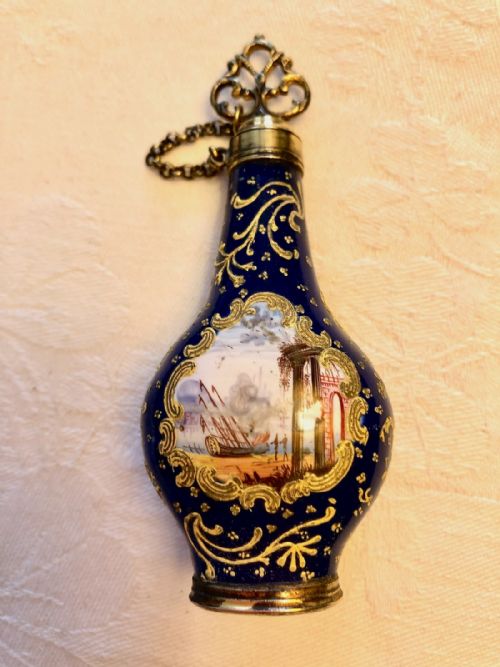
The form spans various domestic and personal uses, from miniature scent flasks with painted scenes to larger gin decanters and schnapps vessels. Continental European folk art and Victorian glass production dominate the non-Asian examples found in these records.
Materials and construction
Makers utilised glass, porcelain and white metal as foundations for the enamel surface, sometimes incorporating gold leaf accents or pewter mounts. Clear, white opaline and coloured glass vessels received direct hand-painted enamel detailing that fused to the body during firing.
Porcelain snuff bottles employed fine ceramic bodies painted in famille rose palettes or bearing specific studio marks such as Guyue Xuan. European flasks and decanters often featured polychrome enamel applied over blown glass or framed by silver hardware.
The listings combine Chinese porcelain snuff bottles with European glass decanters and flasks, spanning the eighteenth and nineteenth centuries.
What separates the grades
The distinction between ordinary and superior pieces rests entirely upon the execution of the hand-painted details and the crispness of the glass or porcelain ground. Finer examples display meticulous brush control in figurative scenes or floral motifs, while simpler pieces rely on heavier, block-colour folk decoration.
Material choice and structural integrity also divide the range, from standard pressed or blown glass to cased opaline bodies and marked imperial Chinese porcelain. Preserved gilding and undamaged enamelwork elevate the standing of any bottle.
The Hand Painted Enamel Bottle Glossary
- Famille rose
- A palette of opaque Chinese ceramic enamels dominated by pink or rose colours, introduced during the Qing dynasty. It allowed for subtle shading and complex pictorial scenes.
- Opaline glass
- An opaque or translucent glass developed in France and Bohemia, appearing in white or pastel shades. It provides a smooth, solid background well-suited to painted enamel designs.
- Mary Gregory glass
- Victorian glassware decorated with silhouettes of children in white enamel, usually set against green, blue or cranberry backgrounds. The figures are often highlighted with delicate gold tinting.
- Schnapps flask
- A small portable container designed for holding spirits, frequently produced in European folk art traditions. These vessels often feature bright polychrome enamel inscriptions or floral motifs.
- Guyue Xuan mark
- A studio mark associated with high-quality imperial Chinese glass and porcelain wares. Pieces bearing this attribution often command attention for their superior painted decoration.
Hand Painted Enamel Bottle: Frequently Asked Questions
What were hand painted enamel bottles used for?
These vessels served various personal and domestic purposes depending on their size and origin. Smaller examples held medicinal snuff, personal scents or pomanders, while larger glass bodies functioned as table decanters or pocket gin flasks.
Many also served as decorative ornaments in period interiors, showcasing the miniature painting skills of their makers rather than holding contents.
How do I date an enamel bottle?
Dating relies on combining the material characteristics, the style of the painted scenes and any factory or reign marks present on the base. Eighteenth-century pieces often exhibit distinct folk art palettes or early translucent glass formulas, whereas Victorian and late nineteenth-century items display heavier moulded bodies or specific stylistic traits like Mary Gregory silhouettes.
Examining the wear patterns on the base and the composition of the enamel can also offer strong clues to the period of manufacture.
Are these bottles fragile?
Most pieces are made from glass or porcelain, meaning they require careful handling to avoid chipping the rims or cracking the body. The enamel itself sits on the surface and can be worn or scratched if subjected to abrasive cleaning.
Displaying them away from high-traffic areas and cleaning them only with a soft, dry cloth preserves the painted details.
How should I display them at home?
Because of their compact scale, these bottles suit enclosed cabinets, shelves or mantelpieces where they can be viewed close up. Placing them near a light source helps illuminate the translucent qualities of the glass and the fine details of the enamel work.
Keeping them out of direct, strong sunlight prevents any fading of the pigments over time.