


Hand Painted Desk
A hand painted desk brings together fine cabinetry and delicate brushwork, offering a distinctive workspace shaped by centuries of decorative traditions.
Hand Painted Desk
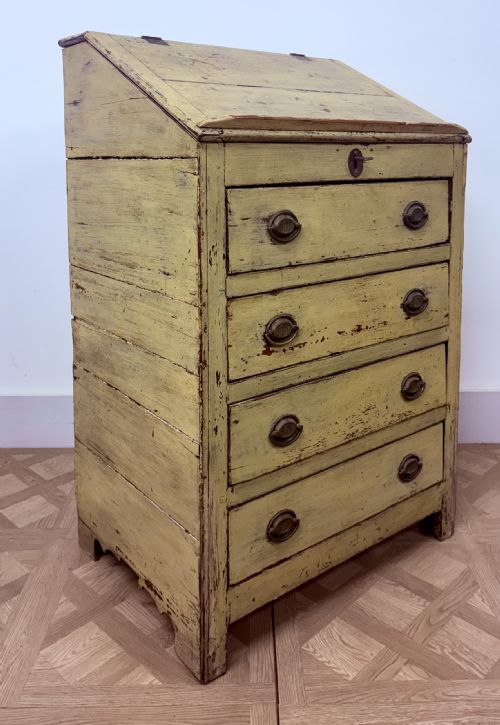
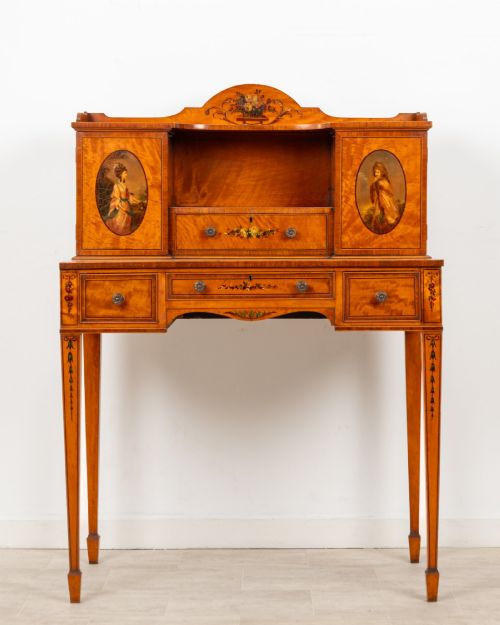
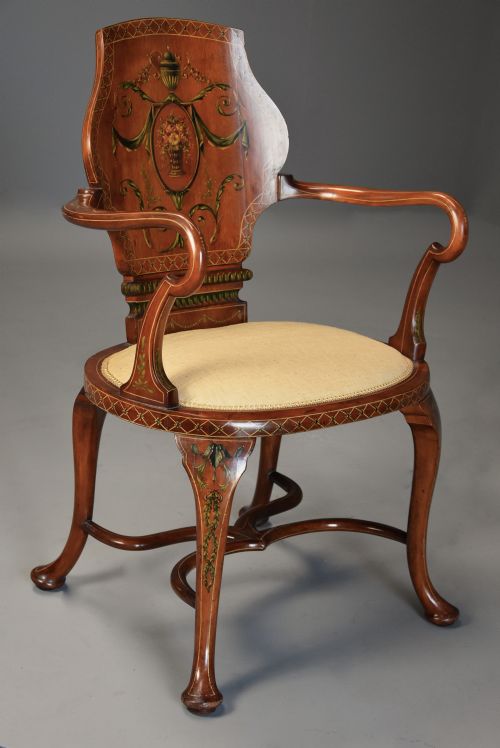
When searching for a hand painted desk, a buyer encounters pieces ranging from refined Edwardian satinwood writing tables to Georgian provincial chests fitted with writing slopes and later decorative finishes. These items combine practical writing surfaces with artistic surface ornamentation.
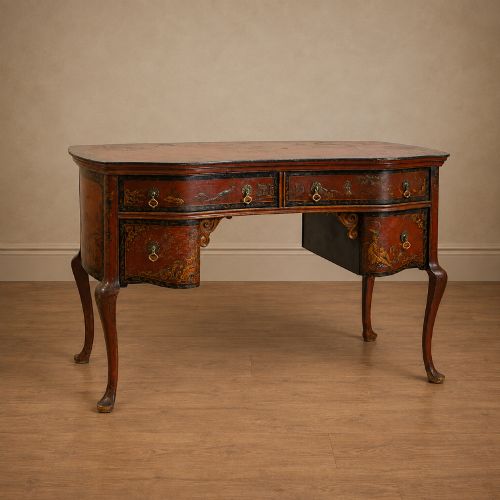
The selection frequently includes smaller forms such as papier-mâché lap desks and writing boxes featuring detailed miniature scenes of dogs, horses, and floral motifs. Larger examples span kidney-shaped dressing tables and bureaus finished in the Chinoiserie style with lacquer work.
Origins stretch from English workshops to French revivals and Kashmiri traditions, reflecting diverse cultural approaches to surface decoration. Edwardian satinwood and Georgian forms dominate the larger furniture selections available on the market.
Materials and Construction
Cabinet makers utilised timber bases such as satinwood, cedar, and mahogany, often applying a smooth lacquer or paint layer to prepare the ground for detailed artwork. Papier-mâché served as a sturdy, mouldable medium for portable writing boxes.
Surface designs relied on oil paints, gilt bronze accents, and hand-applied pigments to create scenes ranging from oriental landscapes to British flora and fauna. Varnish layers were subsequently added to protect the delicate painted details from daily wear.
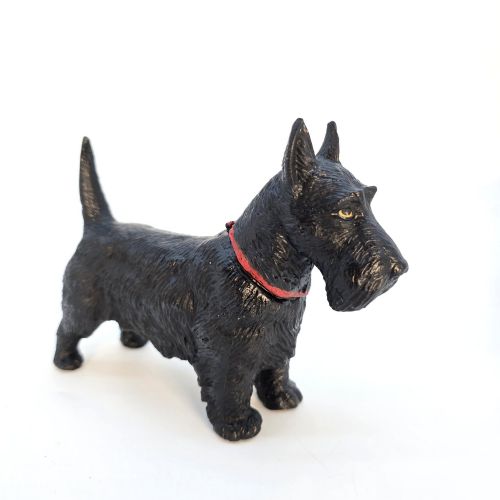
Victorian desk boxes frequently feature painted portraits of faithful dogs keeping watch over the inkwells.
Markers of Distinction
The standard of a hand painted desk rests upon the crispness of the cabinetry and the fidelity of the brushwork. Master painters achieved depth and shading that elevated simple wooden frames into notable works of decorative art.
Originality of the surface finish dictates desirability, distinguishing period pigment work from later decorative updates. The integration of structural drawers, hinges, and secondary woods further establishes the integrity of each piece.
Royal Worcester
The Hand Painted Desk Glossary
- Satinwood
- A durable, yellowish timber prized for its smooth grain and pale lustre, commonly used in fine Edwardian and Georgian furniture.
- Chinoiserie
- European interpretations of Chinese and East Asian artistic traditions, featuring lacquered surfaces and motifs of figures, pagodas, and landscapes.
- Papier-mâché
- A composite material made from paper pulp or layers of paper bound with glue, moulded and dried to create rigid writing boxes and desk accessories.
- Bonheur du jour
- A small, light lady's writing desk featuring a tiered superstructure with shelves, drawers, or a cabinet above the main writing surface.
- Pounce pot
- A small container with a perforated lid used to sprinkle resin powder over parchment or paper to prepare the surface for writing.
Hand Painted Desk: Frequently Asked Questions
What is a hand painted desk?
A hand painted desk is a piece of antique furniture featuring an integrated writing surface and artistic brushwork applied directly to wood, lacquer, or papier-mâché.
These pieces range from compact Edwardian satinwood writing tables to larger Georgian chests and bureaus decorated with floral or Chinoiserie motifs.
How do I care for a painted wooden desk?
Protect the painted surface by keeping the desk away from direct sunlight and maintaining stable room humidity to prevent timber movement.
Dust gently with a dry, soft cloth and avoid chemical cleaners that might lift or dull the original lacquer and pigments.
Are these desks suitable for daily writing?
Many antique writing tables and bureaus remain fully functional for modern correspondence, laptop use, or administrative tasks.
Using a leather blotter or writing pad helps protect the historic painted surface from ink spills and daily friction.
How can I tell if the paintwork is original?
Original hand painted decoration shows natural integration with the underlying timber grain, consistent wear patterns, and period-appropriate pigment chemistry.
Later decorative overhauls often sit too flat on the surface or lack the fine hand of period decorative artists.