





Hand Painted Console
A hand painted console brings surface artistry and architectural poise to a hallway, drawing the eye with decorative brushwork.
Hand Painted Console
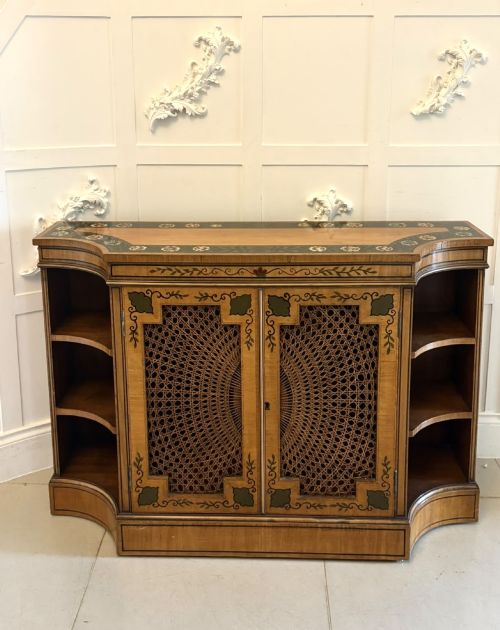
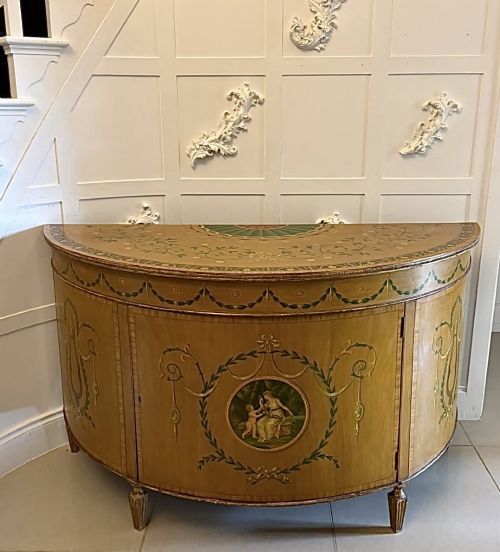
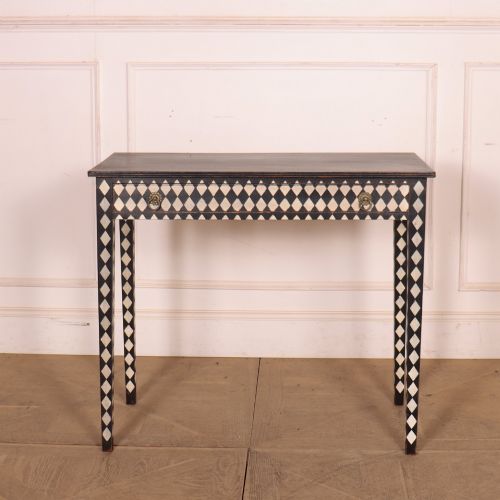
When you search for a hand painted console, you look at narrow tables designed to sit flush against a wall in hallways, reception rooms and drawing rooms. The pieces gathered here span the nineteenth century, the Edwardian era and the early twentieth century, showing both English and continental origins.
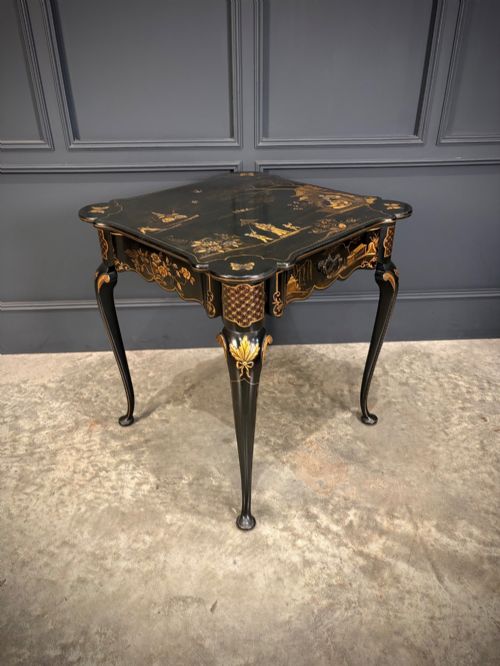
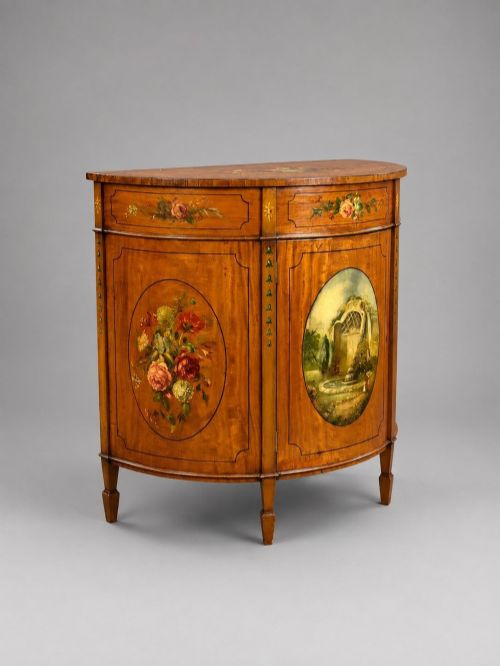
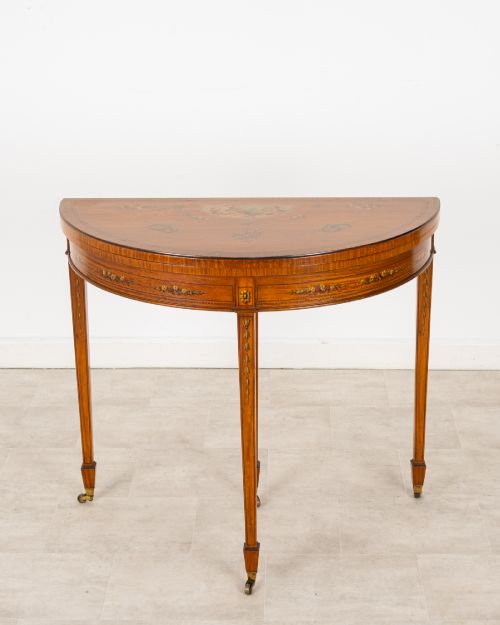
You will most frequently meet demi-lune satinwood commodes and side cabinets, alongside occasional tables and wall-mounted console tables. Many examples incorporate folding tops for use as card or games tables, offering dual utility in compact footprints.
Materials and construction
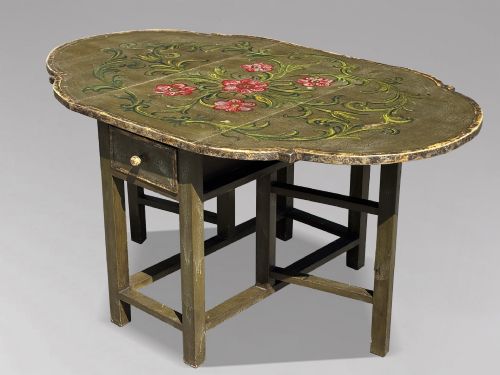
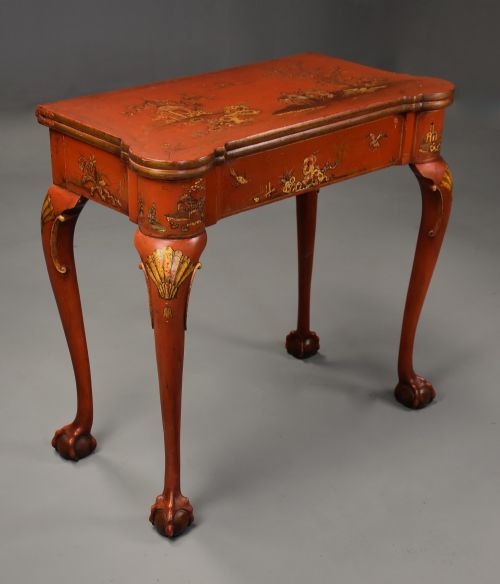
Cabinet makers utilised foundational timbers such as mahogany and satinwood, applying smooth paint finishes directly to the wood or building up deep layers of red and black lacquer. Surfaces frequently display intricate Chinoiserie motifs, floral vignettes and Italian folk art detailing executed by hand.
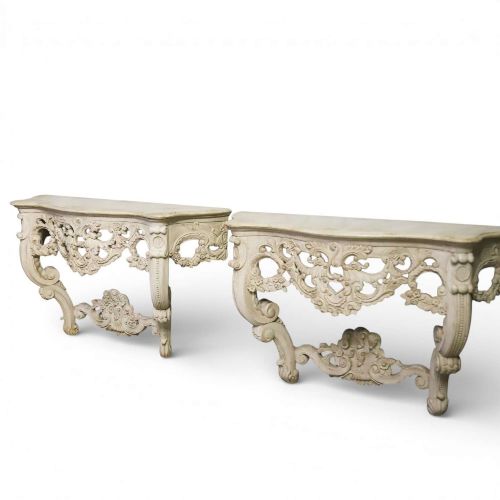
Many of the finer examples incorporate contrasting specimen marble tops or brass hardware. Structural forms range from turned and carved wooden legs to wall-fixed console frames finished in antique white.
Hand Painted Console Retail Price Guide 2026
Typical asking prices for hand painted console among the pieces listed under this phrase on Sellingantiques today, from the lower quarter to the upper quarter. They describe what is for sale here now, not the wider market.
Current listings demonstrate a strong presence of Edwardian satinwood demi-lune cabinets alongside early twentieth-century red and black lacquered Chinoiserie tables.
Assessing quality and execution
The distinction between standard and superior pieces rests entirely on the precision and artistry of the painted surface. Finer examples display crisp, detailed brushwork in the Chinoiserie or floral decoration, whereas lesser items show flat, hurried application.
The selection of base materials also dictates worth. Tables utilising solid satinwood, genuine marble tops and elaborate lacquer work represent a higher tier of craftsmanship than basic painted pine or softwood.
The Hand Painted Console Glossary
- Demi-lune
- A half-moon shape used for console tables and commodes designed to stand flat against a wall. This profile saves floor space in narrower hallways and landings.
- Chinoiserie
- European interpretations of Chinese and East Asian artistic styles, popular in painted and lacquered furniture decoration. The technique employs gilt and coloured motifs on dark backgrounds.
- Satinwood
- A durable, yellowish timber native to India and Ceylon, prized for its lustrous grain. It served as a smooth canvas for painted decoration during the eighteenth and nineteenth centuries.
- Pier table
- A decorative table designed to sit specifically against the wall between two windows, often placed directly beneath a mirror. These pieces frequently feature marble tops and elaborate painted frames.
Hand Painted Console: Frequently Asked Questions
Where should I place a console table?
These narrow tables suit entrance halls, narrow corridors and landings where floor space is limited. Their shallow depth allows them to sit against walls without obstructing pathways.
They also function effectively in living rooms beneath mirrors or artwork, providing a surface for lamps and decorative objects.
How do I care for painted wooden surfaces?
Dust surfaces regularly with a soft, dry cloth to prevent the accumulation of grit that might scratch the painted layer. Avoid placing pieces in direct sunlight to prevent fading of delicate pigments.
Keep wooden furniture away from direct heat sources and moisture fluctuations to protect both the timber substrate and the decorative finish.
How do I distinguish Edwardian pieces from nineteenth-century ones?
Edwardian painted satinwood pieces often draw inspiration from earlier Sheraton revival designs, exhibiting lighter proportions and delicate floral swags. Nineteenth-century examples tend to display heavier timber construction and denser decorative schemes.
Examining the underside, secondary woods and hardware can also offer clues regarding the manufacturing era.