





Hand Painted Chinoiserie Chest
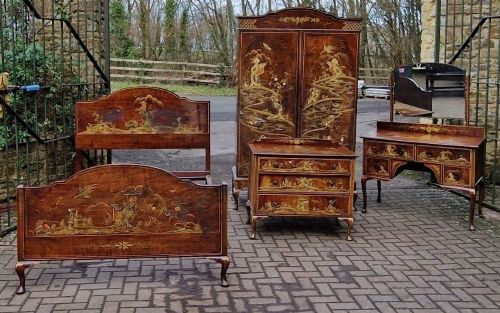
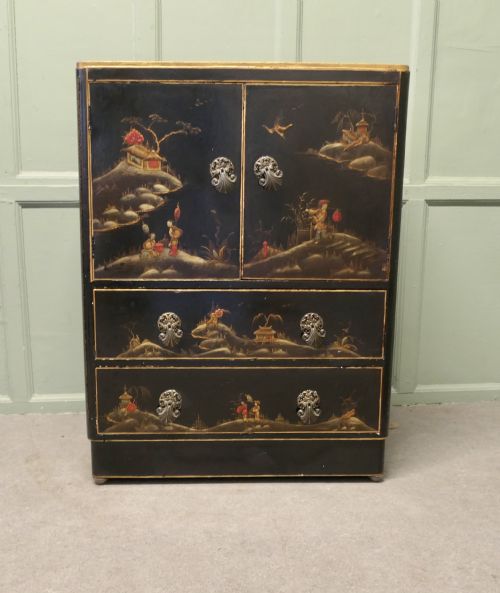
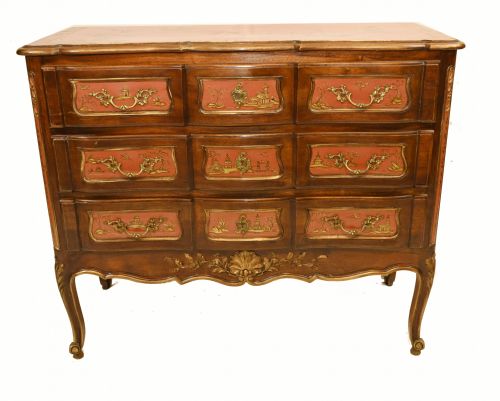
A hand painted chinoiserie chest brings bright lacquer and narrative scenes of figures, pavilions and landscapes into a room.
Hand Painted Chinoiserie Chest
A hand painted chinoiserie chest takes the form of a storage cabinet, a chest of drawers, a commode or a drinks cabinet finished with lacquer and painted oriental motifs. These pieces date from the eighteenth century through to the early twentieth century, spanning periods such as the nineteenth century, nineteen-ten and nineteen-thirty.
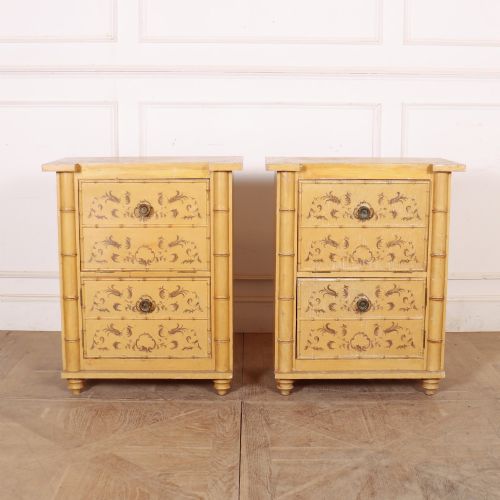
The buyer meets various formats on this page, including bedside tables, tallboys, side cabinets and lowboys. Many adopt the chinoiserie style, alongside Chinese export, Qing Dynasty and Aesthetic Movement influences, often rendered in black, green, pale cream or colourful lacquer schemes.
Materials and construction
Makers built these pieces using timber as a base for layers of lacquer, applying paint and frequently adding gold leaf, gilt or brass hardware. Some examples incorporate faux bamboo or rest upon carved stands.
Surface decoration relies on meticulous hand painting over lacquered wood, creating glossy black, green or cream panels filled with traditional figurative and landscape details.
Hand Painted Chinoiserie Chest Retail Price Guide 2026
Typical asking prices for hand painted chinoiserie chest among the pieces listed under this phrase on Sellingantiques today, from the lower quarter to the upper quarter. They describe what is for sale here now, not the wider market.
Listings feature items spanning the eighteenth century to nineteen-thirty, utilising materials such as lacquer, brass, gilt and gold leaf.
Assessing quality and finish
Quality rests upon the depth of the lacquer surface and the intricacy of the hand painted details. Finer examples display crisp brushwork and well-preserved gilt or gold leaf work rather than flat, uniform decoration.
The underlying cabinetwork dictates durability, with superior pieces showing sound timber construction, stable stands and original brass mountings that complement the painted scheme.
Harrods
The Hand Painted Chinoiserie Chest Glossary
- Chinoiserie
- European interpretation and imitation of Chinese artistic traditions and motifs, popular in furniture decoration. It relies on fanciful depictions of figures, pagodas and gardens.
- Lacquer
- A durable resin finish applied in multiple layers and polished to a hard gloss. It serves as the smooth ground for painted decoration.
- Japanned
- European work mimicking Asian lacquer finishes, typically using black or coloured grounds with raised gilt decoration. The technique developed during the seventeenth and eighteenth centuries.
- Commode
- A low cabinet or chest of drawers designed for domestic storage. The term often describes decorative pieces standing on short legs or feet.
- Lowboy
- A small table with drawers, functioning as a dressing table or side table. These pieces often feature cabriole legs or turned supports.
Hand Painted Chinoiserie Chest: Frequently Asked Questions
Are these chests fragile?
The wooden structures are generally robust, but the lacquered and painted surfaces require careful handling. Chips and surface wear can occur if objects are dragged across the top.
Place the chest in a stable environment with minimal temperature fluctuations to prevent the lacquer from crazing or lifting over time.
How do I date a chinoiserie piece?
Examine the construction methods of the drawers, timber types, and the composition of the lacquer layers. Eighteenth-century examples show different cabinetmaking techniques compared to early twentieth-century reproductions or adaptations.
Stylistic shifts also provide clues, as nineteenth-century interpretations often embrace Aesthetic Movement influences while later pieces lean towards cocktail cabinets on stands.
Where should I place a cocktail cabinet?
These tall cabinets suit living rooms or dining spaces where their decorative painted doors can remain closed when not in use. Ensure the floor is level so the doors hang correctly.
Provide adequate clearance around the piece if the doors fold back fully, allowing safe access to the interior shelves and mirrored compartments.