


Hand Painted Ceramic Dogs
Hand painted ceramic dogs bring character to a room, ranging from Staffordshire spaniels to Chinese porcelain figures.
Hand Painted Ceramic Dogs
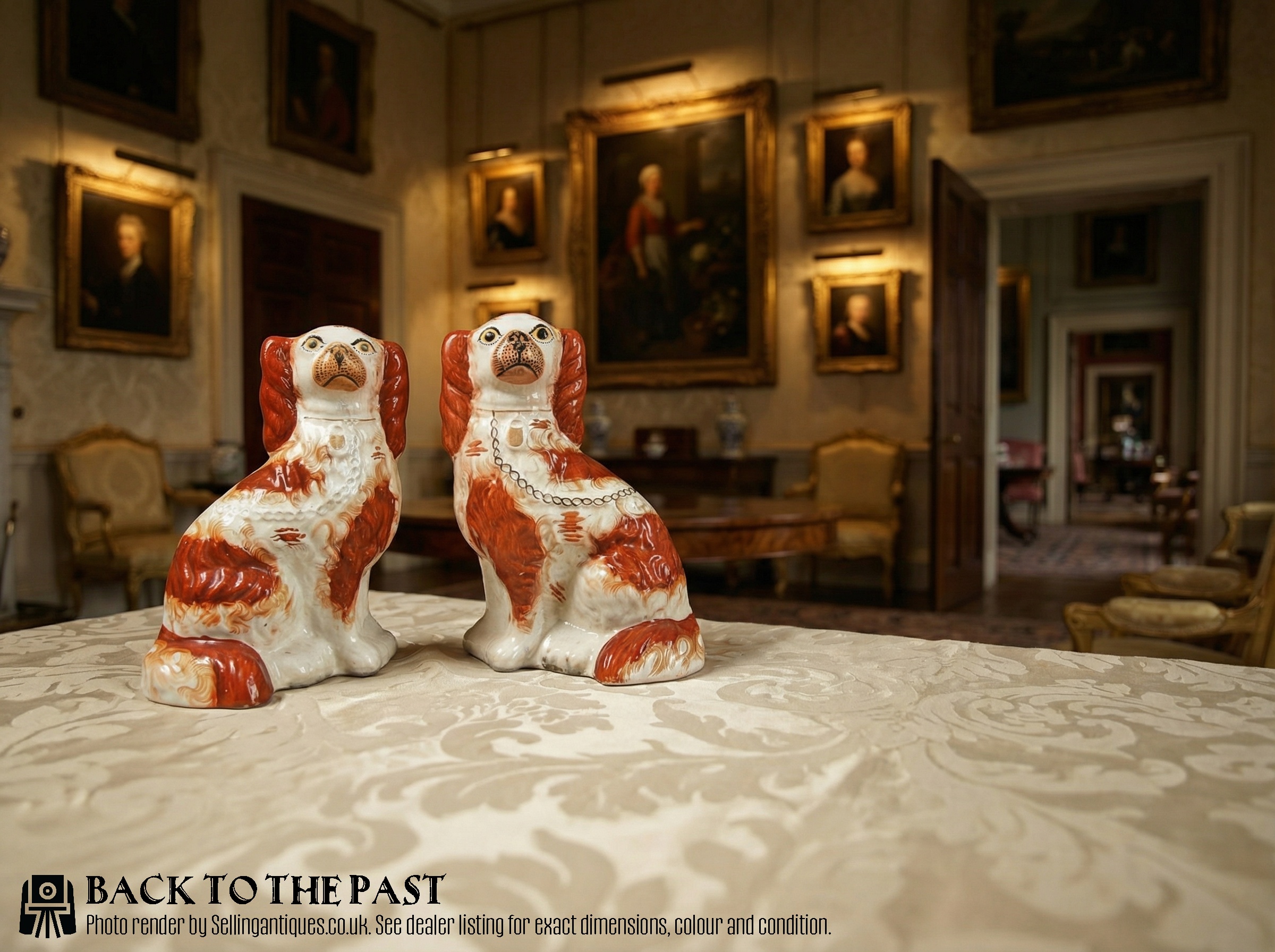
When you search for hand painted ceramic dogs, you enter a field dominated by Victorian Staffordshire figures and Continental examples spanning the nineteenth century. The spaniel and dalmatian forms appear frequently in pairs, standing as mantle ornaments or hearthside companions.
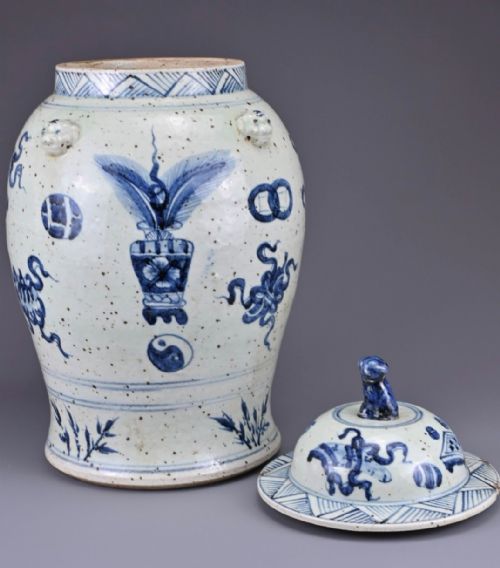
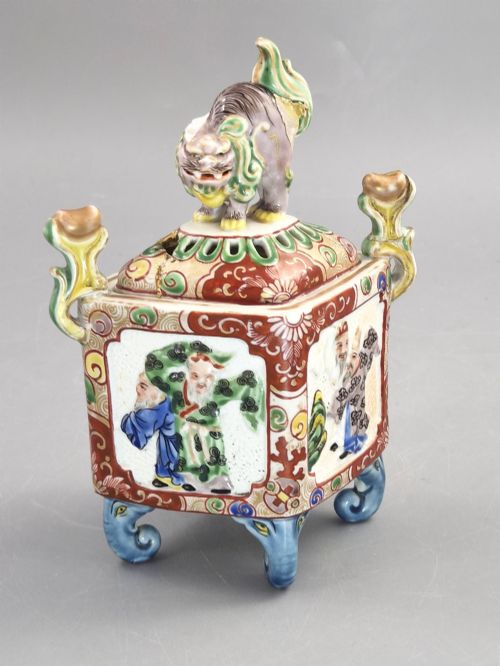
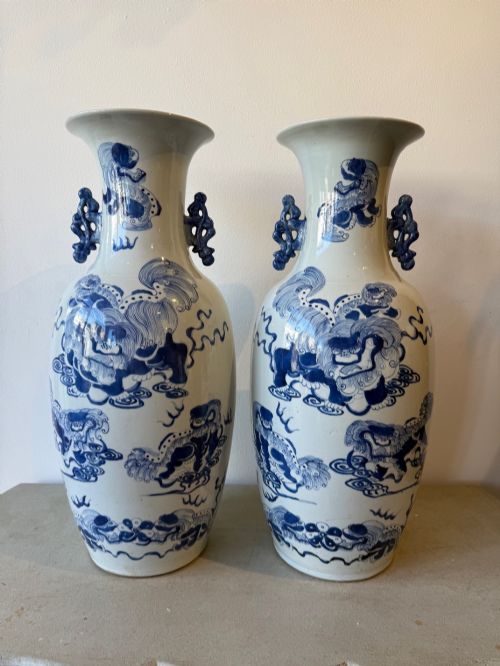
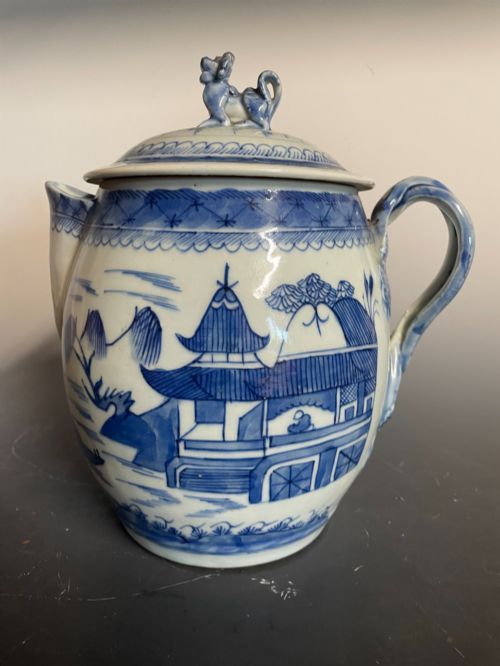
Beyond the Staffordshire potteries, the selection widens to include Chinese porcelain dog statues from earlier periods and miniature Continental porcelain figures. Each piece displays hand painted detail upon ceramic bodies, reflecting the domestic tastes of their respective eras.
Materials and construction
Potters shaped these figures from earthenware and porcelain, applying glazes and enamel pigments by hand before firing. Staffordshire pieces rely on earthenware bodies finished with painted surface decoration, whilst Chinese and Continental examples utilise hard paste porcelain.
The hand painted execution varies from simple underglaze cobalt to vibrant overglaze enamel palettes incorporating red, green, and gold leaf highlights. Potters modelled these dogs as hollow or solid figures, often pairing them to face inwards towards each other.
Listings span from the seventeenth century through the Victorian era, encompassing earthenware Staffordshire figures alongside Chinese and Japanese porcelain.
Judging quality in ceramic dogs
Colour retention and glaze stability indicate the success of the original firing and subsequent preservation. Pairs that remain together with matching decoration and minimal wear command greater interest than mismatched survivors.
The Hand Painted Ceramic Dogs Glossary
- Staffordshire
- Pottery figures produced in the Staffordshire region of England, most famously represented by spaniels and other dogs from the Victorian era.
- Earthenware
- A porous pottery body fired at lower temperatures, commonly used for nineteenth-century British animal figures.
- Porcelain
- A vitrified ceramic material made from clay and petuntse, fired at high temperatures to produce a dense, non-porous white body.
- Enamel
- Opaque glass-like pigments applied over the glaze and fired again at a lower temperature to add bright colours to ceramics.
- Underglaze
- Decoration applied to the ceramic body before the transparent glaze layer is applied and fired, protecting the pigment.
Hand Painted Ceramic Dogs: Frequently Asked Questions
What are Staffordshire dogs?
Staffordshire dogs are ceramic figures, most often spaniels, produced in English potteries during the Victorian period for domestic display.
They were typically made in pairs to sit upon fireplace mantels or window sills in homes across Britain.
How do I date an antique ceramic dog?
Dating relies on stylistic clues, the type of ceramic body, and the characteristics of the glaze and painted decoration.
Victorian Staffordshire pieces show distinct moulding styles from the mid to late nineteenth century, differing from earlier Chinese porcelain examples.
Were these dogs meant to be toys?
These ceramic figures were purely decorative ornaments rather than toys, intended for display within the home.
Their placement on mantels made them focal points of Victorian interior decoration.
Why do Staffordshire dogs come in pairs?
Pairs were designed to face one another when placed on either end of a mantelpiece or shelf.
This symmetrical arrangement suited nineteenth-century interior design conventions for domestic display.