






Hand Painted Black Cupboard
A hand painted black cupboard brings dramatic lacquerwork and striking hand-painted scenes into a room, offering both character and functional storage.
Hand Painted Black Cupboard
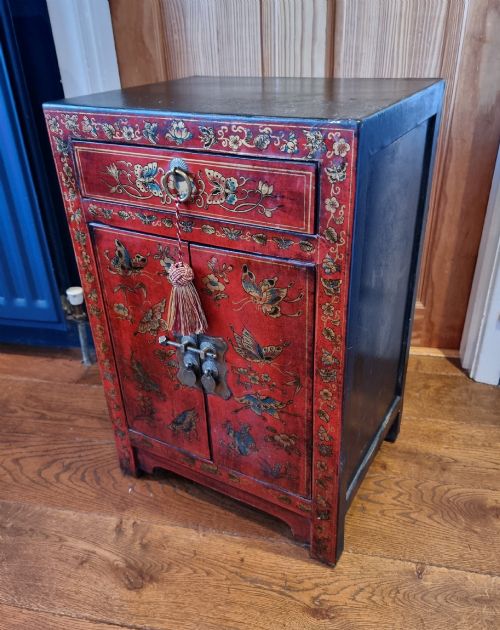
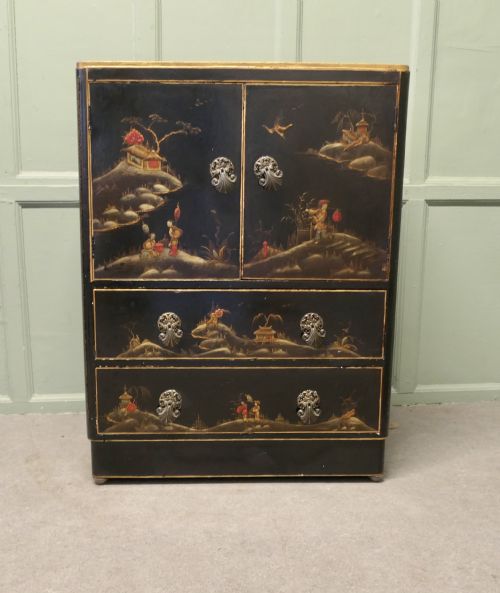
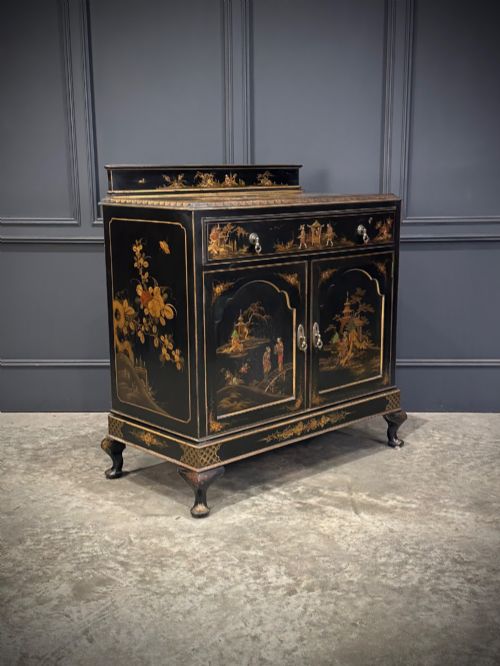
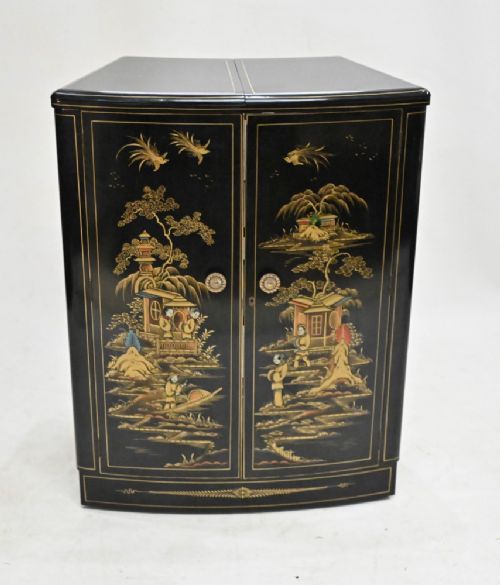
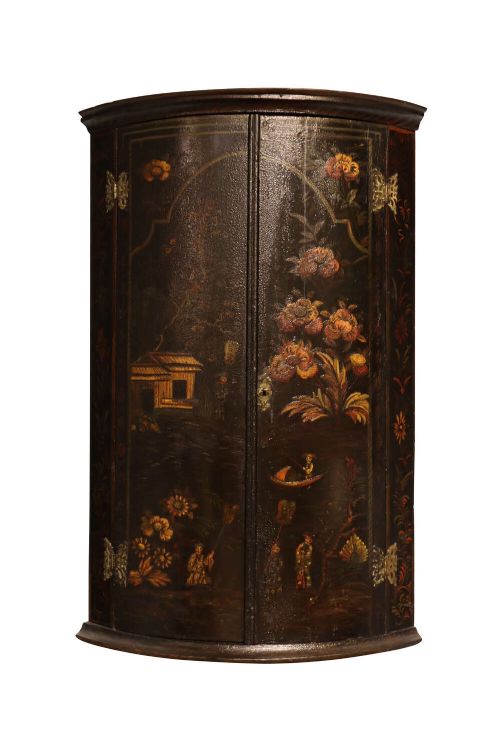
A hand painted black cupboard is a striking storage piece that typically manifests as a side cabinet, corner cabinet, or cocktail cabinet adorned with decorative motifs. The examples found here span from the eighteenth century through the Victorian era and into the early twentieth century, drawing heavily on Chinoiserie and Art Deco aesthetics.
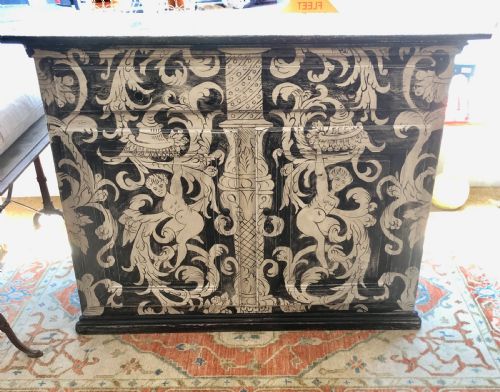
Buyers will most frequently encounter black lacquer and lacquered wood finishes embellished with painted details, ranging from Georgian and Edwardian Chinoiserie interpretations to folk art and Venetian Rococo styles. These pieces function equally well as display units, compactum wardrobes, or drinks cabinets, anchoring a space with their dark surfaces.
How they were made
Construction relies upon traditional cabinet woods finished with layers of black lacquer or paint, often complemented by brass hardware. Artisans applied these liquid finishes in stages to build a smooth base before executing the hand-painted details.
Decoration draws upon techniques associated with Chinoiserie and Japanning, where painters built up intricate motifs in gilt and colour over dark grounds. Specialised pieces from the Victorian era onwards also incorporate specific artistic touches, such as hand-painted grotesque ornament applied directly to wooden surfaces.
Hand Painted Black Cupboard Retail Price Guide 2026
Typical asking prices for hand painted black cupboard among the pieces listed under this phrase on Sellingantiques today, from the lower quarter to the upper quarter. They describe what is for sale here now, not the wider market.
Materials documented across these cupboards include wood, brass, lacquer, gilt, metal, and paint.
What varies in quality
The distinction between tiers of quality rests primarily on the depth of the lacquer finish and the execution of the hand-painted artwork. Finer examples display meticulous brushwork and integrated decorative schemes that respect the historical style, whether Georgian Chinoiserie or Art Deco.
Structural integrity and the retention of original surface conditions also separate standard items from superior ones. Pieces retaining their original painted schemes without heavy modern intervention command greater appreciation among collectors.
Melissa White
The Hand Painted Black Cupboard Glossary
- Chinoiserie
- European decorative style reflecting Chinese artistic influences, frequently featuring figures, landscapes, and pavilions rendered in gilt and colour upon dark lacquered grounds.
- Japanning
- European imitation of East Asian lacquerwork, created by applying layers of varnish and heat-drying them before adding painted or gilt decoration.
- Lacquer
- A durable resin or varnish applied to wood in multiple coats and polished to a hard, smooth finish.
- Compactum
- A large fitted wardrobe designed with interior compartments, drawers, and hanging space for efficient organisation.
- Rococo
- An ornate architectural and decorative style characterised by asymmetry, scrollwork, and playful motifs, seen here in Venetian furniture forms.
Hand Painted Black Cupboard: Frequently Asked Questions
Where should I place a black cupboard?
These cabinets work effectively in living rooms, hallways, or dining spaces where their dark finishes and painted details can serve as a visual focal point. They pair well with neutral walls that allow the decorative surface to stand out.
Consider the scale of the room and the piece itself, ensuring that corner units or larger cocktail cabinets fit comfortably within the available floor space without overcrowding the area.
How do I care for lacquered surfaces?
Dust the exterior gently with a soft, dry cloth and avoid using harsh chemical cleaners or abrasive polishes that might damage the hand-painted finish. Keep the piece away from direct sunlight and extreme temperature fluctuations to protect the lacquer.
Applying a specialist wax occasionally can help maintain the sheen of older wooden and lacquered surfaces, provided the finish is stable and sound.
What periods do these cupboards date from?
The selection includes items spanning from the eighteenth century through the Victorian period and into the early twentieth century, including the Art Deco era and the 1930s. Each era brings distinct proportions and stylistic interpretations to the painted designs.
Earlier pieces often reflect Georgian Chinoiserie traditions, whereas twentieth-century examples frequently embrace bold Art Deco lines or playful folk art influences.