

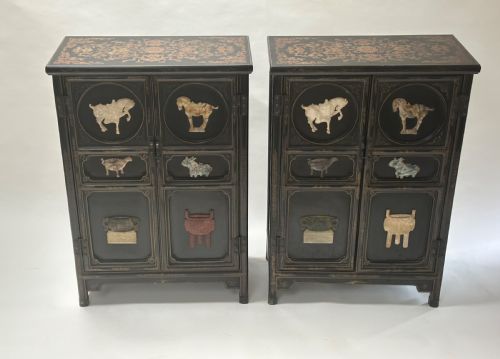


Chinese Lacquered Side Cupboard
These Chinese lacquered side cupboards bring rich pigment and storied timber to a room, offering practical storage wrapped in centuries of decorative art.
Chinese Lacquered Side Cupboard
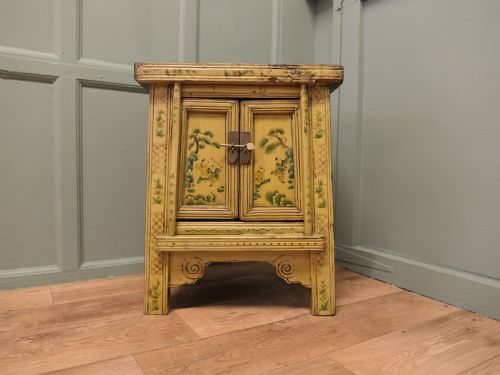
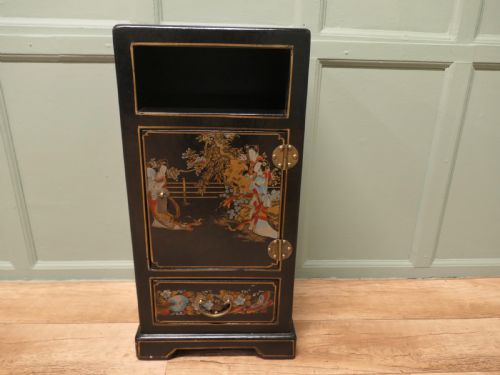
A Chinese lacquered side cupboard combines traditional storage forms with layered surface finishes, appearing in formats ranging from low bedside lamp cabinets to taller marriage and wedding pieces. Buyers seeking this phrase encounter compact side cabinets and paired units designed for living spaces or bedrooms.
The objects span several distinct eras, with nineteenth-century examples sitting alongside pieces from nineteen-hundred, nineteen-twenty, nineteen-thirty, and the Edwardian period. Their forms function primarily as side cabinets or storage cupboards, bringing distinct Oriental character to an interior.
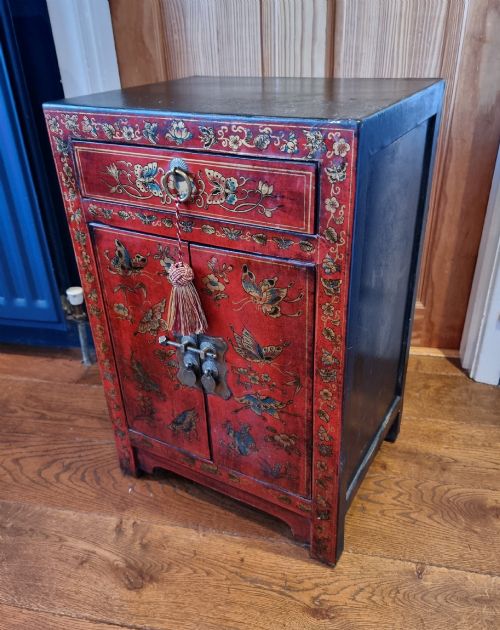
Makers and artisans utilised specific structural formats, producing elm and wood carcases finished in red lacquer, cream or standard lacquer, and cinnabar. These surfaces often carry Chinoiserie decoration, traditional Chinese motifs, or Qing Dynasty styling.
How they were made
Makers built the foundational carcase from sturdy timbers such as elm and general wood, ensuring a stable structure to bear the weight of applied finishes. Iron and brass hardware, including hinges and locking plates, provided functional reinforcement and visual contrast against the wooden surfaces.
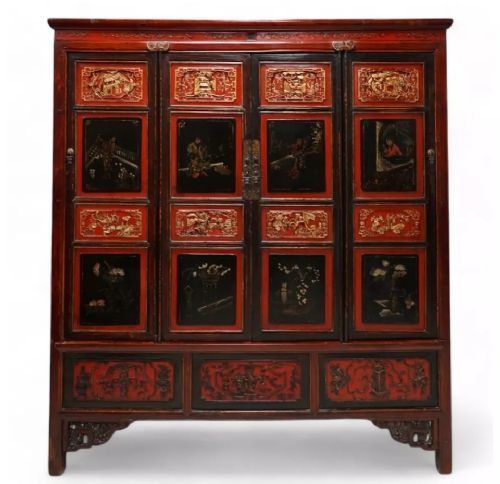
The defining characteristic lies in the application of lacquer, painted wood, and hardstone details to the exterior surfaces. Artisans built up layers of red lacquer, cream finishes, or cinnabar work, often incorporating Chinoiserie pictorial scenes that required meticulous drying and polishing between stages.
Chinese Lacquered Side Cupboard Retail Price Guide 2026
Typical asking prices for chinese lacquered side cupboard among the pieces listed under this phrase on Sellingantiques today, from the lower quarter to the upper quarter. They describe what is for sale here now, not the wider market.
The listings span the nineteenth century, nineteen-hundred, nineteen-twenty, nineteen-thirty, and the Edwardian period.
What varies in quality
Quality in a Chinese lacquered side cupboard rests upon the depth and preservation of the surface finish, whether in rich red lacquer, cream tones, or cinnabar work. Superior examples exhibit intact pictorial detail and harmonious integration of brass or iron hardware without distracting loss to the underlying timber.
Construction integrity also separates standard utility pieces from finer creations, particularly in the joinery of elm carcases and the balance of doors and stands. Finer pairs demonstrate consistent proportion and skilled execution in their Chinoiserie ornamentation.
The Chinese Lacquered Side Cupboard Glossary
- Chinoiserie
- European interpretation and imitation of Chinese artistic traditions and motifs, frequently applied to furniture surfaces during the eighteenth and nineteenth centuries. This style introduces playful architectural scenes and figural landscapes.
- Cinnabar lacquer
- A technique involving the application of numerous layers of red mercuric sulphide lacquer, which is subsequently carved with intricate low-relief designs. This method produces a weighty and tactile decorative surface.
- Marriage cabinet
- A traditional large storage form associated with wedding ceremonies and dowries, adapted in smaller side cabinet variants for domestic use. These pieces often feature prominent brass or iron hardware on the central doors.
- Elm
- A resilient hardwood utilised extensively in traditional Chinese furniture making for its interlocking grain and structural stability. It provides a durable foundation for painted and lacquered finishes.
- Lacquer
- A durable resin finish derived from tree sap, applied in successive coats to seal and decorate wooden objects. It forms a smooth, glossy shield that accepts pigments and metallic dust readily.
Chinese Lacquered Side Cupboard: Frequently Asked Questions
Where should I place a side cupboard?
These cupboards suit bedrooms, hallways, or living rooms as statement storage pieces that anchor a corner or flank a larger piece of furniture. Their compact side formats make them versatile for holding lamps or daily items.
Ensure the placement protects the lacquered surface from direct, harsh sunlight and excessive moisture fluctuation, which can affect older wooden carcases and applied finishes.
How do I date a lacquer cabinet?
Dating relies on observing construction methods, timber choice, hardware style, and the specific characteristics of the lacquer work. Nineteenth-century examples often display heavier elm framing and distinct patination on the brass or iron fittings.
Nineteen-thirty and Edwardian pieces may reveal different construction tolerances and stylistic influences, such as simplified Chinoiserie motifs or alternative bedside proportions.
What is the difference in lacquer types?
Standard red or cream lacquer surfaces provide smooth, painted pictorial scenes often associated with Chinoiserie decoration. These finishes rely on pigmented layers sealed over wood or painted wood.
Cinnabar lacquer involves thick, carved red layers that create a sculptural, monochromatic texture quite distinct from flat painted compositions.
How do I care for antique lacquer?
Maintain the surface by dusting gently with a soft, dry cloth and avoiding modern chemical polishes or abrasive cleaners. Maintaining a stable indoor climate prevents timber movement beneath the lacquer.
Keep the cupboards away from direct heat sources to preserve the integrity of the wood and the stability of the layered finishes.