


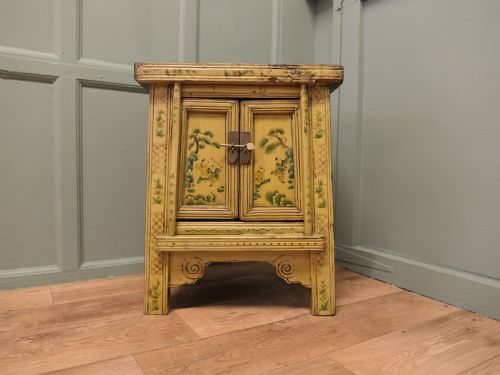



Asian Style Side Cabinet
These asian style side cabinet pieces bring lacquer, hardwood, and painted finishes together for practical storage with ornamental presence.
Asian Style Side Cabinet
An asian style side cabinet brings together storage pieces and low tables shaped by Chinese export, Chinoiserie, and traditional Chinese aesthetics. They take the form of side cupboards, occasional tables, two-tier lamp tables, and bedside cabinets.
The pieces on this page span the nineteenth century through the nineteen-thirties, covering Edwardian examples alongside pieces dated to 1900, 1910, 1920, and 1930. These provide compact surfaces and closed storage suited to modern rooms.
Buyers meet red lacquer marriage cabinets, cinnabar lacquer designs, and cream Chinoiserie decorated cupboards alongside hardwood and mother of pearl inlaid tables. Each form serves as a functional side unit carrying distinct decorative ornament.
How they were made
Makers constructed these cabinets using solid wood, hardwood, and rosewood as a structural base for decorative surfaces. Many examples utilise lacquered wood or painted wood finished with detailed ornamentation.
Surface decoration relies on applied lacquer, Chinoiserie painting, and mother of pearl inlay set into wood. Brass fittings and hardware provide structural accents and functional handles across cupboards and drawers.
Asian Style Side Cabinet Retail Price Guide 2026
Typical asking prices for asian style side cabinet among the pieces listed under this phrase on Sellingantiques today, from the lower quarter to the upper quarter. They describe what is for sale here now, not the wider market.
Marriage cabinets arrive bearing red lacquer meant to bring luck to newlyweds, now holding lamps and spare keys.
What varies in quality
The depth and execution of surface decoration separate standard examples from finer pieces. Hand-applied lacquer, intricate mother of pearl inlay, and painted Chinoiserie scenes demand skilled craft that elevates the visual weight of the furniture.
The choice of underlying material alters the integrity of each piece, with dense hardwoods and rosewood offering greater durability than softer painted timbers. Original brass hardware and well-preserved lacquer finishes retain the intended character of the design.
The Asian Style Side Cabinet Glossary
- Chinoiserie
- European interpretation and imitation of Chinese artistic traditions and motifs. This style appears frequently on nineteenth and twentieth century painted furniture.
- Cinnabar lacquer
- Carved lacquer built up in numerous layers using mercury sulphide. Artisans carve intricate patterns into the hardened red material.
- Mother of pearl inlay
- Shell fragments embedded into a wooden or lacquered surface to create shimmering geometric or pictorial designs. It catches light across table tops and cabinet doors.
- Marriage cabinet
- Large storage furniture traditionally given to newlywed couples in China. They often feature bright red finishes and significant brass mounting.
Asian Style Side Cabinet: Frequently Asked Questions
Where do I place an asian style side cabinet?
These cabinets suit living rooms, hallways, and bedrooms where surface space and enclosed storage are both required. Their compact proportions allow them to function easily beside seating or beds.
Taller cupboards provide concealed storage for books or household items, while lower lamp tables and occasional tables hold lighting and decorative objects.
How do I care for lacquer and painted wood?
Keep lacquered and painted surfaces away from direct sunlight and excessive heat to prevent cracking or fading. Dust gently with a soft, dry cloth without harsh cleaning agents.
Maintaining a stable indoor humidity helps protect both the wooden substrates and the delicate surface finishes from shrinking or warping over time.
What is the difference between Chinoiserie and Chinese export?
Chinoiserie describes European decorative arts made in a Chinese taste, popular during various periods including the Edwardian era. These pieces reflect Western ideas of Eastern aesthetics.
Chinese export refers to items made within China specifically for overseas markets, combining traditional domestic craftsmanship with foreign functional requirements.
How do I distinguish between different periods?
Nineteenth-century pieces often display heavier timber construction and traditional joinery methods associated with regional Chinese workshops. Edwardian and later twentieth-century examples frequently incorporate lighter frames and European-influenced cabinet forms.
Examining the interior construction, wear patterns, and hardware helps clarify the likely decade of manufacture alongside stylistic cues.